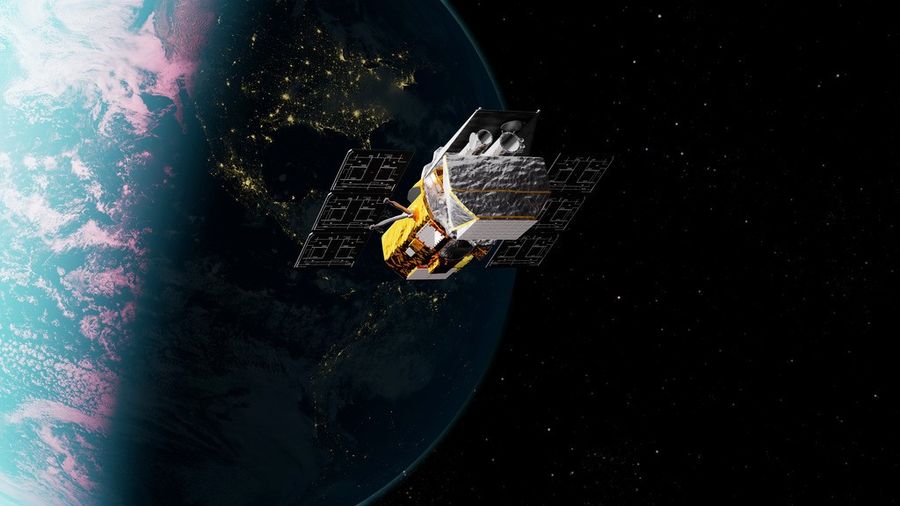
NASA and Katalyst Space suspended plans to boost the Neil Gehrels Swift Observatory to a higher orbit due to ongoing attitude control problems with the LINK spacecraft. The commercial vehicle cannot reliably maintain its orientation in space, making satellite capture and altitude augmentation unsafe.
Swift remains one of NASA's most productive gamma-ray burst observatories. Launched in 2004, the satellite detects sudden eruptions of high-energy radiation across the cosmos, helping astronomers understand stellar explosions and neutron star collisions. An orbital boost would have extended Swift's operational life by years, offsetting natural orbital decay.
Katalyst Space developed LINK as a commercial servicing vehicle capable of proximity operations with orbiting satellites. The mission represented a test case for commercial spacecraft autonomy and satellite life-extension services, a growing segment of the space economy. Companies like Orbit Fab, Axiom Space, and others pursue similar rendezvous-and-servicing capabilities.
NASA and Katalyst still plan rendezvous and proximity operations with Swift, though the specific objectives shift. The team will use these lower-risk maneuvers to gather data on LINK's performance and gather experience with close satellite operations. The spacecraft will demonstrate navigation, relative motion control, and sensor capabilities without attempting the more demanding boost procedure.
This setback reflects the technical challenges of commercial space operations. Attitude control systems manage spacecraft orientation using reaction wheels, thrusters, or magnetic torquers. A malfunction in any component cascades into mission risk. Swift's operational continuity now depends on its current propellant reserves and natural orbital decay timelines.
The postponement does not cancel future boost attempts. NASA and Katalyst will analyze LINK's telemetry and conduct corrective measures before attempting more complex maneuvers. Swift's science mission continues from its current altitude. The partnership demonstrates how commercial providers and NASA collaborate to extend