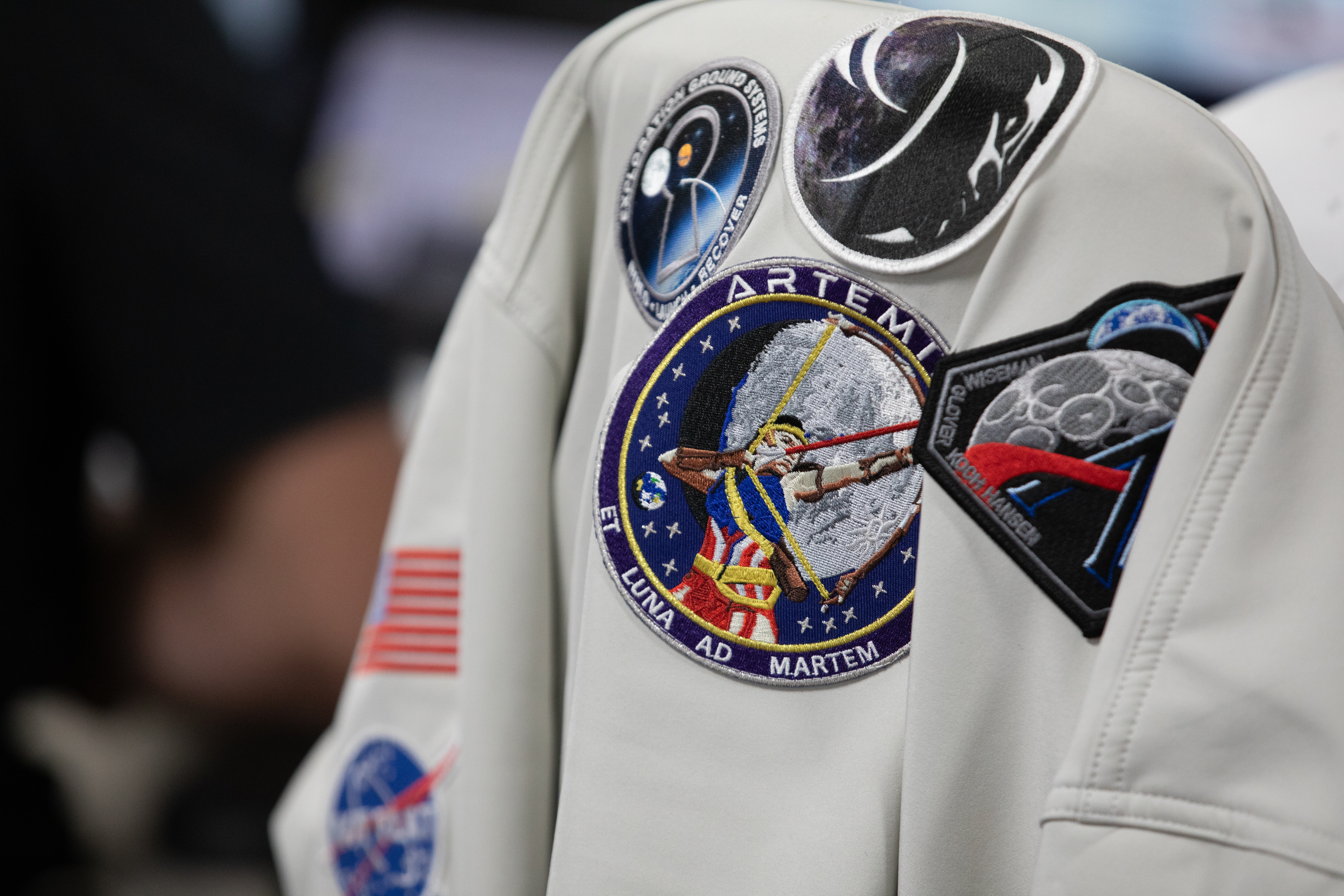
NASA conducted a terminal countdown simulation for Artemis III at Kennedy Space Center's Launch Control Center on August 6, 2026. The exercise tested operational procedures and systems ahead of the actual crewed lunar mission, with staff monitoring equipment and communication protocols used during final launch preparations.
The simulation occurred inside the Rocco A. Petrone Launch Control Center, the facility that coordinates Space Launch System rocket launches. Mission patches from Artemis I and Artemis II adorned the control room, marking the progression of NASA's lunar exploration program. Artemis I, an uncrewed test flight, launched in November 2022 and validated the Space Launch System and Orion spacecraft. Artemis II, scheduled to carry astronauts around the Moon without landing, represents the next phase before Artemis III returns humans to the lunar surface for the first time since 1972.
Artemis III aims to land astronauts near the Moon's south polar region, where permanently shadowed craters harbor water ice and other resources. This mission represents a critical step toward establishing sustainable lunar exploration and using the Moon as a stepping stone for Mars missions. The south polar region offers scientific opportunities unavailable during Apollo's equatorial landing sites, including access to ancient geological materials and potential propellant sources.
Terminal countdown simulations test every element of launch operations, from propellant loading procedures to weather monitoring and emergency protocols. These exercises identify potential issues before actual missions and ensure launch teams execute procedures with precision. The Artemis program builds on lessons from Apollo while incorporating modern technology and commercial partnerships through contracts with SpaceX for lunar lander development.
The countdown simulation underscores NASA's methodical approach to returning humans to the Moon after a 54-year hiatus. Each test validates systems and procedures that will support not just Artemis III, but the broader lunar exploration architecture NASA plans to establish over the coming decade.