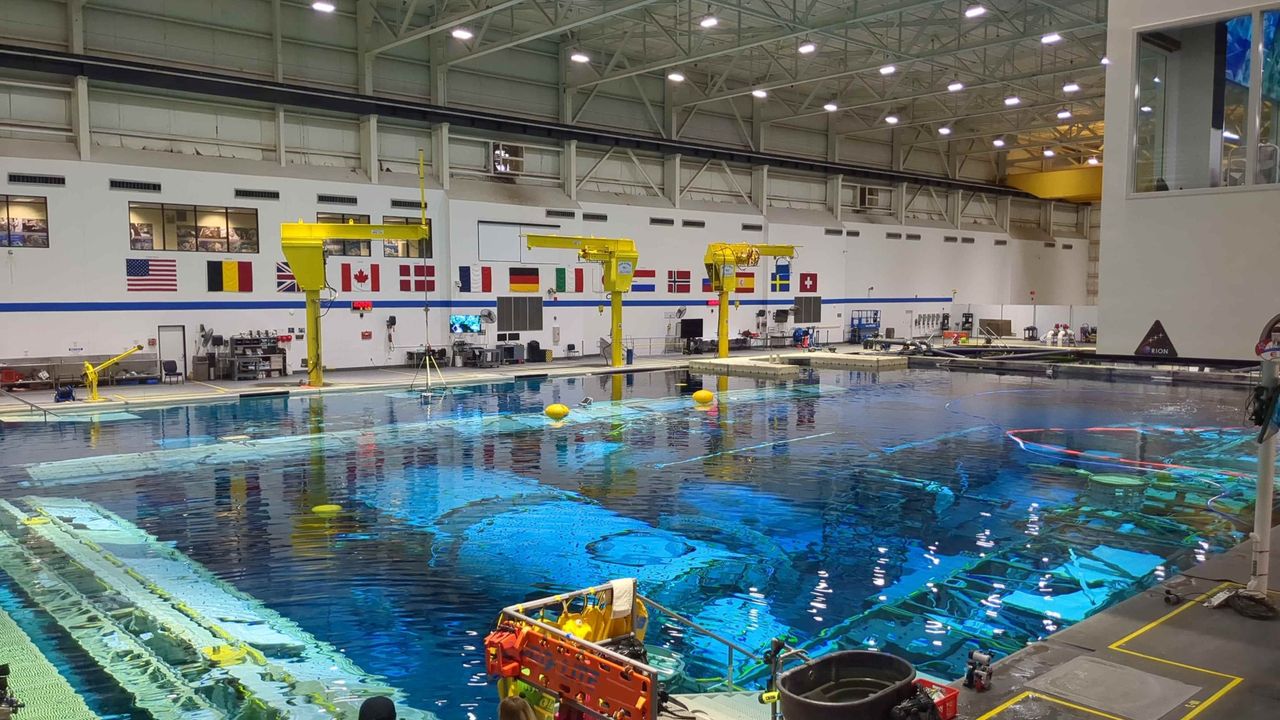
NASA's Johnson Space Center in Houston stands at a crossroads. For decades, the facility trained astronauts exclusively for government missions. That era is ending. The agency now prepares crews for flights aboard commercial space stations being built by private companies, reshaping how the nation's astronauts learn to live and work in orbit.
The shift reflects a fundamental change in spaceflight economics. NASA ended Space Shuttle operations in 2011 and relied on Russian Soyuz rockets to reach the International Space Station until 2020. SpaceX's Crew Dragon and Boeing's Starliner now ferry NASA astronauts to orbit. Within the next decade, commercial stations built by Axiom Space, Orbital Reef, and other private operators will replace the ISS as primary platforms for microgravity research and human presence in low Earth orbit.
Johnson Space Center's training infrastructure must adapt. Astronauts currently train on ISS mockups and hardware replicas at the facility. Commercial stations feature different layouts, life support systems, emergency procedures, and operational protocols. Axiom's modular design differs radically from the ISS truss structure. Orbital Reef's architecture diverges further. Each commercial platform requires station-specific training modules.
The center already conducts training partnerships with industry. Crews bound for SpaceX missions train on Crew Dragon simulators co-developed by NASA and SpaceX engineers. Boeing provides Starliner-specific instruction. These collaborations now extend to full-station operations. Private companies work directly with Johnson's training specialists to build curriculum around their hardware, then host astronauts for hands-on practice.
This arrangement benefits both sectors. Commercial operators gain credibility by training government astronauts to the same standards that certified crews for the ISS. NASA preserves its role as the technical authority on human spaceflight while avoiding the expense of building mockups for every private station. The agency funds training development through contracts rather than capital construction.
The broader implication reshapes NASA's mission. The agency transitions from operating a single government-owned orbital facility to managing multiple commercial platforms through contracts and partnerships. Astronauts will rotate among different stations, requiring broader operational knowledge than ISS specialists possessed. Training deepens in emergency response across varied systems and architectural layouts.
Johnson Space Center's role evolves from sole proprietor to orchestrator. The facility remains NASA's lead training organization, setting standards and certifying crew readiness. Its engineers and instructors increasingly work as consultants to private industry rather than exclusive servants of government hardware. This model mirrors NASA's shift toward commercial crew and cargo transportation.
The transition creates workforce challenges. Training specialists who spent careers mastering ISS systems must learn new platforms. Younger instructors enter a training environment spanning multiple stations rather than one. Simulator technology must advance to handle multiple vehicle types efficiently.
Revenue models shift as well. NASA historically absorbed all training costs as internal operations. Commercial stations may charge for training services, creating new budget considerations. The agency will negotiate training provisions in commercial station contracts, establishing baseline requirements that private operators must accommodate.
Johnson Space Center's transformation reflects deeper changes in American spaceflight. Government and private sectors increasingly operate as partners rather than competitors or separate entities. The training hub's evolution demonstrates how institutional expertise migrates from exclusive government control toward collaborative ecosystems. This model positions NASA to maintain astronaut readiness while reducing operational burden during a period when multiple destinations await human crews.