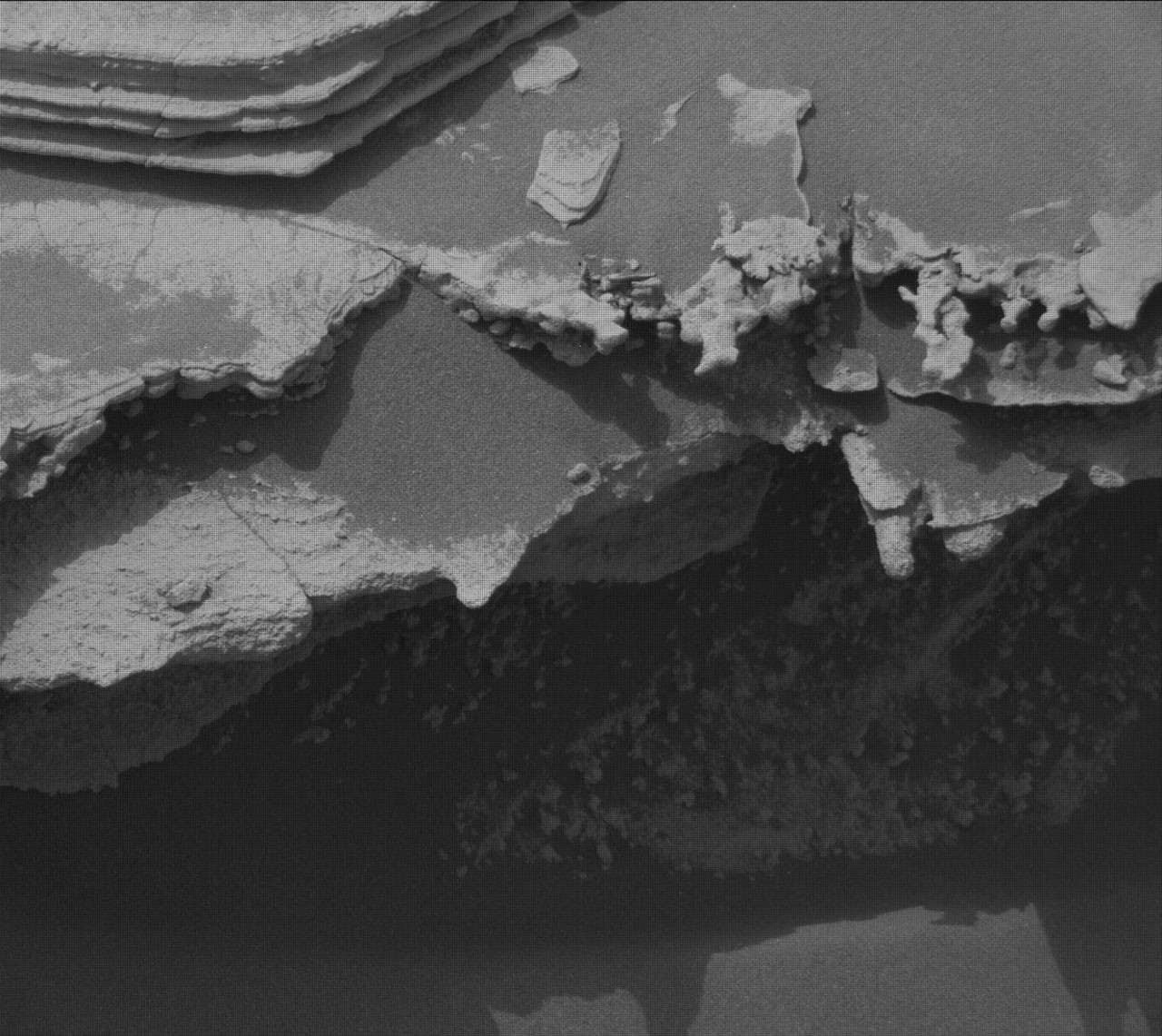
NASA's Curiosity rover has resumed its primary mission of ascending Mount Sharp after a brief scientific detour to investigate an erosional surface on Mars. The rover, which has now operated for nearly 4,982 sols (Martian days), returned to its planned route during the week of August 14, 2026, according to Allison Dries-Padilla, Missions Operations Specialist at Malin Space Science Systems.
The temporary diversion provided valuable data about an unexpected geological feature. Erosional surfaces on Mars reveal how wind, water, and time have shaped the planet's landscape over billions of years. These formations offer clues about ancient Martian climate patterns and atmospheric conditions. By studying such anomalies, scientists gather intelligence about the planet's geologic history and the processes that continue to alter its surface today.
Curiosity has been climbing the central peak of Gale Crater since its landing in August 2012. Mount Sharp, officially named Aeolis Mons, rises 5.5 kilometers above the crater floor. The rover's ascent through different rock layers acts as a vertical time machine. Each layer represents a different era in Mars' history, with older rocks at the base and younger deposits higher up. This geological stratification allows scientists to read Mars' climate record preserved in stone.
The rover's instruments include the Sample Analysis at Mars (SAM) instrument suite, which can detect organic compounds and assess habitability conditions. The ChemCam laser spectrometer provides elemental composition data from distances up to seven meters. RAD detects radiation levels, crucial for understanding whether past Mars could have supported microbial life. These tools transform Curiosity into a mobile laboratory capable of answering fundamental questions about Mars' past.
Since landing over 13 years ago, Curiosity has traveled more than 32 kilometers across the Martian surface. The rover was originally designed for a two-year mission but continues operating effectively, a testament to its engineering and the skill of the rover team managing operations from Earth. Each command sent across the 140-million-plus-kilometer journey takes up to 20 minutes to reach Mars, requiring rover operators to plan multiple sols of activities in advance.
Returning to the regularly scheduled ascent of Mount Sharp signals that Curiosity's scientific priorities have shifted focus back to the primary investigation. This doesn't diminish the value of the erosional surface study. Rather, it reflects the strategic balance rover operators maintain between exploring unexpected discoveries and maintaining long-term exploration objectives.
The rover's continued climb provides opportunities to sample fresh rock exposures unweathered by Mars' harsh surface conditions. Each new elevation brings Curiosity into contact with geological strata that contain different mineral compositions and potentially different chemical signatures of Mars' habitability window.
For planetary scientists, Curiosity's sustained operation remains invaluable. The rover generates data that informs landing site selection and scientific priorities for future Mars missions, including those of the Perseverance rover currently operating in Jezero Crater. Every sol of operation extends humanity's understanding of whether Mars ever harbored life and what conditions might have supported it.