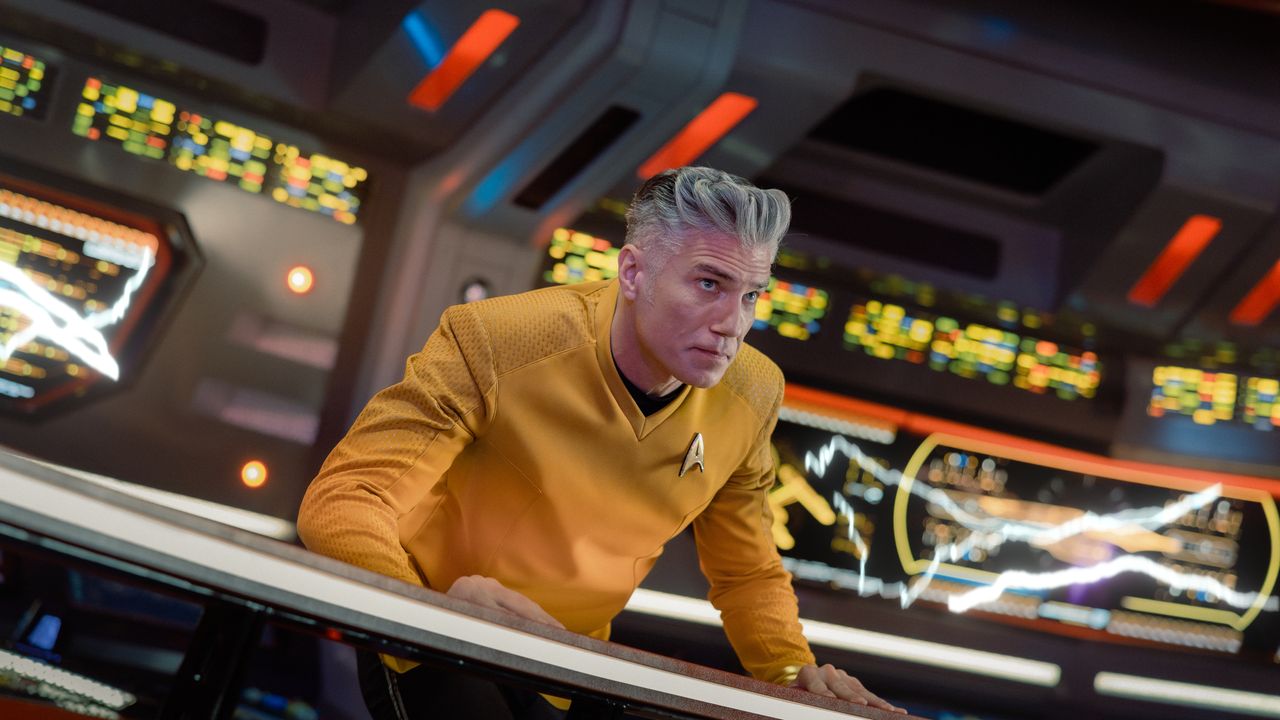
# Star Trek: Strange New Worlds Undermines Dramatic Stakes With Familiar Canon
Star Trek: Strange New Worlds delivered an episode that leaned hard on false peril, banking on the franchise's established continuity to defuse tension before it could build. The show spent considerable screen time manufacturing the appearance of mortal danger for major characters, only to rely on what fans already know about their futures to neutralize any genuine threat.
This narrative approach exposes a fundamental tension in prequels. Strange New Worlds operates as a prequel to the original 1960s Star Trek series, with Captain Pike commanding the USS Enterprise before James T. Kirk takes the helm. The problem is transparent: audiences know Pike and his crew survive this episode because they appear in later canonical material. No character with a predetermined future can truly die on screen without creating a continuity violation.
The episode's writers invested significant runtime in suggesting character deaths. They constructed scenarios where established cast members faced apparent extinction. The dramatic machinery was there. The music swelled. The blocking emphasized the finality of moment. Yet the underlying reality never shifted. Viewers who know Star Trek canon experienced these sequences as elaborate theater rather than genuine jeopardy.
Prequel storytelling in serialized fiction faces this exact problem. The Marvel Cinematic Universe confronted it head-on with WandaVision and Loki, where filmmakers sidestepped pure canonicity by introducing multiverse mechanics that allowed for unpredictable outcomes. Game of Thrones, which operated with no established future, could kill anyone at any time. That uncertainty shaped every scene.
Strange New Worlds exists in a different position. It cannot kill Pike without contradicting decades of Trek continuity. It cannot eliminate senior crew members who appear in original series episodes. The show's writers know this. The audience knows this. Everyone sitting down to watch the episode knows this.
The series has shown other narrative strengths. Character development works because it fills gaps that canon never clarified. Discovering why Pike chose to captain a starship, how he built relationships with his crew, what missions shaped his command philosophy. These stories matter because they add texture to established facts without contradicting them.
This particular episode represented a departure. Rather than deepening character through new discovery, the writers attempted to manufacture tension through artificial stakes. They wagered that the mechanics of suspenseful cinematography could override logical audience knowledge.
The calculation failed. Viewers with casual familiarity with Star Trek could feel the attempt. Those with deeper knowledge experienced it as theatrical rather than threatening.
Strange New Worlds performs best when it embraces its prequel nature and builds outward from canonical anchors. The show excels at exploring the spaces between known facts. It struggles when it tries to pretend those facts do not exist.
Future episodes benefit from acknowledging this limitation directly. Not every conflict needs to resolve in character death. Emotional stakes, professional consequences, moral dilemmas, and philosophical challenges all carry weight without requiring fake mortality. The show's strongest hours deploy these alternatives instead of betting on false peril.