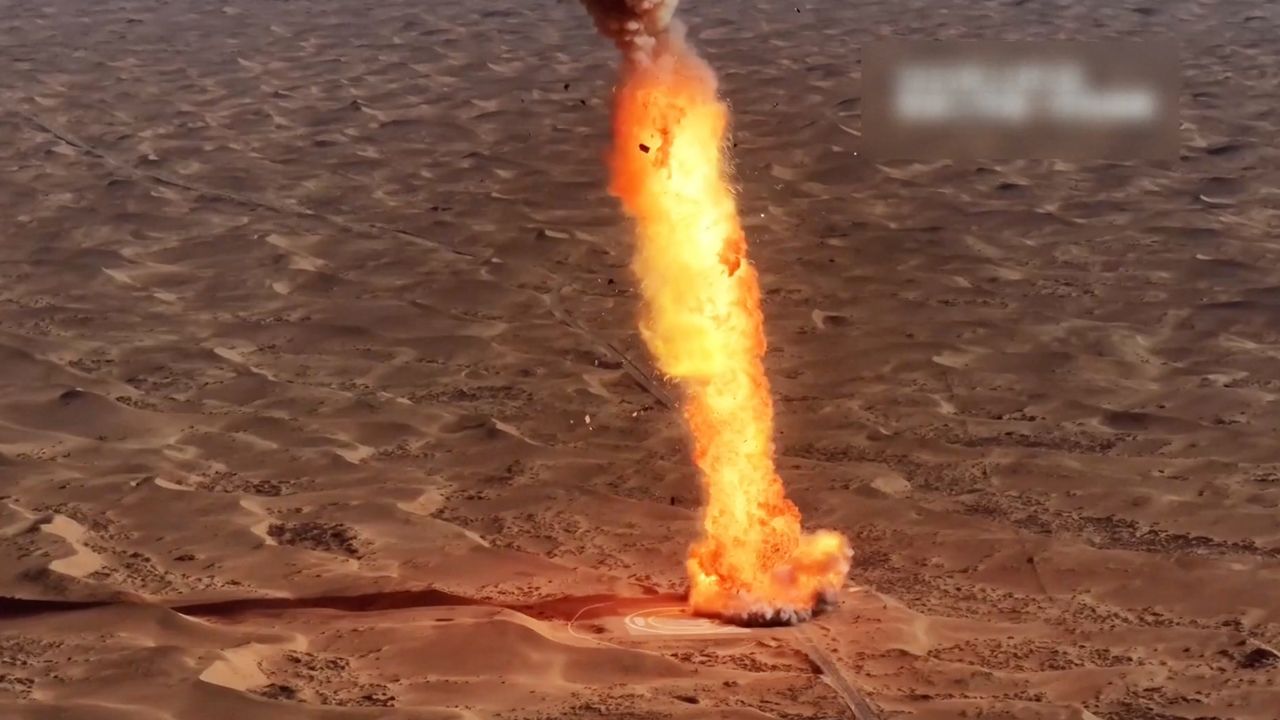
LandSpace's maiden attempt to land its Zhuque-3 rocket became a high-stakes spectacle of engineering ambition and explosive consequence. Newly released video footage captures the dramatic moment when China's privately developed heavy-lift launch vehicle attempted to return to Earth, only to detonate in a spectacular fireball during its landing sequence.
The Zhuque-3 represents a pivotal development in China's commercial spaceflight sector. LandSpace, founded in 2015, designed the Zhuque-3 as a methane-fueled, partially reusable heavy-lift launch vehicle intended to compete with international players like SpaceX's Falcon 9 and Blue Origin's New Shepard. The rocket stands approximately 70 meters tall and targets a lifting capacity of 25 tons to low Earth orbit.
The landing failure occurred during LandSpace's first booster recovery attempt. Video footage shows the Zhuque-3's first stage descending under engine control toward a designated landing zone. The booster's engines ignited for a powered landing sequence, slowing its descent velocity. However, something went catastrophically wrong during the final stages of the approach. The rocket erupted in a massive explosion, creating a towering fireball that illuminated the landing area.
This setback reflects the inherent risks involved in developing reusable rocket technology. SpaceX experienced similar failures during Falcon 9 booster landings before perfecting the technique. Blue Origin faced landing challenges with New Shepard's booster system. LandSpace's failure places the company among a growing cohort of space enterprises pushing the boundaries of reusable launch vehicle development.
The significance of LandSpace's attempt extends beyond one failed landing. China's commercial space industry has accelerated dramatically over the past five years. State support combined with private investment has created a competitive landscape where companies like LandSpace, iSpace, and Expace pursue advanced launch capabilities. A successful booster recovery program would reduce launch costs substantially, making Chinese commercial spaceflight more competitive on global markets.
The video release itself signals confidence in LandSpace's continued development program. Rather than concealing the failure, the company made footage public, demonstrating transparency uncommon in Chinese aerospace ventures. This approach aligns with the international aerospace community's acceptance that failure serves as a prerequisite for eventual success.
LandSpace conducted subsequent test flights following this landing attempt. The company refined its booster recovery procedures and continued advancing toward operational reusability. Each failed attempt generates data that informs engineering decisions for future missions.
The broader context matters here. China's commercial spaceflight sector operates within a framework of government oversight and military considerations, yet pursues objectives aligned with international space industry trends. Reusable boosters represent the future of cost-effective space access. LandSpace's push to achieve this capability reflects both Chinese national ambitions and genuine competitive pressure from international operators.
The dramatic video of LandSpace's exploding booster serves as a reminder that space exploration demands relentless iteration. Failures drive innovation. The companies that transform catastrophic moments into engineering lessons eventually claim success.