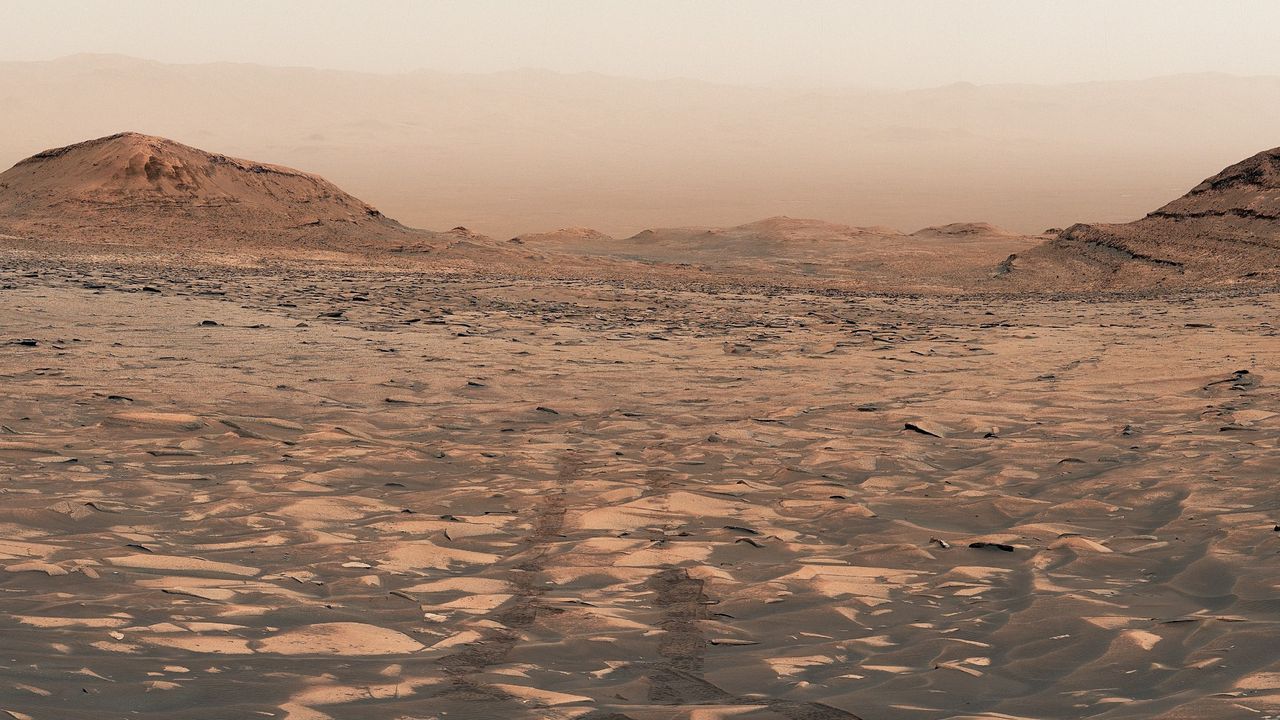
NASA's Curiosity rover has reached a cumulative climbing distance of 1 kilometer across its 14-year mission on Mars, marking a milestone in planetary exploration that underscores the durability of robotic science platforms operating in extreme environments.
The rover commemorated this achievement by capturing a panoramic image of its surroundings. Curiosity has traveled this vertical distance while navigating the slopes and terrain of Gale Crater, where it has investigated geological formations and searched for evidence of past habitability since its landing in August 2012.
Curiosity represents a fundamental shift in how NASA approaches Mars exploration. The six-wheeled rover, roughly the size of an SUV, carries 10 scientific instruments designed to characterize the planet's geology, atmosphere, and radiation environment. Its primary mission lasted two years. The rover has now operated for more than seven times that duration, continuously gathering data that informs our understanding of Mars' climate history and potential for past microbial life.
The 1-kilometer elevation gain reflects the rover's systematic ascent of Mount Sharp, the 5.5-kilometer central peak within Gale Crater. This geological feature exposes layers of rock deposited over billions of years, creating a vertical timeline of Mars' climatic evolution. Each layer tells a story about atmospheric conditions, water availability, and habitability at different periods in the planet's past.
Curiosity's longevity stems from meticulous engineering and conservative operational practices. The rover relies on a plutonium-238 radioisotope thermoelectric generator for power, making it independent of solar panels and enabling extended operations through Martian dust storms. NASA's rover drivers and science team manage power consumption carefully, prioritize scientific observations, and perform targeted maintenance to keep the aging platform productive.
The rover's accomplishments extend beyond raw distance traveled. Curiosity detected organic compounds in Martian rocks, confirming that carbon-based chemical building blocks persist in the subsurface. The rover measured methane fluctuations in the atmosphere, indicating ongoing chemical processes or potentially biological activity. Radiation measurements provided critical data for assessing hazards to future human explorers.
This milestone arrives as NASA prepares for sustained human presence on Mars. Data from Curiosity and its orbiting counterparts inform landing site selection, resource identification, and habitability assessments for eventual crewed missions. The rover demonstrates that robotic platforms can function reliably across decades, establishing baseline expectations for supporting infrastructure that human missions would require.
Curiosity continues its scientific operations, with no retirement timeline announced. Engineers expect the rover's power source to remain adequate for several additional years of exploration. Future observations may reveal deeper insights into Mars' subsurface geology and potential evidence of ancient life preserved in rock formations at higher elevations of Mount Sharp.
The 1-kilometer ascent represents not merely a distance traveled but a systematic reconstruction of Mars' geological history layer by layer, rock by rock. Each kilometer climbed advances human knowledge of planetary climate change on worlds beyond Earth and demonstrates humanity's capacity for persistent robotic exploration across interplanetary distances.