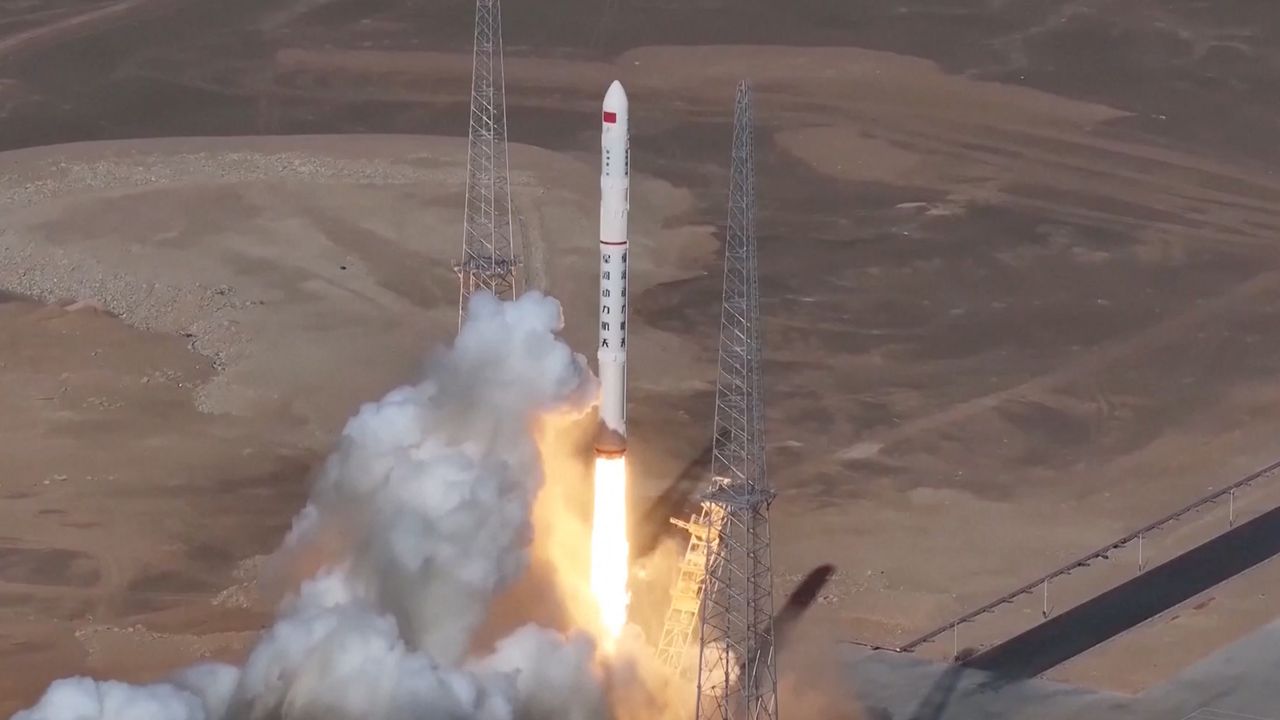
Galactic Energy's Pallas-1 rocket completed its maiden flight on August 31, lifting off successfully and reaching orbit. The Chinese commercial launch provider demonstrated that its new reusable vehicle architecture functions as designed, though the first stage did not perform a powered landing during this initial mission.
The Pallas-1 enters a crowded field of next-generation launch vehicles. SpaceX's Falcon 9 has dominated the reusable rocket market for over a decade, landing its first stages routinely and reflying them dozens of times. Blue Origin's New Shepard achieved brief suborbital spaceflight success. Now China's private sector is accelerating its development of recoverable orbital rockets, with Galactic Energy joining competitors like Relativity Space and ABL Space Systems in the race to reduce launch costs through reusability.
Galactic Energy, founded in 2018, operates under China's regulatory framework for commercial spaceflight. The company previously operated the Ceres-1 solid-fuel launcher, which conducted multiple orbital missions. Pallas-1 represents the firm's pivot toward liquid-fueled, reusable vehicles. The rocket's nameake references the asteroid in classical astronomy, fitting nomenclature for a vehicle designed for repeated missions.
The decision to forego a first-stage landing on debut reflects a conservative approach common among launch providers testing new hardware. SpaceX similarly avoided landing attempts on early Falcon 9 flights, prioritizing payload success and data collection before attempting recovery operations. Recovering a first stage requires precise fuel management, autonomous flight control, and hardware capable of withstanding re-entry heating and deceleration forces. Most operators establish baseline orbital performance before adding recovery complexity.
Pallas-1's successful debut signals China's commitment to competitive pricing in the international launch market. Reusable rockets theoretically slash per-launch costs by eliminating the need to manufacture and qualify new first stages repeatedly. This economic advantage drives technological investment across the commercial space sector globally. Companies achieving rapid, reliable reusability gain market share in a sector increasingly reliant on high flight cadence.
The Chinese government has supported private spaceflight companies through regulatory clarity and occasional direct investment. Unlike the United States approach, where SpaceX operated largely independently through development stages, Chinese commercial providers navigate closer relationships with state enterprises and defense-related oversight. Galactic Energy's progress nonetheless demonstrates that engineering talent and capital can produce sophisticated launch vehicles outside the traditional aerospace establishment.
Future Pallas-1 missions will likely include first-stage recovery attempts once engineers confirm the vehicle's baseline reliability. Planned improvements may include upgraded engines, larger payload capacity, or enhanced reusability features. The rocket competes against SpaceX's Falcon 9, which currently launches more frequently than any other orbital vehicle, plus emerging competitors in India, Europe, and Japan.
Orbital spaceflight remains a demanding enterprise. The successful debut of Pallas-1 proves Galactic Energy mastered the fundamentals. Whether the company can achieve SpaceX's level of operational cadence and reliability over years of sustained operations determines its long-term viability in a market where performance consistency matters as much as engineering prowess.