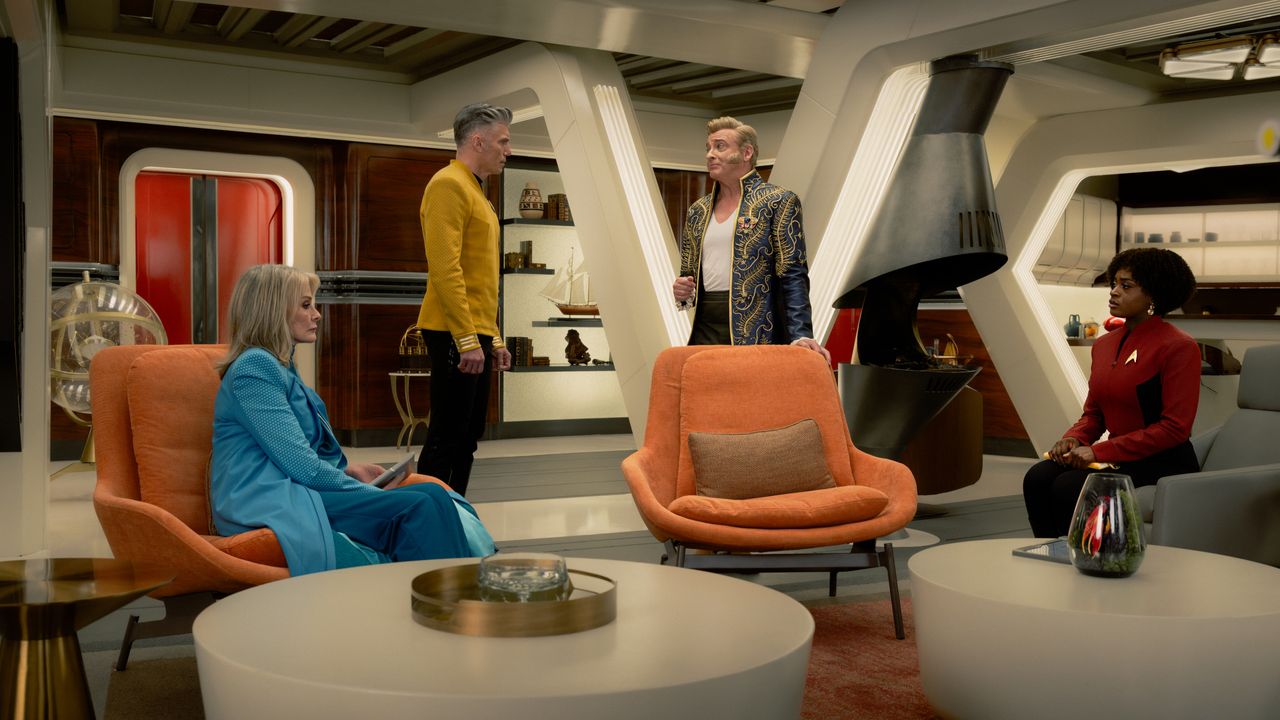
# Star Trek's Soap Opera DNA: Why Strange New Worlds Embraces the Melodrama
Star Trek has always trafficked in interpersonal drama wrapped inside science fiction spectacle. The latest episode of "Strange New Worlds" leans hard into soap opera tropes, but the franchise's long history proves this is no departure from the series' DNA.
The original 1960s series, despite its futuristic setting and philosophical aspirations, relied on emotional conflict between crew members to drive narratives forward. Captain Kirk's romantic entanglements became as central to episodes as the alien threats Enterprise faced. The writers understood that space exploration means nothing without human stakes. Distant nebulae and time paradoxes work only when audiences care about the people navigating them.
"The Next Generation" doubled down on this formula. The Picard-Crusher tension simmered across seven seasons. Data's quest to understand humanity hinged on emotional yearning rather than pure logic. Worf's internal struggle between Klingon warrior culture and Starfleet duty shaped some of the show's most compelling episodes. These weren't distractions from the core mission. They were the core mission.
"Deep Space Nine" pushed further, treating the space station itself like a small town where relationships deepened over seasons. Characters married, divorced, had children, and watched loved ones die. The show borrowed liberally from soap opera playbooks, but with the explicit understanding that this was legitimate storytelling. The Bajoran religious politics, the Cardassian occupation aftermath, the Dominion War all gained weight because viewers had grown attached to fallible people working through complicated problems.
"Voyager" and "Enterprise" continued threading emotional narrative through their adventures. "Discovery" embraced serialization and relationship arcs as core structural elements.
"Strange New Worlds" picks up the "Original Series" thread directly. The show deliberately recreates the feel of 1960s Trek while updating the visual language and production quality. That means Captain Pike navigates command challenges alongside personal demons. His crew members face moral dilemmas that test friendship and loyalty. The show knows it can pair a compelling character moment with time-travel mechanics or alien encounters without one diminishing the other.
The latest episode's soap opera spoof doesn't mock the franchise's history. Instead, it acknowledges what made Star Trek work across decades. The best episodes, from any era, combined genuine stakes for characters with larger conceptual ideas. Kirk's "The City on the Edge of Forever" remains powerful because the audience feels his loss. "The Best of Both Worlds" hangs on Picard's violation and struggle to reclaim himself. These are soap opera beats at their core, executed with intelligence and emotional honesty.
Science fiction fans sometimes dismiss soap opera elements as lowbrow or distracting. But the most enduring television, regardless of genre, centers human connection and consequence. Star Trek understood this from its inception. The franchise never pretended that exploring strange new worlds mattered without caring about the people doing the exploring.
"Strange New Worlds" inherits this tradition openly. The show's willingness to lean into melodrama, even comedically, reflects confidence in the material. Trek has always been a soap opera in space. The latest episode simply makes that explicit.