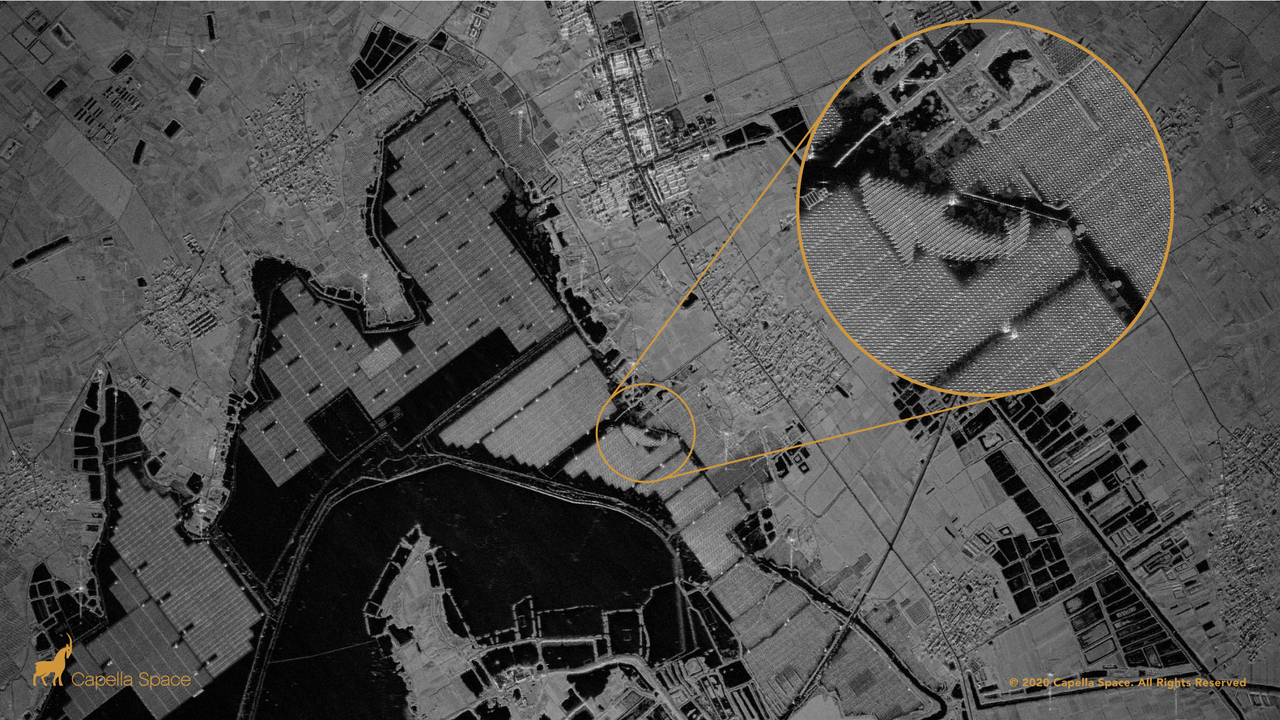
The Earth observation landscape has transformed fundamentally over the past five years. Commercial satellite operators now collect vast quantities of imagery daily, while artificial intelligence processes this deluge of information at speeds and scales impossible for human analysts. This shift reshapes how scientists, governments, and disaster response teams understand our planet, but introduces complex challenges around data access, privacy, and strategic control.
Private companies like Planet Labs, Maxar Technologies, and Rocket Lab's BlackSky operate constellations that capture Earth's surface repeatedly. Planet Labs alone manages roughly 150 small satellites in sun-synchronous orbit, collecting petabytes of imagery annually. These commercial networks complement government systems like NASA's Landsat and the European Space Agency's Copernicus program, which have operated openly for decades under public mandate.
The scale of data collection now exceeds human capacity to analyze. A single Maxar satellite generates terabytes of imagery daily. Enter artificial intelligence. Machine learning models trained on millions of labeled images now detect deforestation, monitor urban expansion, track agricultural cycles, track maritime traffic, and identify infrastructure changes with precision. AI systems identify methane leaks from oil and gas facilities, monitor illegal fishing operations, and assess wildfire progression in near real-time. This automation enables researchers to process years of historical data and generate actionable intelligence within hours rather than months.
The benefits extend across multiple sectors. Insurance companies use AI-analyzed satellite data to assess climate risks and settlement patterns. Conservation organizations track poaching in protected areas across Africa and Southeast Asia. Municipal planners optimize infrastructure development. During natural disasters, AI-processed Earth observation data accelerates damage assessment and emergency response coordination. The 2023 Morocco earthquake and Turkey-Syria earthquakes demonstrated how rapidly private satellite constellations could mobilize, providing damage maps within days.
Yet this democratization of Earth observation creates governance tensions. Private satellite operators control unprecedented planetary surveillance capability. Unlike Landsat's open data policy, some commercial providers restrict imagery access, creating information asymmetries between wealthy nations and developing countries. Intelligence agencies weaponize commercial satellite data. Authoritarian governments use observation capabilities for population monitoring and suppression.
Data privacy poses another challenge. High-resolution commercial satellites now distinguish individual vehicles and people in real-time. This technology enables targeted surveillance of protest movements, refugee camps, and critical infrastructure. No international framework currently governs commercial satellite imagery, leaving regulation fragmented across national jurisdictions with vastly different standards.
AI introduces additional complications. Training data bias skews algorithms toward analyzing North American and European landscapes more accurately than African or Asian regions. Proprietary AI systems operated by private companies lack transparency, making it difficult for independent researchers to verify results or challenge conclusions.
The scientific community recognizes these dynamics require governance evolution. NASA and ESA increasingly partner with commercial operators to access data while maintaining open-science principles. The United Nations discusses Earth observation regulation. Industry groups develop ethical guidelines. International Earth observation policy remains underdeveloped relative to the technology's capabilities and impact.
The private satellite and AI revolution accelerates understanding of Earth systems, climate change, and human-environment interactions. Harnessing these tools responsibly requires balancing commercial innovation with equitable access, privacy protections, and transparent governance structures that do not yet exist.