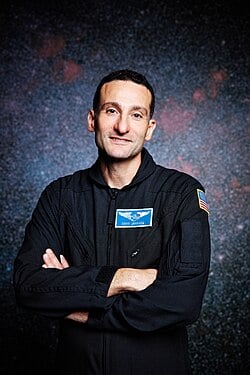
Dr. Eiman Jahangir, a cardiologist from Houston, crossed the Kármán line aboard a Blue Origin New Shepard vehicle in August 2024, becoming the world's first spacefaring commercial cardiologist and an astronaut. His journey is documented in a new book, "A Heart for Space," which offers insights relevant to future space travelers and the commercialization of spaceflight.
Jahangir's flight represents a watershed moment in the democratization of space access. Blue Origin's New Shepard suborbital vehicle, which conducts brief journeys beyond 100 kilometers altitude, has enabled private citizens to experience spaceflight without the years of military or NASA training traditionally required of astronauts. This shift reflects a broader transformation in the space industry over the past two decades, where commercial providers now offer pathways to space that bypass governmental space agencies entirely.
The significance of Jahangir's achievement extends beyond personal accomplishment. As a physician specializing in cardiology, his experience in the microgravity environment provides data points for medical professionals considering spaceflight. His medical background also positions him uniquely to observe and document physiological responses to suborbital conditions. The cardiovascular system behaves differently in weightlessness, making a cardiologist's firsthand observations particularly valuable for understanding how the human body responds to space conditions.
Blue Origin, founded by Jeff Bezos, designed New Shepard specifically for brief recreational spaceflights lasting roughly 10 minutes. The vehicle takes passengers to the edge of space where they experience a few minutes of weightlessness before returning to Earth. Unlike orbital missions, which require complex life support systems and multi-day missions, New Shepard prioritizes rapid turnaround and safety. Each flight carries a small number of passengers alongside a capsule operator.
Jahangir's documentation of his pre-flight preparation, the actual spaceflight experience, and post-flight reflections in "A Heart for Space" provides practical guidance for prospective commercial astronauts. His medical expertise allows him to describe physiological sensations in clinical terms while remaining accessible to general readers. For future space tourists and private astronauts, his account addresses common concerns about health risks, training requirements, and the psychological impact of crossing the Kármán line.
The commercialization of spaceflight has dramatically lowered barriers to access. Whereas NASA astronauts undergo years of intensive preparation at the Johnson Space Center, commercial flights require substantially shorter training periods. SpaceX's Inspiration4 mission in 2021 flew four private citizens on a multi-day orbital mission. Virgin Galactic has conducted suborbital spaceflights since 2023. Blue Origin's New Shepard continues regular commercial flights.
Jahangir's story exemplifies how space has transitioned from an exclusive domain of government agencies and military test pilots to a realm accessible to professionals across diverse fields. His perspective as a heart specialist adds to the growing body of knowledge about human performance in space environments contributed by other commercial astronauts and space tourists.
As the commercial space industry expands, first-person accounts from educated professionals like Jahangir become increasingly valuable. They bridge the gap between technical space operations and public understanding. His book contributes to literature that documents this historic shift while providing practical information for the next generation of space travelers seeking to follow his path beyond the Kármán line.