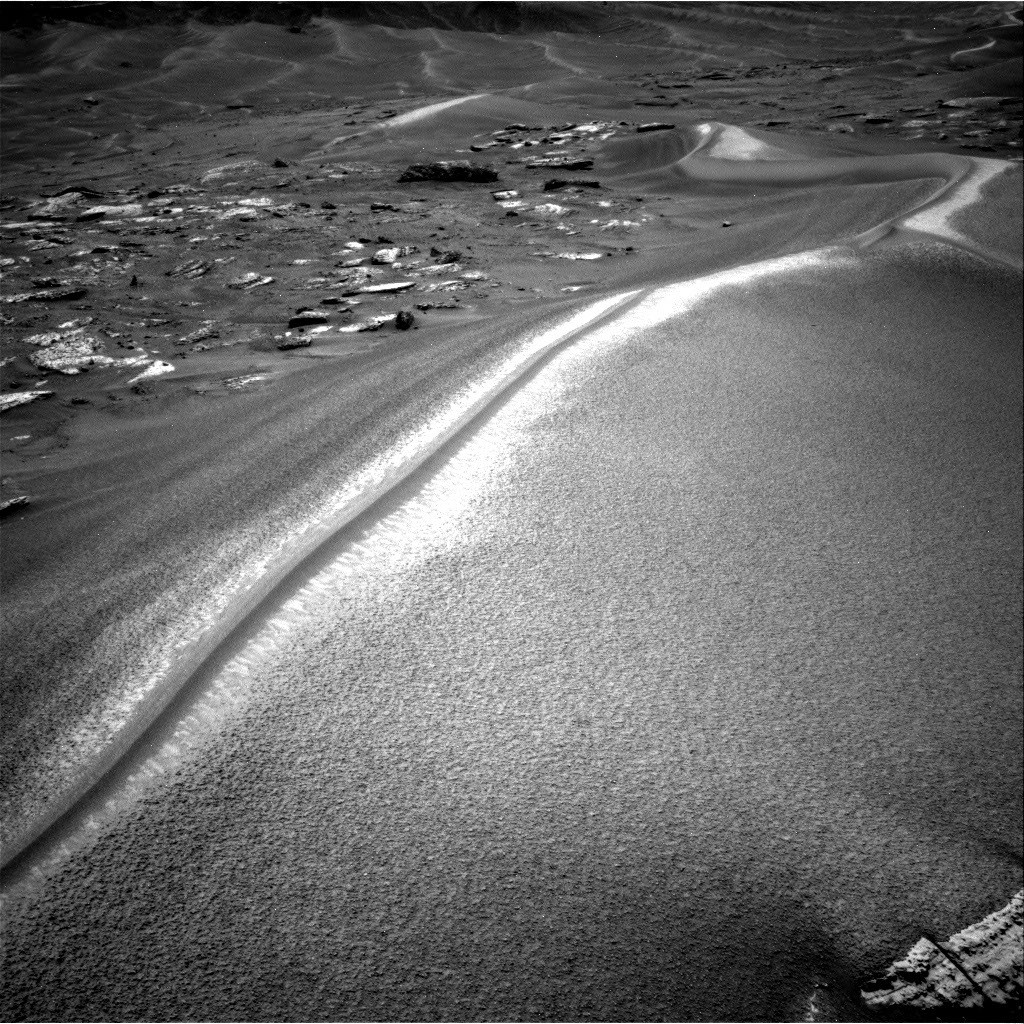
NASA's Curiosity rover has now logged 5,000 Martian days on the surface of Mars, marking a historic milestone in planetary exploration. The mission, which launched in 2011 and touched down inside Gale Crater on August 5, 2012, has far exceeded its original two-year operational window and continues to conduct cutting-edge science investigations.
The rover's longevity stands as testament to exceptional engineering and adaptive management by NASA's Jet Propulsion Laboratory. Curiosity was designed to assess Mars' habitability and gather data on the planet's radiation environment, atmospheric composition, and geological history. Over its thirteen-plus years of operation, the rover has fundamentally reshaped our understanding of Mars as a world that once hosted liquid water and possessed atmospheric conditions potentially suitable for microbial life.
The current mission phase finds Curiosity conducting mountaineering work of genuine scientific consequence. The rover has ascended more than one kilometer in elevation from its initial landing site on the floor of Gale Crater, steadily climbing the slopes of Mount Sharp (Aeolis Mons), a 5.5-kilometer-tall peak at the crater's center. This climb has allowed Curiosity to traverse rock layers that represent distinct periods of Mars' geological history, each layer encoding information about the planet's climate and habitability conditions from different epochs.
William Farrand, Senior Research Scientist at the Space Science Institute, noted the significance of this achievement in his mission report. The thousand-meter elevation gain represents more than a physical accomplishment. It represents access to a vertical slice of Mars' geological record, allowing scientists to study how the planet's environment evolved over billions of years. Each layer tells a story about atmospheric thickness, water availability, and chemical conditions that either supported or precluded life.
Curiosity's instruments remain operational and productive. The rover's chemistry and camera suite (ChemCam) continues to provide detailed compositional data through laser spectroscopy, while the Sample Analysis at Mars (SAM) instrument, the rover's onboard laboratory, processes rock and regolith samples to detect organic compounds and measure isotopic ratios. These measurements have revealed complex organic chemistry in Martian rocks and detected methane fluctuations in the Martian atmosphere, both findings with profound implications for understanding Mars' past.
The rover's continued operation comes as NASA prepares for human missions to Mars. The data Curiosity collects on radiation exposure, dust properties, and resource availability directly informs planning for crewed surface operations. Each day of operation generates information that mission planners and engineers apply to protecting astronauts and enabling long-duration exploration.
The achievement of 5,000 sols underscores the resilience of Mars rovers and the scientific return possible from sustained, long-term planetary exploration. Curiosity's record surpasses the earlier Opportunity rover, which operated for 4,687 sols before a global dust storm ended its mission in 2018. As Curiosity continues its climb up Mount Sharp, it remains at the cutting edge of Mars science, writing new chapters in humanity's knowledge of the red planet.