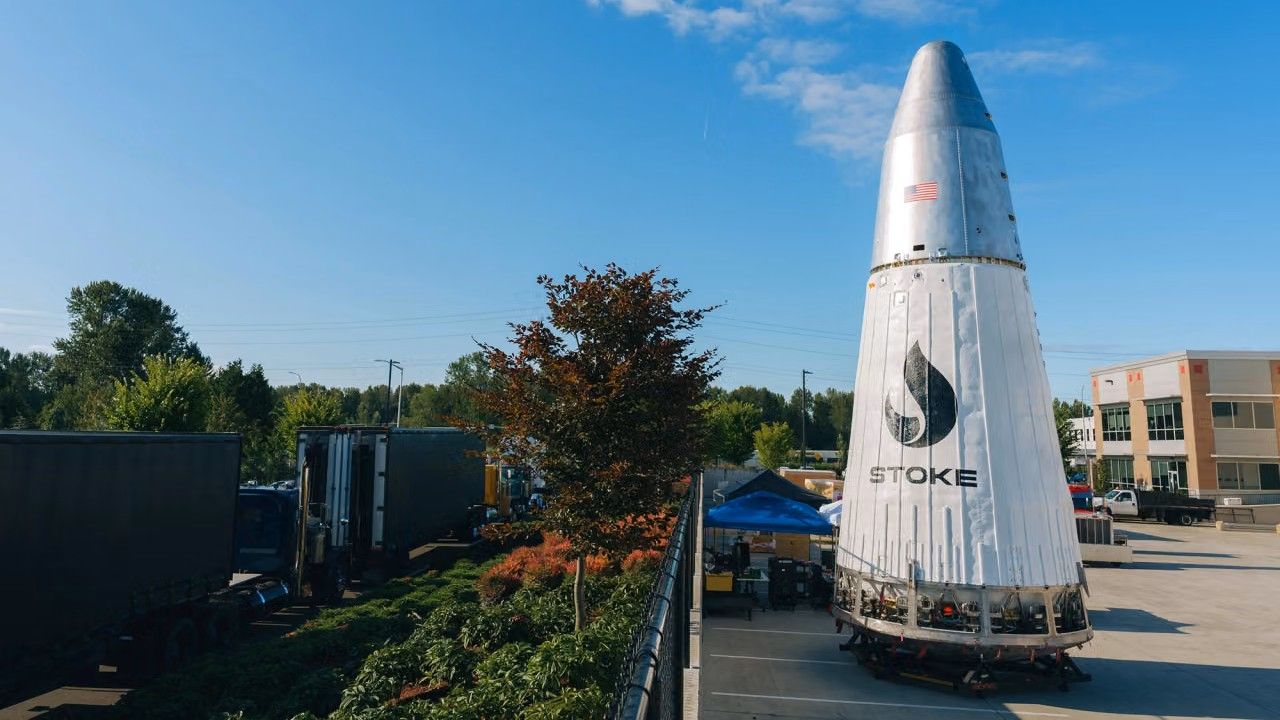
Stoke Space has secured $1 billion in new funding to accelerate development of Nova, a fully reusable rocket system designed to operate at launch cadences approaching daily flights. The funding round supports the company's path toward what it describes as an "early 2027" first orbital flight, a timeline that positions Stoke as a competitor in the rapidly expanding commercial launch sector.
The Nova Block 2 variant, unveiled as part of the funding announcement, targets a 15-ton payload capacity to low Earth orbit. This capability slots Nova into the medium-lift category, occupying competitive space between SpaceX's Falcon 9 and larger heavy-lift systems. Stoke's emphasis on full reusability across all vehicle components distinguishes its engineering approach from competitors that retain expendable stages or components.
Stoke Space's funding milestone reflects investor confidence in a particular model of rocket economics. The company has pitched reusability not as an incremental improvement but as a fundamental restructuring of launch costs. Daily or near-daily flight rates depend on rapid vehicle turnaround, minimal refurbishment requirements between flights, and reliable recovery procedures. These targets remain theoretical for most commercial operators. SpaceX's Falcon 9 has achieved the highest flight rates in the industry, but complete reusability across all stages remains incomplete even after two decades of development.
The company's technical approach relies on engine and airframe designs optimized specifically for reuse. Stoke has not disclosed full technical specifications for Nova, but the emphasis on "fully reusable" suggests critical differences from Falcon 9, which still expends its second stage. Achieving that objective requires solutions to heat management during reentry, structural durability across multiple flight cycles, and propellant efficiency that permits both ascent and powered descent on every flight.
Stoke Space emerged from stealth in 2021 with backing from Khosla Ventures and other venture capital firms. The company has competed for NASA contracts and U.S. Space Force funding, signaling its alignment with government priorities around responsive space and assured access to orbit. A successful first launch would validate Stoke's technical approach and potentially attract additional customers beyond initial anchor tenants.
The 2027 target represents aggressive scheduling. SpaceX required over a decade between Falcon 9's first test flight in 2010 and routine reuse of the first stage booster. Blue Origin's New Shepard conducted suborbital flights for years before Orbital operations. Stoke's timeline assumes successful completion of design, manufacturing, testing, and regulatory approval from the Federal Aviation Administration's Office of Commercial Space Transportation within roughly three years.
Success with Nova would reshape the commercial launch landscape by introducing a new pricing model and operational cadence. Failure or delays would reinforce existing market leaders including SpaceX, Rocket Lab, and emerging competitors like Axiom Space's launch derivatives. The stakes for venture capital returns are correspondingly high.
The company's funding round underscores investor appetite for moonshot launch concepts despite demonstrated technical obstacles. Stoke Space joins Blue Origin, Relativity Space, and others in pursuing transformative rocket technologies that promise to break through cost barriers that have limited access to orbit for decades.