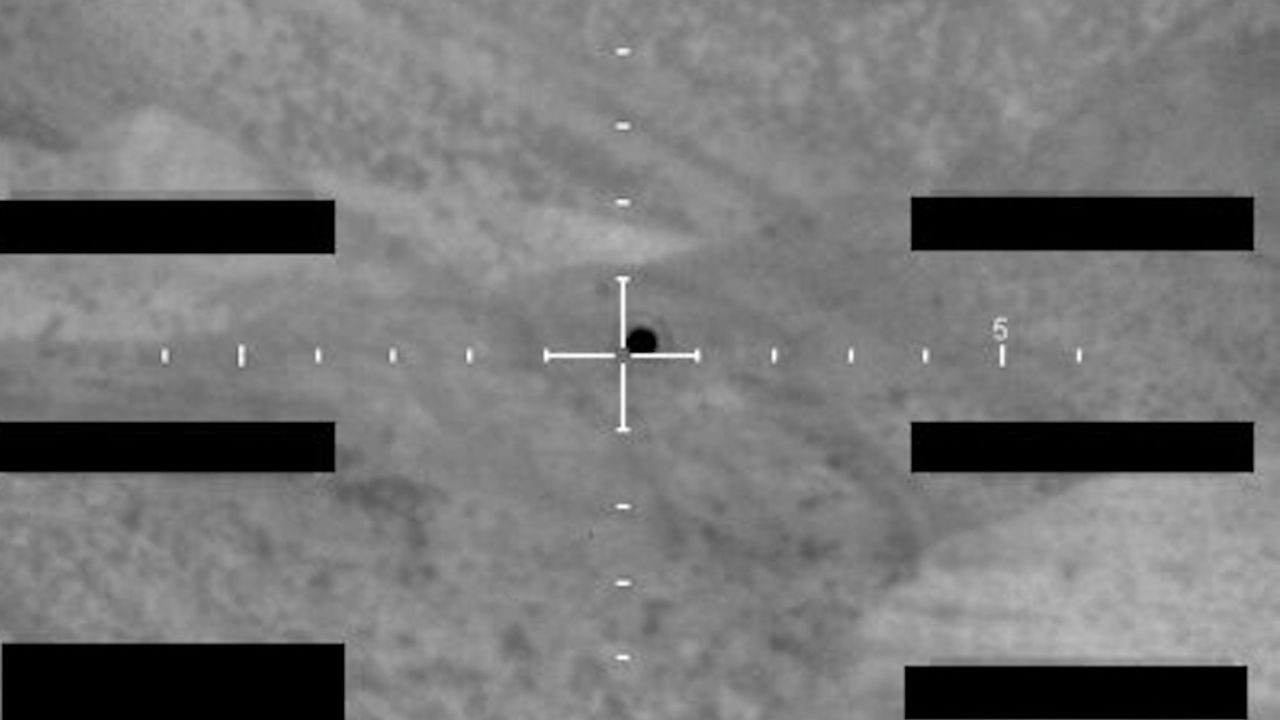
The White House has established a new institutional framework dedicated to investigating unidentified anomalous phenomena, or UAP, with the creation of the UAP Science Advisory Council. The council convened recently at the Office of the Director of National Intelligence, signaling a shift toward formal scientific scrutiny of reports that have eluded conventional explanation.
This council represents a departure from decades of informal or classified handling of UAP incidents. The structure places civilian scientific expertise at the center of what was previously a scattered collection of military observations, pilot reports, and classified government assessments. The Office of the Director of National Intelligence chairs the effort, indicating that UAP investigation now carries the weight of the intelligence community's institutional authority.
The council's formation follows a series of congressional hearings and government reports that brought UAP into mainstream policy discussions. In 2021, the Pentagon released an unclassified assessment acknowledging that military personnel had observed aircraft and objects exhibiting flight characteristics inconsistent with known technology. These sightings occurred over restricted airspace, including near nuclear weapons facilities and naval vessels. The incidents raised both national security and scientific questions that demanded institutional response.
The White House chair of the council stated that the government operates with sincerity in its efforts to understand these phenomena. This framing matters. For decades, official dismissal or ridicule surrounded UAP reports, causing pilots and military personnel to avoid formal documentation. By elevating the inquiry to White House level with scientific credibility, the administration removes the stigma that once silenced witnesses.
The council's work involves several distinct challenges. First, it must standardize data collection across military services and civilian aviation. Pilots and sensor operators use different instruments, training, and reporting protocols. Second, it must distinguish between genuine unknowns and misidentified conventional phenomena. Atmospheric effects, classified military aircraft, drones, and sensor artifacts account for most sightings when properly analyzed. Third, it must assess whether any observations indicate technology fundamentally beyond current human capability.
The council draws from the National Academies of Sciences, engineering, and medicine. These institutions bring peer-reviewed credibility to what remains a speculative field. Scientists participating in the council maintain rigorous standards while remaining open to data that challenges existing frameworks. This balance separates scientific inquiry from pseudoscience or conspiracy thinking.
Congress has demanded transparency on UAP efforts. The Intelligence Authorization Act now requires regular reporting to Congress on UAP incidents. The Department of Defense established a formal UAP reporting mechanism for military personnel. These structural changes create accountability and incentivize honest documentation rather than suppression of anomalous observations.
The council's investigations focus on several categories. Some reported objects demonstrate flight characteristics that defy current physics understanding. Others appear in sensitive airspace where foreign adversaries operate. Still others lack conventional explanation due to incomplete data. Each category demands different investigative approaches.
For the broader space and aviation communities, this council legitimizes the study of unexplained phenomena as a scientific endeavor. Whether the council ultimately identifies terrestrial, atmospheric, or genuinely exotic explanations, its existence affirms that observation without immediate understanding deserves institutional examination rather than dismissal. The work ahead involves converting isolated pilot reports and sensor data into systematic scientific knowledge.