NASA and private space agencies have long identified in-situ resource utilization, or ISRU, as essential to establishing sustained human presence on Mars. A new breakthrough in producing rocket fuel from the Martian atmosphere represents a major step toward that goal, potentially cutting the mass that missions must carry from Earth by orders of magnitude.
The Martian atmosphere consists primarily of carbon dioxide at roughly 95 percent concentration, with trace amounts of nitrogen and argon. Scientists have demonstrated methods to extract CO2 and convert it into methane and oxygen, the propellant combination used by SpaceX's Raptor engines and planned for NASA's lunar Gateway station. By manufacturing fuel on Mars rather than launching it across 140 million to 250 million miles of space, future missions could leave Earth with far lighter payloads, reducing launch costs and enabling longer, more ambitious expeditions.
The physics underlying this conversion relies on the Sabatier reaction, a chemical process that combines hydrogen with carbon dioxide to produce methane and water. Researchers have been refining electrolysis techniques to generate hydrogen from Martian water ice or atmospheric moisture, then combining it with extracted CO2. Recent laboratory tests have demonstrated improved efficiency in this process, bringing the technology closer to deployment-ready systems.
The mass savings are transformative for Mars exploration strategy. A crewed mission to Mars typically requires hundreds of tons of propellant for the return journey to Earth. Manufacturing that fuel locally reduces the total launch mass required from Earth, which translates directly into fewer heavy-lift rocket flights, lower mission costs, and greater feasibility for human landings. For every ton of fuel produced on Mars, a mission saves roughly three to four tons of Earth launch capacity due to the exponential fuel requirements of rocket propulsion.
NASA's Mars 2020 Perseverance rover carried the MOXIE instrument, which demonstrated CO2-to-oxygen conversion in actual Martian conditions. Those experiments provided crucial validation that the concept works in the harsh Red Planet environment, with its thin atmosphere, extreme temperatures, and dust storms. MOXIE successfully produced oxygen multiple times during the rover's primary mission, proving the feasibility of similar systems at larger scales.
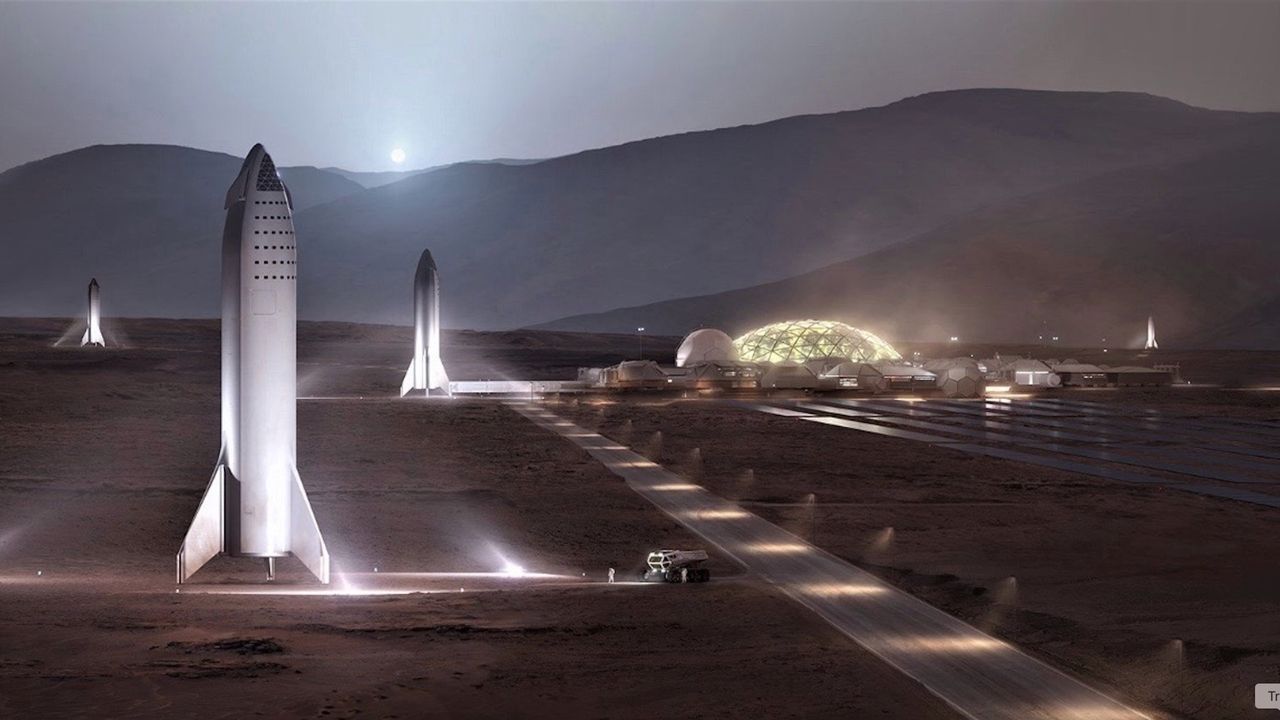
SpaceX has similarly prioritized ISRU development as part of its long-term Mars colonization strategy outlined by founder Elon Musk. The company envisions a fleet of Starship vehicles eventually establishing a self-sustaining settlement, with fuel production on Mars enabling continuous resupply and deeper exploration missions across the planet.
Challenges remain in scaling these systems for operational use. Dust contamination, extreme cold, reactor efficiency under Martian conditions, and long-term material durability all require engineering solutions. Research teams at universities and government laboratories continue testing prototypes that can withstand the Red Planet's unforgiving environment.
This breakthrough accelerates the timeline for human exploration beyond Earth orbit. Within the next decade, NASA's Artemis program aims to return humans to the Moon, where similar ISRU technologies could support lunar base operations using ice deposits in permanently shadowed craters. Success on the Moon serves as proof of concept for Mars missions in the 2030s and 2040s.
The ability to manufacture fuel from planetary atmospheres represents a fundamental shift in space exploration economics. Rather than treating Mars as a remote destination requiring Earth-supplied resources, it becomes a staging point for deeper space operations, with fuel and oxygen extracted from the planet itself.