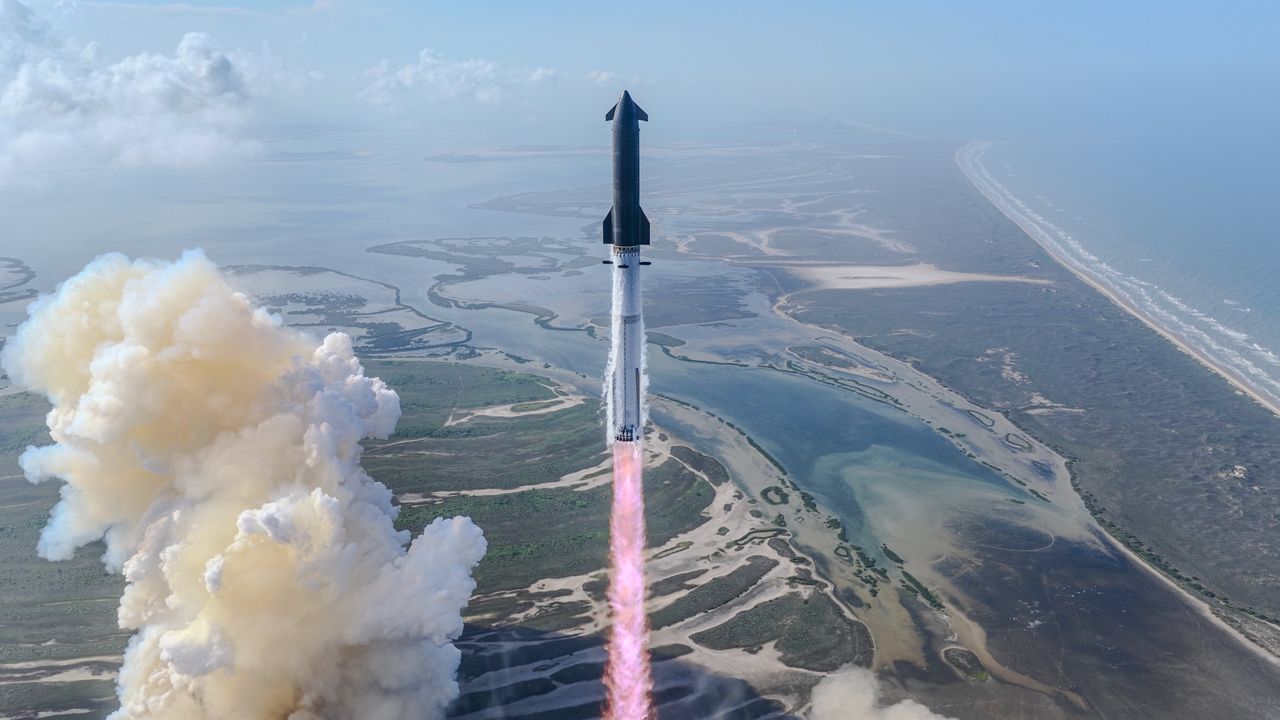
SpaceX has scheduled the third integrated flight test (IFT-3) of Starship for September 22, marking the first attempt to reach orbital velocity with the fully stacked vehicle. The launch represents a major inflection point for the company's most ambitious spacecraft development program to date.
The mission will test Starship's ability to complete a full orbital trajectory. Unlike the first two integrated flight tests conducted in April and November 2023, which focused on achieving supersonic speeds and testing booster catch mechanisms before vehicles reached space, IFT-3 aims for sustained orbital flight lasting approximately 10 hours. This extended timeline allows SpaceX to evaluate the spacecraft's behavior across multiple phases of powered and unpowered flight.
The payloaddelivered to orbit will consist of 26 Starlink satellites, demonstrating Starship's practical capability as a heavy-lift launch vehicle. This payload selection serves dual purposes. It validates the spacecraft's ability to safely deploy a commercially valuable cargo during a test flight, while simultaneously advancing SpaceX's Starlink constellation expansion. The 26 satellites represent a full payload manifest for Starship's current operational capacity, though earlier variants could accommodate larger numbers.
Starship's development path has required rapid iteration following two previous integrated flight tests. The April 2023 launch resulted in a rapid unscheduled disassembly when the vehicle lost thrust vector control and structural integrity during ascent. November's IFT-2 achieved higher altitudes and successfully demonstrated booster catch by the launch tower's mechanical arms, called "chopsticks," but the upper stage underwent an uncontrolled entry and breakup over the Indian Ocean. Each setback informed design modifications and procedural adjustments for the next attempt.
September 22 will test critical systems that previous flights could not adequately evaluate. The booster will attempt a second catch by the tower arms following separation. The upper stage must ignite its engines in space and perform a controlled deorbit maneuver, positioning itself for a targeted splashdown in the Indian Ocean. Starship must survive atmospheric reentry, the most thermally stressful phase of the flight, while maintaining structural integrity.
Success on this mission establishes operational readiness for NASA's Artemis lunar program, which depends on Starship as its primary lunar lander. The human-rated version, called Starship HLS (Human Landing System), must demonstrate reliable orbital operations before transporting astronauts to the Moon's surface. Each successful test flight compresses the schedule for Artemis missions planned for the latter half of this decade.
The launch also carries consequences for SpaceX's internal development timelines. Starship represents the foundation for the company's Mars transportation architecture. Regular orbital operations establish the flight rate and operational reliability necessary to conduct in-space refueling, long-duration missions, and eventually crewed deep-space operations. Every successful flight builds confidence in the vehicle's systems and validates engineering decisions made during its accelerated development.
Weather patterns and technical readiness will influence final launch timing near September 22. The company maintains launch windows across multiple days to accommodate these variables. If IFT-3 achieves orbit and successfully deploys its Starlink payload, SpaceX will have demonstrated the first fully integrated flight of a vehicle designed to become humanity's primary deep-space transportation system.