# Deep Within the Carina Nebula, Stellar Nurseries Reveal the Universe's Grand Design
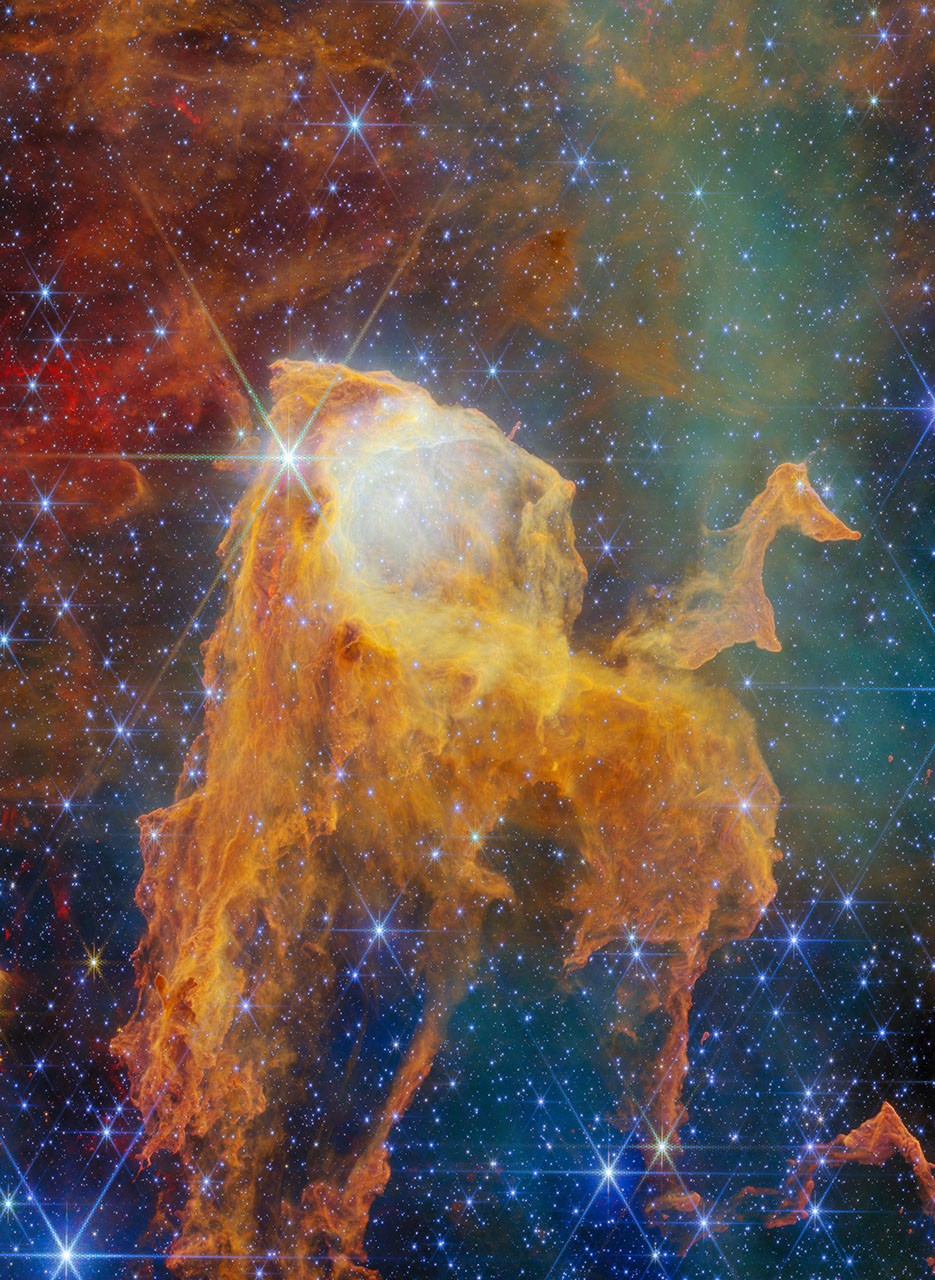
NASA's Astronomy Picture of the Day program showcases a region of intense star formation nestled within the Carina Nebula, one of the most luminous and massive stellar nurseries in our galaxy. This observation captures the violent beauty of cosmic creation, where gravity collapses vast clouds of gas and dust into newborn stars while radiation from young, hot stars carves spectacular cavities into surrounding material.
The Carina Nebula sprawls across roughly 460 light-years of space in the southern sky constellation Carina. Within this stellar factory, massive stars ignite in rapid succession. Their ultraviolet radiation ionizes hydrogen gas, creating the glowing pink nebular clouds visible in deep-space imagery. Simultaneously, stellar winds and eventual supernova explosions sculpt the nebula into pillars, globules, and shock-fronted structures. Each feature marks a different stage in the cycle of star birth and death.
The imagery presented in today's Astronomy Picture of the Day likely originates from space-based observatories such as the Hubble Space Telescope or ground-based facilities like the European Southern Observatory's imaging surveys. These instruments capture light across multiple wavelengths, revealing structures invisible to human eyes. Visible light shows the bright nebulosity and stellar associations. Infrared observations penetrate dust clouds to reveal embedded protostars still gathering mass from their surroundings. X-ray data highlights the hottest stellar winds and high-energy events.
For astronomers, these observations answer fundamental questions about how stars form in clusters. Do massive stars ignite first, disrupting the formation of smaller companions? How does feedback from newborn stars regulate the overall star formation rate within a nebula? The Carina Nebula provides a nearby laboratory for testing models of stellar evolution developed through decades of theoretical work.
The region also harbors noteworthy individual objects. Eta Carinae, one of the most luminous and massive stars known, resides within the Carina Nebula. This binary system exhibits extreme variability and expelled massive shells of material in eruptions during the 19th century. Studying Eta Carinae and its surroundings helps astronomers understand the lives of the most extreme stars in the universe, objects so massive they burn through their fuel in mere millions of years before exploding as supernovae.
The Carina Nebula sits approximately 7,600 light-years distant from Earth, placing it well within our Milky Way galaxy. Its prominence in the southern sky has made it a target of continuous observation since the advent of telescopic astronomy. Each new generation of space telescope reveals finer details, uncovering smaller protostars, measuring the composition of nebular gas, and tracking the dynamical evolution of stellar associations over years and decades.
The designation "treasure chest" reflects the abundance of astrophysical phenomena concentrated in this single region. Stellar nurseries like Carina Nebula represent the birthplaces of stars that will eventually populate the galaxy, seed planetary systems, and potentially harbor worlds where life could emerge. Understanding these regions informs our knowledge of cosmic chemistry, stellar dynamics, and the long-term evolution of galaxies themselves.