# Passion Meets Precision at NASA's Flight Research Lab
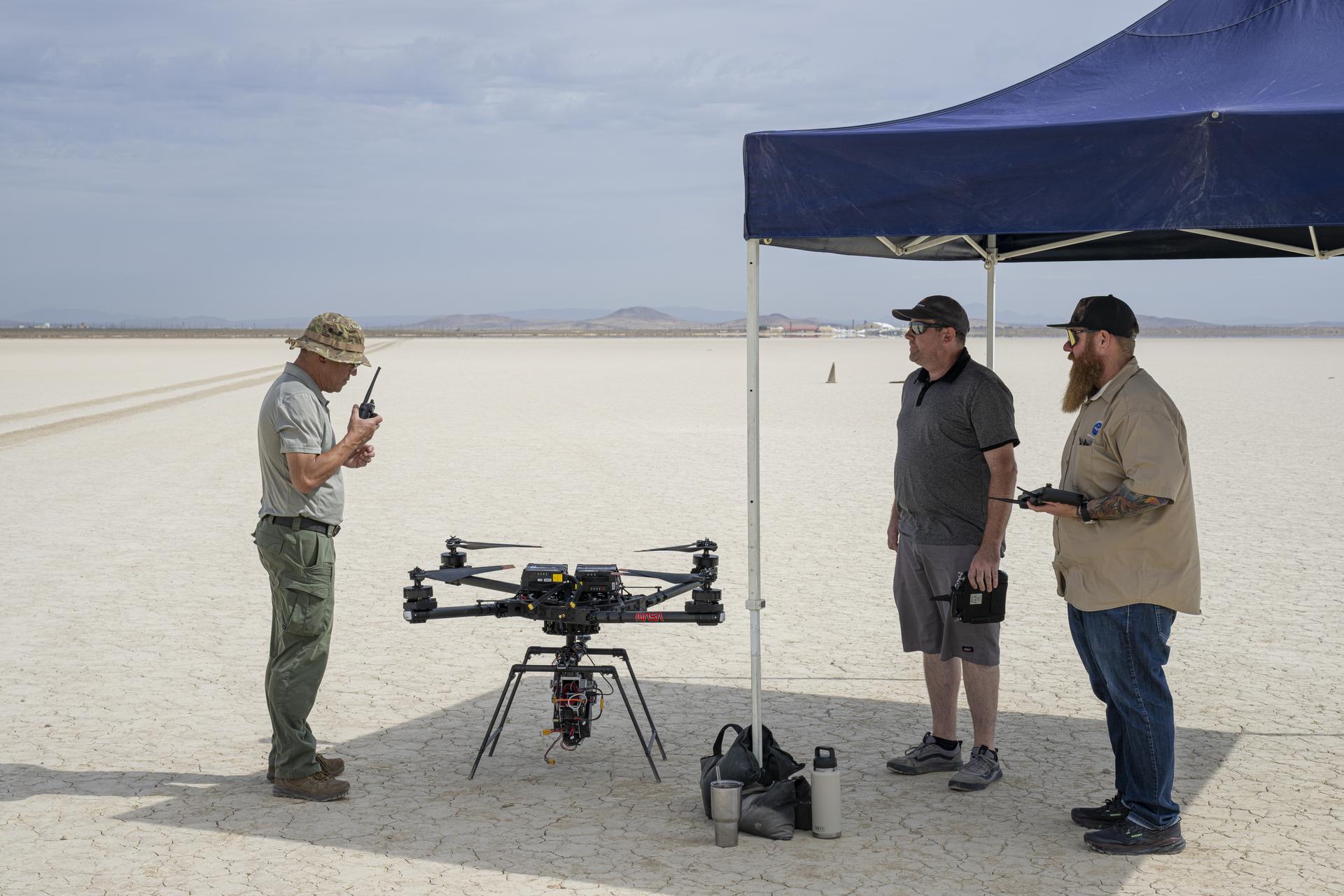
Derek Abramson, Justin Hall, and Justin Link spent their early years in garages and basements building radio-controlled aircraft, testing aerodynamic concepts, and competing at hobby events. Today, these three engineers run NASA's Dale Reed Subscale Flight Research Laboratory at Armstrong Flight Research Center in California, where that same hands-on experimentalism drives cutting-edge aerospace innovation at a scale that bridges hobby engineering and full-scale flight testing.
The Dale Reed lab represents a unique operational philosophy within NASA. Rather than moving directly from computer simulations to expensive full-scale prototypes, the team uses subscale aircraft to rapidly test, validate, and refine novel designs and control systems. This middle ground catches problems early, reduces development costs, and accelerates the path from concept to operational aircraft.
Subscale testing has deep roots in aerospace. The method allows engineers to explore unconventional configurations, test new materials, validate autonomous flight software, and gather real-world aerodynamic data without risking billion-dollar hardware or lengthy development timelines. At Armstrong, the lab has become a proving ground for concepts that feed directly into NASA's broader exploration and aeronautics missions.
The laboratory takes its name from Dale Reed, an Armstrong researcher who pioneered subscale flight testing in the 1970s and 1980s. Reed developed the Gossamer Condor and Gossamer Albatross, human-powered aircraft that demonstrated revolutionary approaches to ultralight flight. His methodology of testing at smaller scales first established a template that NASA researchers continue to refine today.
The current team leverages advanced sensors, high-speed cameras, telemetry systems, and real-time data analysis that would have astounded Reed's generation. Modern subscale aircraft carry accelerometers, gyroscopes, pressure transducers, and GPS units that stream hundreds of data points per second to ground stations. Machine learning algorithms now process flight data and identify aerodynamic signatures that would take weeks to extract manually.
This work connects directly to NASA's current priorities. Subscale testing supports research into electric propulsion systems, advanced materials for aircraft structures, autonomous flight systems for both air and space missions, and unconventional aircraft designs optimized for efficiency or specific operational environments. Results from the lab inform full-scale development of everything from crewed experimental aircraft to high-altitude reconnaissance platforms and future aerial vehicles for Mars exploration.
The personal investment that Abramson, Hall, and Link bring matters. Engineers who grew up building and flying their own aircraft bring intuition about what works in practice, not just on paper. They understand failure modes viscerally. They know how to troubleshoot a system when instruments fail and ingenuity becomes your best tool. That mentality accelerates problem-solving and fosters a culture where controlled risk-taking and rapid iteration are valued.
NASA's approach to subscale flight research also reflects broader industry trends. Commercial companies increasingly use small-scale testing for drone development, electric aircraft designs, and autonomous systems. The methodologies developed at Armstrong ripple outward through academic partnerships, contractor collaborations, and published technical papers that shape how the entire aerospace sector approaches vehicle development.
The Dale Reed lab ensures that passion and precision coexist. The engineers running it built their first aircraft because they loved flight. Now they build them to move aerospace forward. That combination, tested and refined across decades, produces results that matter for exploration, safety, and the next generation of aircraft and spacecraft.