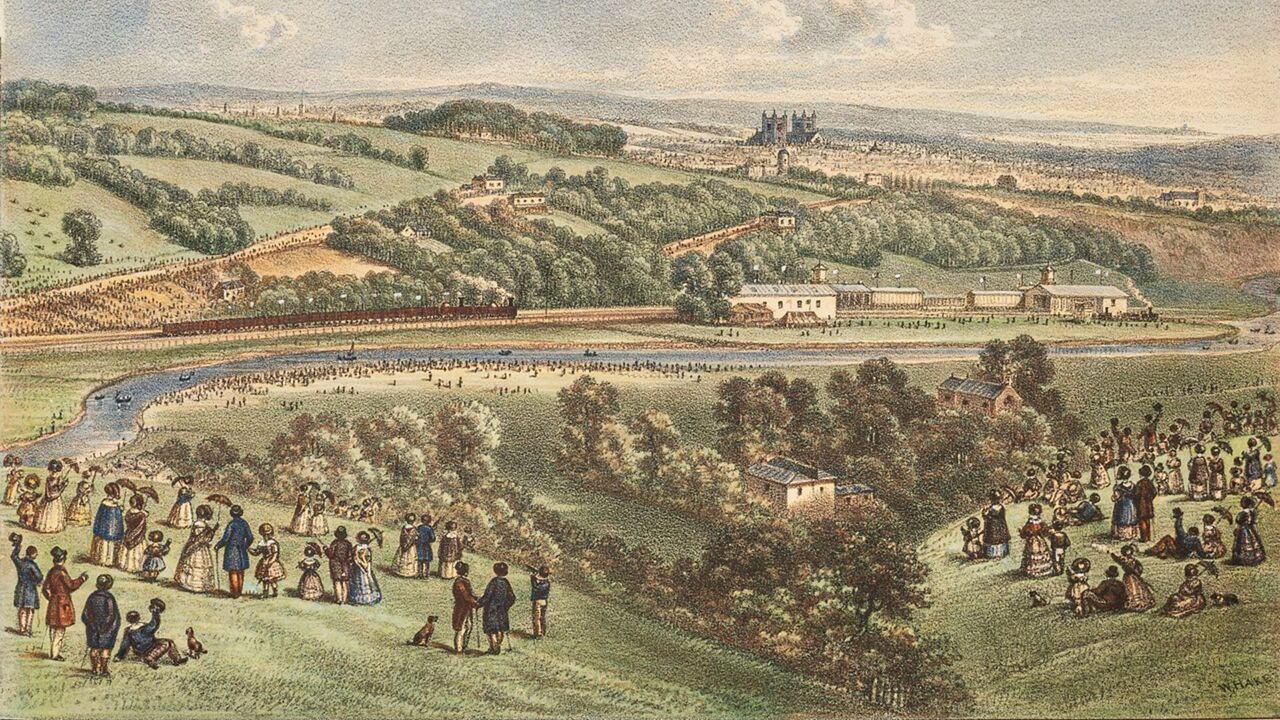
A geomagnetic storm in 1848 induced electrical currents into telegraph wires across Britain, disrupting railway operations and marking one of the earliest documented instances of space weather interfering with human infrastructure. The incident delayed a train on one of the nation's pioneer railway lines by 16 minutes, a seemingly minor disruption that reveals how vulnerable technological systems were, and remain, to solar activity.
Scientists studying historical records have uncovered this Victorian-era space weather event through careful analysis of telegraph operator logs and railway records. The geomagnetic disturbance occurred when a coronal mass ejection from the Sun reached Earth's magnetosphere, compressing the magnetic field and triggering currents in conductive systems on the ground. Telegraph networks, which relied on long metal wires strung across the landscape to transmit messages, proved particularly susceptible to these induced electrical surges.
The 1848 incident carries implications beyond historical curiosity. It demonstrates that space weather poses a genuine operational threat to infrastructure dependent on electrical conductivity. Telegraph systems of the 19th century functioned as the digital networks of their era, transmitting critical information for railway operations, commerce, and government. A 16-minute delay may sound trivial by modern standards, but it represented a tangible failure of coordinated transportation systems during a period when railways were transforming society and economy.
Today's technological landscape faces exponentially greater vulnerability. Power grids, satellite communications, GPS navigation systems, and financial networks all depend on hardware and signals susceptible to geomagnetic disturbance. A severe space weather event comparable to the 1859 Carrington Event would cause cascading failures across multiple infrastructure sectors simultaneously, with economic impacts estimated in the trillions of dollars.
The research team reconstructed this 1848 storm through detective work in historical archives, cross-referencing telegraph operator notes with astronomical observations and railway timetables. This methodical approach reveals patterns in space weather events that predate instrumental satellite measurements. Scientists can extend our understanding of geomagnetic storm frequency and intensity further back in time by examining historical records, allowing better statistical modeling of extreme events that occur only once every century or more.
Understanding the frequency and severity of major geomagnetic storms matters for infrastructure planning. Space agencies and national governments increasingly monitor solar activity through satellites like NOAA's Space Weather Prediction Center and ESA's Heliospheric Observatory (SOHO). Early warning systems for coronal mass ejections provide hours to days of advance notice, allowing operators to take protective measures such as reducing grid loads or repositioning satellites.
The 1848 railway delay exemplifies how solar phenomena reach through interplanetary space to touch human civilization on Earth. Telegraph operators of the era experienced firsthand what modern researchers now quantify in electromagnetic measurements. That historical record preserves evidence of a space weather event that would otherwise vanish into archival obscurity, offering contemporary scientists calibration points for understanding extreme solar storms and their terrestrial consequences.