# Heat Dome Sweeps Central and Southern U.S. as Summer Transitions to Fall
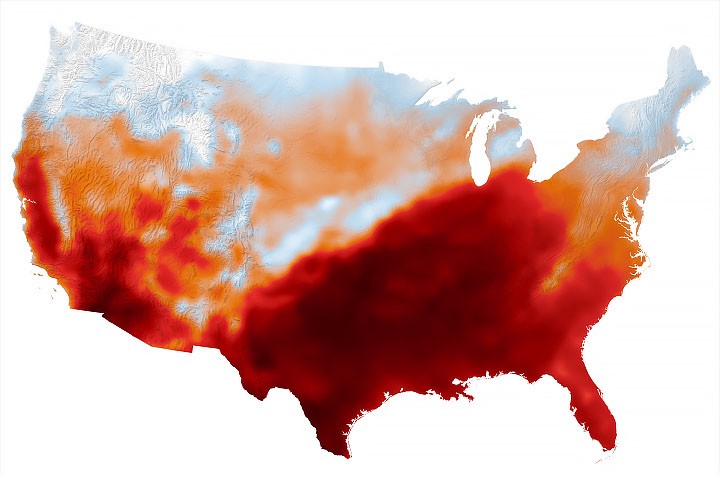
A massive heat dome settled over the central and southern United States in late summer, shattering temperature records across multiple states as the autumnal equinox approached. NASA's Earth observation systems tracked the extreme weather event, documenting widespread heat anomalies that pushed thermometers well above historical norms during what should have been the cooling season's onset.
The heat dome formed as a ridge of high pressure aloft remained anchored over the region, trapping warm air masses and preventing typical late-summer cooling patterns. This atmospheric configuration compressed air into the lower atmosphere, causing temperatures to spike dramatically. NASA satellites measured surface temperatures and atmospheric conditions across the affected zones, providing meteorologists with detailed data on the event's spatial extent and intensity.
The timing of this heat dome coincided with the autumnal equinox, when day length and night length reach equality in the Northern Hemisphere. Typically, this astronomical transition marks the beginning of cooler weather and relief from summer heat. Instead, the stalled high pressure system delayed the normal seasonal temperature decline, forcing central and southern regions to endure extended extreme heat.
Records fell in numerous locations across the affected area. Communities that rarely experienced such late-season temperatures found themselves among the hottest places in North America during this period. NASA's Earth Observing System satellites, including those carrying Advanced Spaceborne Thermal Emission and Reflection Radiometer (ASTER) instruments, captured thermal imagery showing the scale of the heat anomaly.
The event demonstrated how climate patterns continue to evolve across North America. Heat domes have become increasingly common phenomena in recent decades, with blocking high pressure systems lingering longer and intensifying more frequently than historical records suggest was typical. NASA's climate monitoring capabilities allow scientists to compare current conditions against decades of satellite data, establishing whether individual events represent departures from established norms or indicators of shifting baseline conditions.
Such atmospheric blocking patterns affect more than just temperature records. They influence precipitation distribution, agricultural conditions, energy demand for cooling, and public health outcomes. Extended heat exposure strains power grids, increases heat-related medical emergencies, and affects water availability in already stressed regions.
NASA's Earth Science Division operates a fleet of satellites dedicated to monitoring atmospheric conditions, land surface temperatures, and climate variables across the planet. These instruments provide continuous surveillance of weather systems and long-term climate trends, enabling scientists to contextualize individual extreme events within broader atmospheric patterns. The data from these missions informs climate models and helps communities prepare for future extreme weather scenarios.
The heat dome's persistence through the autumnal equinox underscored how late-summer and early-fall weather patterns remain dynamic and capable of departing substantially from seasonal expectations. Understanding these events requires integration of satellite observations, ground-based measurements, and atmospheric modeling. As climate research advances, distinguishing between natural variability and human-influenced changes becomes increasingly important for predicting future conditions and planning infrastructure resilience.