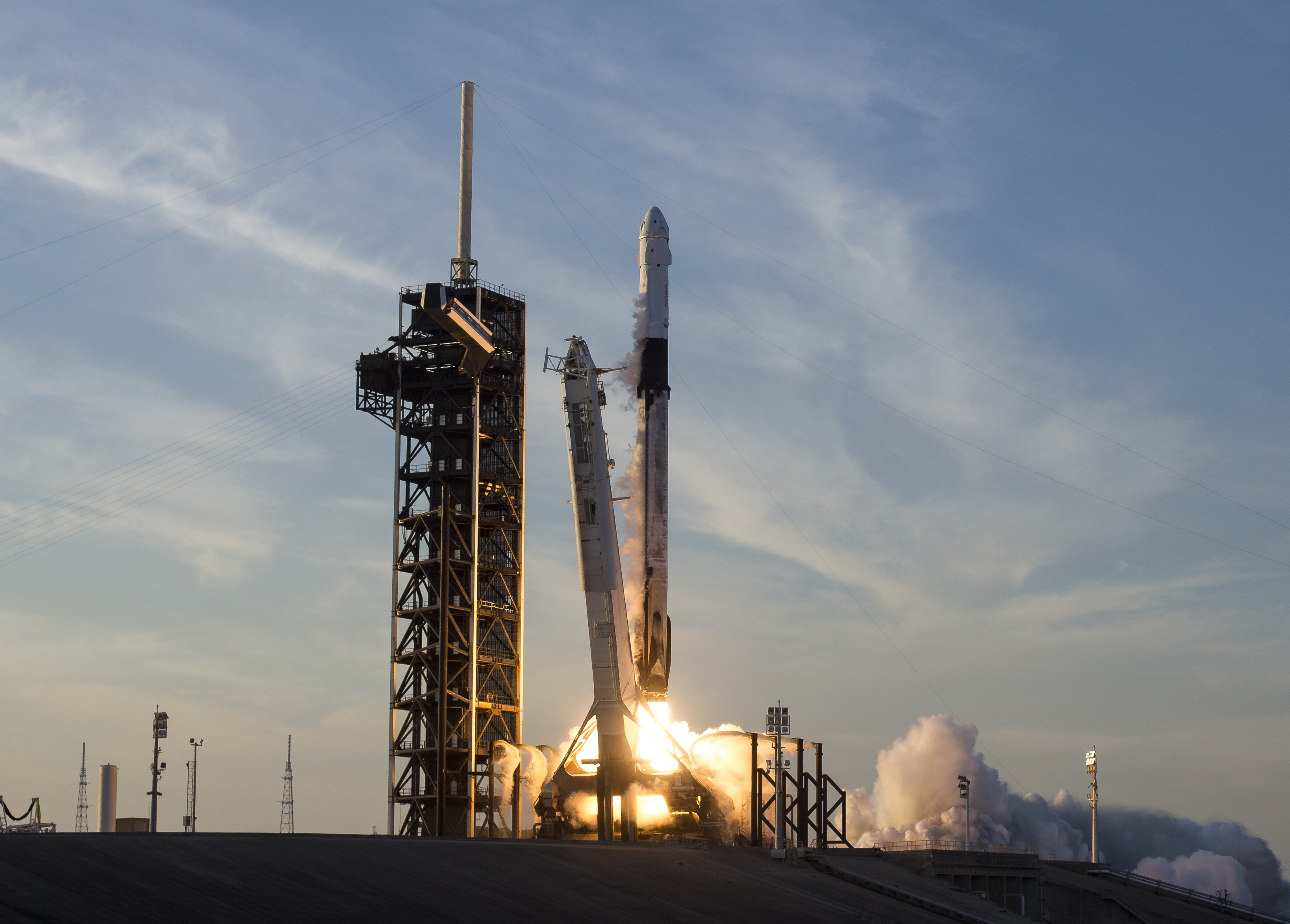
NASA has awarded SpaceX three additional crew missions to the International Space Station under a contract modification, extending the commercial partnership that has reshaped how the United States reaches orbit.
The contract addition builds on SpaceX's existing Commercial Crew Program agreement with NASA. Since 2020, SpaceX's Crew Dragon spacecraft has served as the primary vehicle for transporting American astronauts and international partners to the station. This extension ensures continuity of crew rotation operations through additional flights beyond those previously contracted.
SpaceX has completed multiple successful crewed missions to the ISS, including operational flights carrying four-person crews to the orbiting laboratory. Each mission typically lasts several months, with crews conducting experiments, maintaining station systems, and supporting ongoing research in microgravity. The Crew Dragon vehicle docks autonomously at the station's harmony module and can remain attached for extended periods, enabling crew changes and resupply coordination.
The three additional missions represent NASA's confidence in SpaceX's operational reliability and safety record. The Commercial Crew Program fundamentally shifted American spaceflight by contracting with private companies rather than relying solely on government-operated vehicles. After the Space Shuttle program ended in 2011, NASA depended on Russian Soyuz flights for crew transport, a dependency this program was designed to eliminate.
SpaceX developed Crew Dragon specifically for human spaceflight, incorporating abort systems, life support, and reentry capabilities. The spacecraft launches atop SpaceX's Falcon 9 rocket from Kennedy Space Center in Florida. Each mission requires extensive NASA oversight and certification, ensuring crew safety remains paramount.
The contract modification provides NASA with scheduling flexibility and ensures the station maintains adequate crew presence for its research operations. The ISS typically operates with a complement of six crew members rotating between missions. Regular crew transportation is essential for conducting long-duration experiments in biology, materials science, combustion dynamics, and other research areas impossible to replicate in Earth's gravity.
Beyond crew transport, SpaceX supports the station through cargo missions using its Dragon cargo vehicle, a separate spacecraft designed for delivery of supplies, equipment, and experiments. This dual capability makes SpaceX the primary American logistics partner for the ISS.
The Commercial Crew Program has also spurred competition. Boeing's Starliner capsule completed its first crewed test flight in 2024, providing an additional American option for crew transport. This redundancy strengthens national spaceflight capability and reduces reliance on any single provider.
These three additional missions extend SpaceX's role in human spaceflight operations into the coming years. As NASA plans for eventual ISS retirement and transition to commercial space stations in low Earth orbit, maintaining reliable crew access remains critical. SpaceX's demonstrated capability and infrastructure position it as a cornerstone of America's sustained human spaceflight program.