# NASA Opens Media Access for SpaceX's 35th Cargo Run to Orbital Laboratory
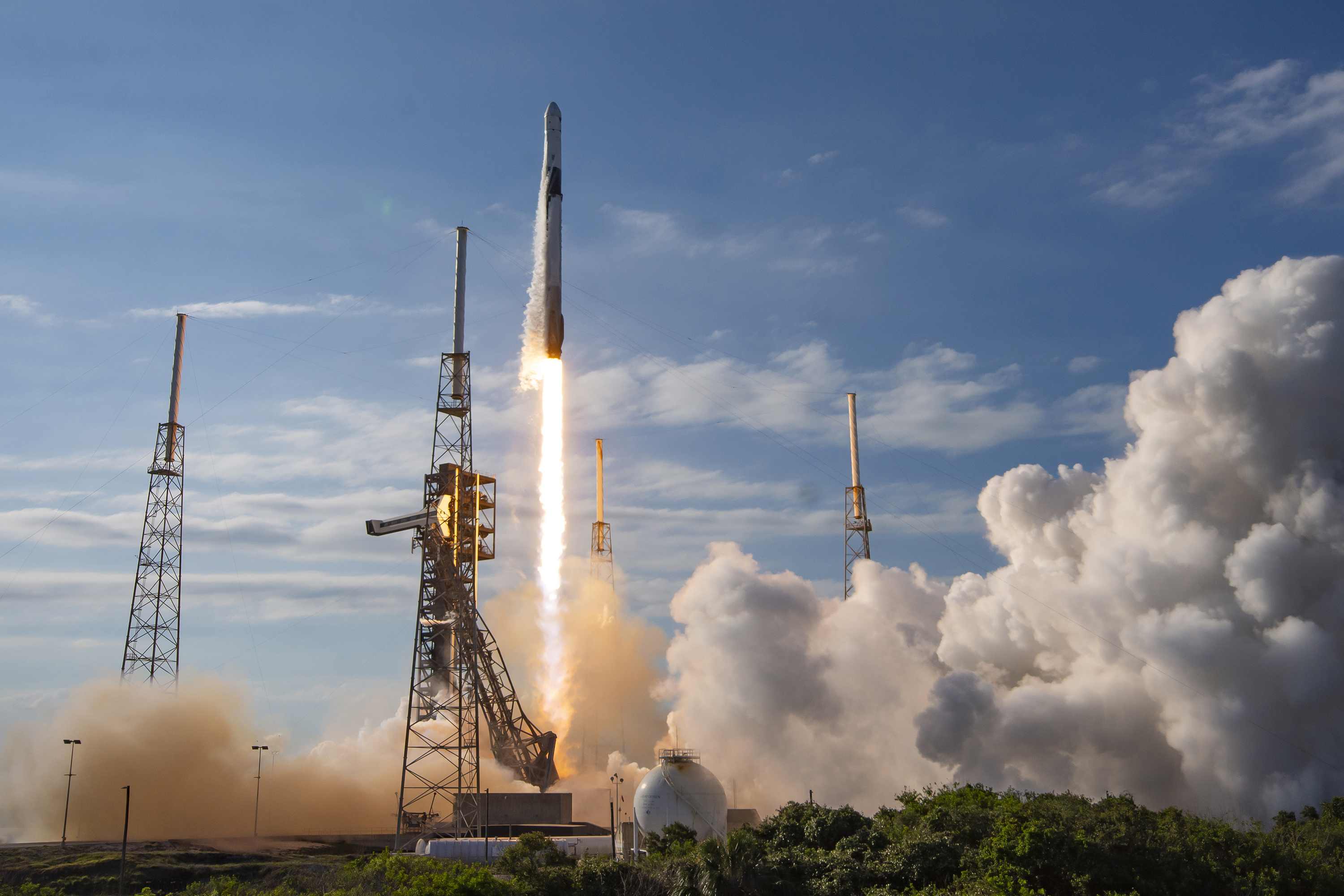
NASA has opened media accreditation for SpaceX's 35th commercial resupply services mission to the International Space Station, marking another routine but essential chapter in the continuous supply chain that keeps the orbital laboratory operational. The Falcon 9 rocket will carry NASA science investigations, supplies, and equipment to the station, with launch targeted for no earlier than October.
The mission represents the steady drumbeat of cargo operations that sustain human spaceflight in low Earth orbit. Since 2012, SpaceX has executed dozens of resupply missions under NASA's Commercial Resupply Services program, a partnership that transformed how the agency delivers payload to the ISS. Each launch carries experiments, spare parts, food, water, and equipment essential for the crew's survival and work.
SpaceX won its initial CRS contract during a pivotal moment in American spaceflight. After the Space Shuttle Program ended in 2011, NASA depended on Russian Soyuz spacecraft for crew transport and supplemented those flights with cargo vehicles. The agency pursued a commercial approach, awarding development contracts to SpaceX and Orbital ATK (now Northrop Grumman). SpaceX's Dragon capsule emerged as the workhorse, and the company has maintained its position as NASA's primary cargo provider for over a decade.
The Falcon 9 first stage regularly demonstrates the reusability that transformed rocketry economics. By landing and reflying boosters, SpaceX reduced launch costs and increased flight frequency. These cost reductions allowed NASA to purchase more frequent resupply missions while maintaining budget discipline.
Resupply missions carry diverse payloads that reflect the station's role as an orbiting research platform. Investigations span materials science, biology, physics, and Earth observation. Crew members conduct experiments in microgravity that cannot be replicated on the ground. Some research targets pharmaceutical development, others study combustion or crystal growth. The station also receives new equipment for maintenance and upgrades to aging systems.
The 35th mission designation reflects the cumulative operational success of the commercial resupply program. NASA expanded its contracts with SpaceX through 2026, ensuring cargo delivery capacity remains available. Concurrent with SpaceX operations, Northrop Grumman's Cygnus spacecraft also resupplies the station, providing redundancy and demonstrating competition in the commercial space sector.
Media accreditation allows journalists to cover launch operations at Kennedy Space Center's Launch Complex 39A, where SpaceX conducts Falcon 9 flights. Credentialed reporters can access public viewing areas, attend NASA briefings, and document the mission from preparation through launch. These public engagement opportunities remain vital as NASA expands human spaceflight activities and maintains transparency about government space operations.
The October launch window places this mission firmly in the operational rhythm that sustains the ISS. With crew rotations, science investigations, and equipment replacements all depending on reliable cargo delivery, resupply missions function as the circulatory system of orbital operations. SpaceX's demonstrated reliability and reusability have become integral to NASA's long-term strategy for continuous human presence in low Earth orbit.