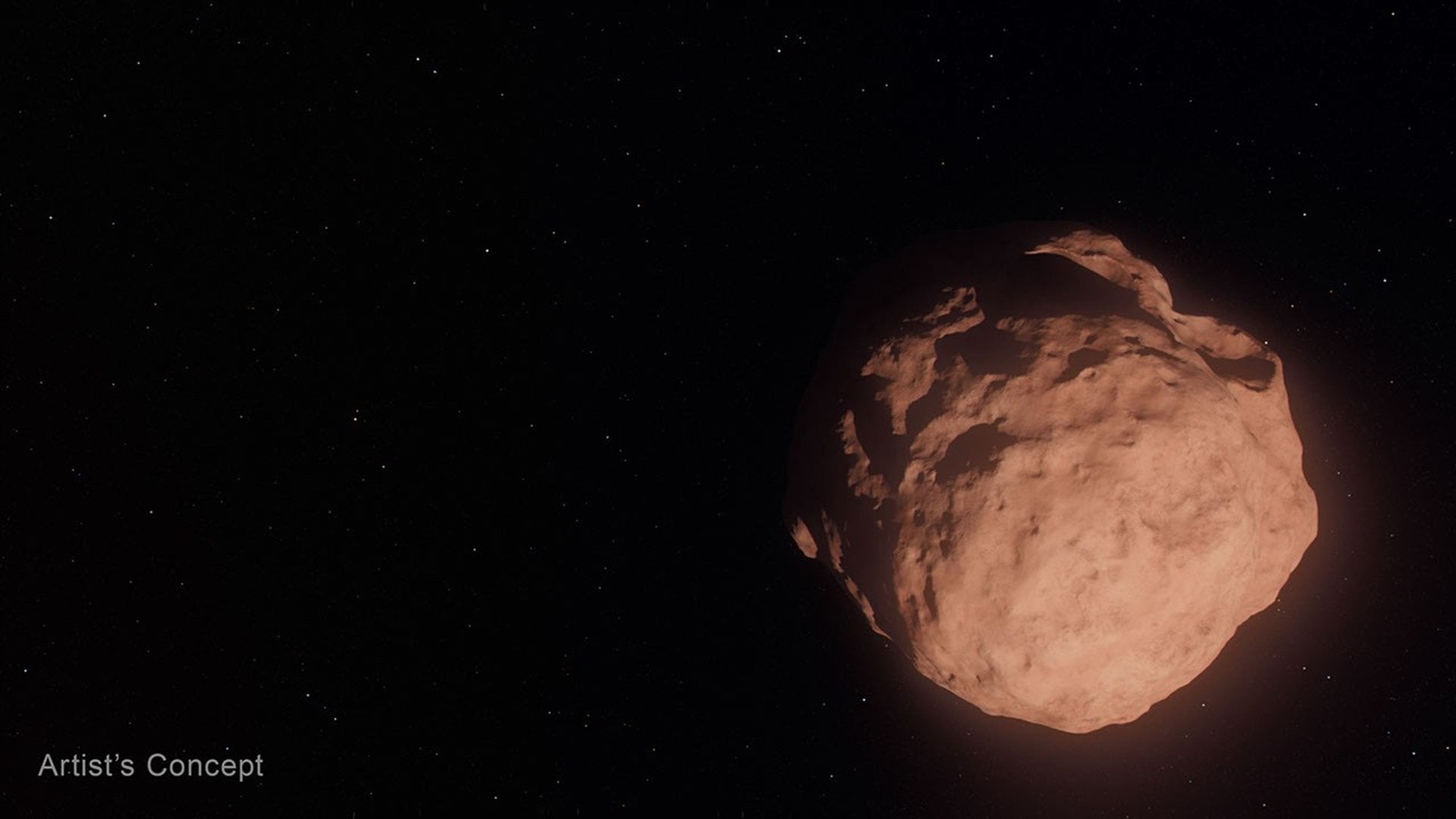
Trans-Neptunian Objects reveal their formation history through the colors painted across their icy surfaces. A new study demonstrates that TNOs originating from different regions of the solar system bear distinct spectral signatures, offering astronomers a method to map the chaotic migrations that shaped our planetary system billions of years ago.
TNOs inhabit the region beyond Neptune's orbit, a realm of primordial bodies frozen in time. Two competing origin stories explain their presence. Some TNOs formed in the inner solar system, closer to the Sun where temperatures ran higher, then migrated outward during the gravitational reshuffling that occurred in the early solar system. Others assembled in situ, condensing from material already resident in the distant reaches where Neptune orbits.
The distinction matters profoundly for understanding planetary formation. The Nice model, named for the French city where astronomers developed the theory, proposes that the giant planets wandered significantly during the solar system's first few hundred million years. Jupiter migrated inward, then outward. Saturn, Uranus, and Neptune shifted position. These movements scattered smaller bodies across vast distances. TNOs can serve as fossils from this violent epoch, their locations and compositions encoding information about where they originated.
Previous work identified orbital parameters that hint at origin. TNOs on low-inclination, low-eccentricity orbits represent the "cold" population, bodies that formed in the cold outer solar system and remained there. TNOs on high-eccentricity or high-inclination orbits typically belong to the "hot" population, objects born closer to the Sun where thermal energy imparted more chaotic motion to their trajectories.
This new research pushes the analysis deeper, examining surface colors across visible and near-infrared wavelengths. The team discovered that "hot" and "cold" TNOs display different spectral properties. Cold TNOs, which never experienced significant heating during their formation and subsequent history, show colors consistent with pristine, unaltered materials. Hot TNOs, which endured warmer conditions during their formation, display altered surface compositions. Space weathering from cosmic rays and solar radiation over billions of years also influences surface appearance, but the primordial color differences remain detectable.
The mechanism driving these color variations stems from processing during formation. Materials closer to the Sun experienced thermal metamorphism, chemical alterations that shift their spectral signatures. As TNOs migrated outward, they carried these altered compositions with them. The surface colors thus preserve a record of birthplace, a barcode written during the solar system's infancy.
This discovery enables more precise classification of TNOs without relying solely on orbital measurements, which can evolve due to gravitational interactions with other bodies. Color-based identification provides an independent confirmation of origin theories. Astronomers can now observe a TNO's spectrum and make probabilistic statements about where in the solar system it condensed and how its orbit subsequently changed.
The implications extend beyond cataloging. Understanding TNO origins constrains models of planetary migration and helps explain the final architecture of the solar system. Each TNO carries testimony from 4.6 billion years ago, when collisions and gravitational forces fundamentally rearranged the planetary system. Reading that testimony from reflected light reveals the forces that shaped our cosmic neighborhood.