A new study from the Max Planck Institute challenges the long-held assumption that our Sun cannot produce superflares, upending decades of scientific consensus about stellar behavior and Earth's protective environment.
Researchers led by Natalie Krivova examined historical sunspot data and stellar magnetic activity patterns to determine whether the Sun possesses the physical mechanisms necessary to generate superflares, the catastrophic energy releases observed in sun-like stars throughout the galaxy. The conclusion contradicts previous models suggesting our star lacks the capacity for such violent outbursts. The Sun, it turns out, is physically capable of producing superflares.
The distinction matters profoundly. Superflares release energy billions of times more powerful than typical solar flares. When observed on other solar-type stars, superflares erupt at frequencies that seem incompatible with life as we know it. A single superflare can strip away planetary atmospheres, ionize magnetospheres, and bombard surfaces with lethal radiation. Scientists have previously argued that Earth's relative tranquility, protected by the Sun's apparent inability to produce such events, represented a lottery win for biological evolution. This stability allowed complex life to emerge and persist without constant extinction-level threats.
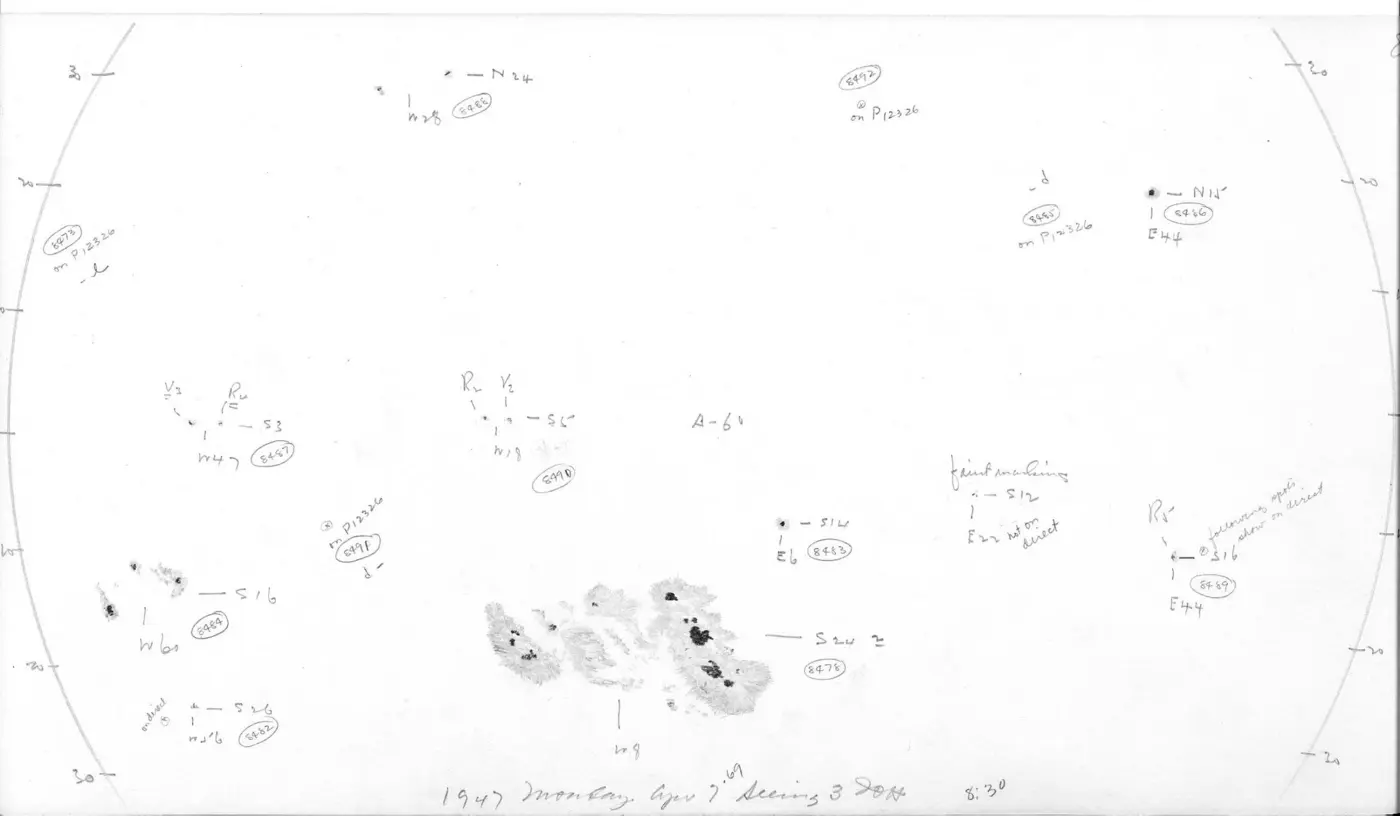
The new research complicates this narrative. By analyzing sunspot patterns and magnetic field data, Krivova's team identified physical mechanisms within the Sun's core and convective zone that could theoretically accumulate and release the necessary energy for a superflare. Historical records, including observations from the Maunder Minimum period and detailed records from the 1947 Great Sunspot, suggest the Sun has possessed the requisite magnetic complexity. The study does not claim superflares are imminent or even likely on human timescales. Instead, it establishes that our star operates under the same physical laws as other sun-like stars observed ejecting superflares.
This finding realigns the Sun within the broader stellar population rather than positioning it as an exceptional outlier. Every sun-like star examined in exoplanet surveys shows evidence of superflare capability. The question shifts from whether Earth's star can produce them to why the historical record shows no confirmed superflare events from the Sun during recorded human history or within accessible geological records.
The implications ripple across multiple disciplines. Exoplanet researchers must reconsider habitability assessments around sun-like stars in other systems. If those stars produce superflares at measurable frequencies, planets within their habitable zones face far greater challenges than previously modeled. Climate scientists studying solar activity's influence on Earth's atmosphere gain new context for understanding extreme scenarios. Space weather forecasters confront new uncertainty in long-term risk assessments.
The work also invites fresh investigation into why superflares, though physically possible for the Sun, appear exceedingly rare in our actual stellar record. Some researchers propose that superflare frequency might follow different patterns than current models suggest. Others highlight measurement limitations in both historical observations and exoplanet surveys that could skew apparent frequency calculations.
Understanding the Sun's true superflare potential fundamentally resets baseline assumptions about planetary habitability, stellar activity cycles, and the statistical likelihood of life-supporting environments throughout the cosmos.