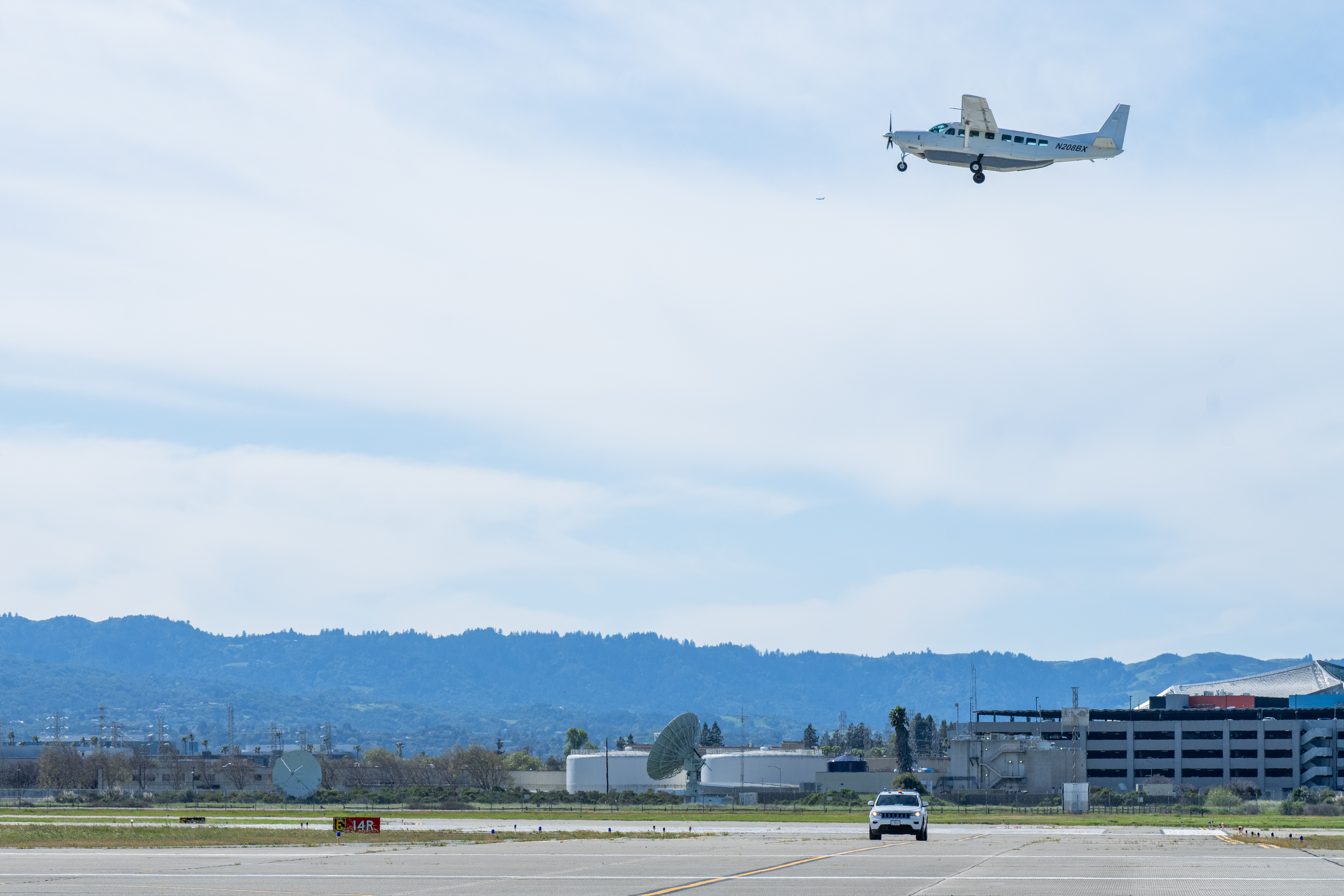
NASA researchers are deploying advanced computational systems to optimize commercial aviation operations, targeting the endemic delays that cost the airline industry billions annually and frustrate millions of passengers.
The initiative focuses on air traffic management modernization, leveraging NASA's decades of expertise in aeronautics research and systems engineering. Rather than relying on legacy ground-based radar and voice communications, NASA's work centers on NextGen, the Next Generation Air Transportation System. This framework integrates satellite-based positioning, automated decision-support tools, and real-time data sharing between aircraft, airports, and air traffic control centers.
Tarmac delays represent a tangible problem. Aircraft burning fuel while stationary waste resources and generate emissions. Holding patterns over congested airports consume time and fuel while passengers remain suspended in regulatory limbo. These inefficiencies ripple through schedules, creating cascading delays that strand connecting passengers and strand aircraft at wrong gates.
NASA's aeronautics division partners with the Federal Aviation Administration (FAA) to accelerate NextGen deployment. The system improves traffic flow prediction by analyzing weather patterns, airport capacity constraints, and aircraft performance data simultaneously. Ground-based automation reduces controller workload, allowing them to manage higher traffic volumes safely. Satellite-based Automatic Dependent Surveillance-Broadcast (ADS-B) replaces older ground radar, providing more precise aircraft positions and enabling closer spacing between flights.
One critical component involves trajectory-based operations (TBO). Instead of flying fixed airways at predetermined altitudes, aircraft receive dynamically optimized flight paths that account for wind patterns, fuel consumption, and traffic flows. A flight headed to Denver might receive a slightly different route and altitude than the same flight the following day, based on real-time atmospheric conditions. This flexibility reduces fuel burn and flight times.
The FAA has mandated ADS-B equipage for most aircraft since 2020, removing a major implementation barrier. However, full NextGen integration requires cultural and procedural shifts. Controllers accustomed to radar-based separation standards must adapt to satellite-based guidance. Airlines must invest in compatible avionics. Airports must upgrade ground infrastructure.
NASA contributes through simulation environments where controllers practice new procedures before they reach operational facilities. The agency runs human factors studies to ensure automation enhances rather than burdens decision-making. NASA's Ames Research Center and Glenn Research Center conduct validation testing on decision-support algorithms before the FAA authorizes operational use.
The economic stakes justify the investment. The FAA estimates NextGen will generate $160 billion in cumulative benefits through 2030, primarily from reduced fuel consumption, shorter flight times, and decreased delays. Airlines reduce operating costs. Passengers arrive on schedule. The environment benefits from lower emissions per passenger-mile.
Implementation remains uneven across the United States. Congested corridors like New York to Boston and Los Angeles to San Francisco have seen measurable improvements. Rural airports remain farther behind in modernization. International coordination matters too. Transcontinental flights transition between FAA-managed U.S. airspace and airspace governed by other nations, creating interoperability challenges.
NASA's role emphasizes that aeronautics research remains central to human spaceflight and planetary exploration. The technologies developed for commercial aviation, from advanced materials to autonomous systems, generate spinoff applications across aerospace. Conversely, space program innovations in sensor technology and data processing accelerate aviation modernization.