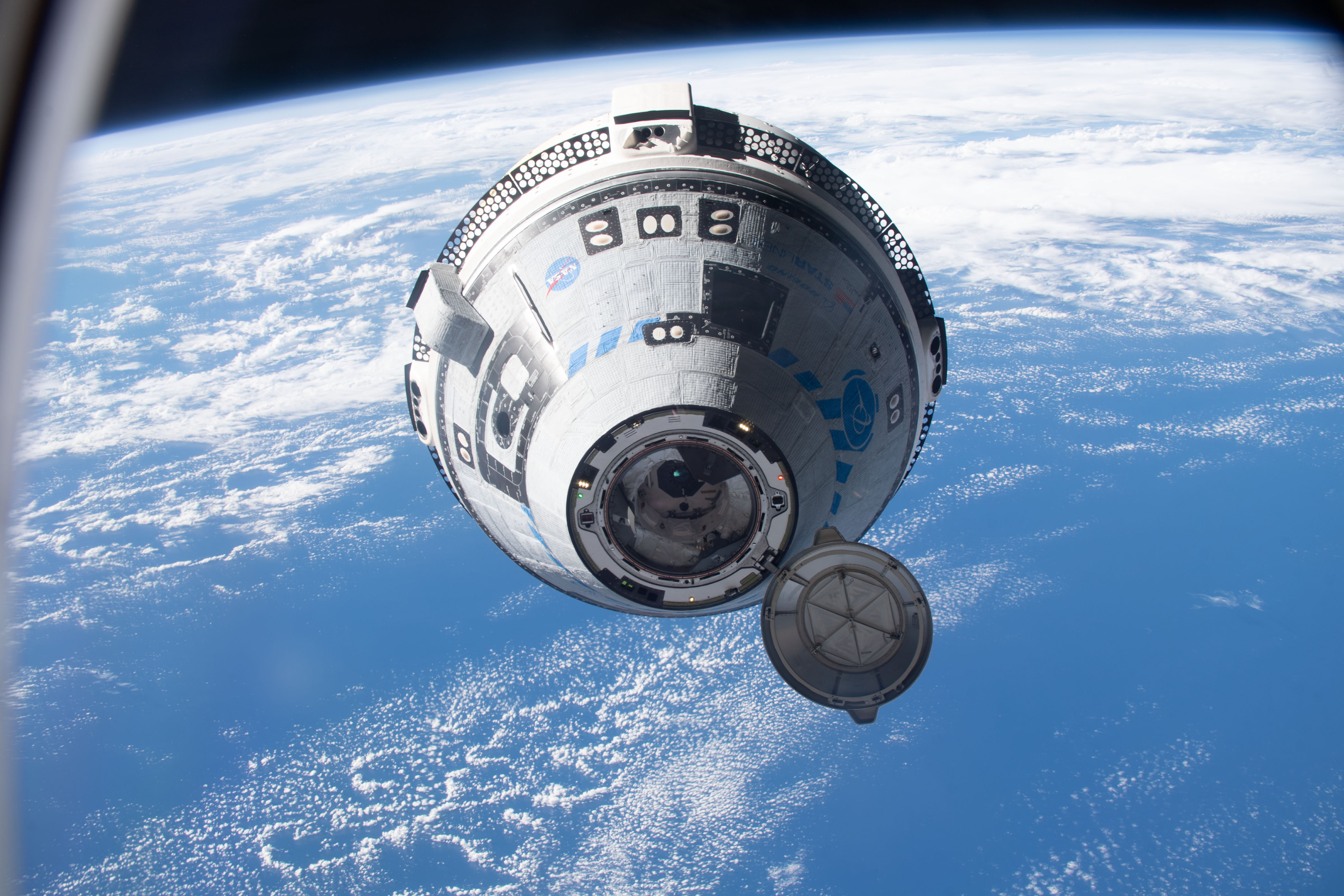
NASA and Boeing will hold a joint news conference on Monday, September 28, at 3 p.m. EDT to discuss the Boeing CST-100 Starliner spacecraft and its path toward operational crew missions to the International Space Station.
The briefing brings together leadership from both agencies to address the vehicle's development status and outline plans for regular crewed rotations to and from the orbiting laboratory. Media credentialed for Crew-13 operations may attend in person at NASA's Kennedy Space Center in Florida.
The Starliner represents Boeing's answer to SpaceX's Crew Dragon in NASA's Commercial Crew Program, a public-private partnership that restored American capability to launch astronauts from U.S. soil after nearly a decade of reliance on Russian Soyuz vehicles. The spacecraft completed an uncrewed Orbital Flight Test to the ISS in May 2022, followed by a crewed test flight in June 2024 carrying NASA astronauts Barry "Butch" Wilmore and Sunita Williams.
That crewed mission, designated Crew Flight Test (CFT), encountered several technical challenges during docking and re-entry, including helium leaks in the spacecraft's propulsion system and thruster anomalies. NASA ultimately extended Wilmore and Williams' stay on the ISS, bringing them home aboard Starliner instead of the originally planned Crew Dragon as planned, which allowed engineers additional time to analyze the vehicle's behavior in space.
The upcoming conference arrives at a pivotal moment for Boeing's crewed spaceflight ambitions. The company must demonstrate that Starliner meets NASA's certification requirements before the spacecraft can transition from test flights to regular crew rotation missions, known as Crew Rotation (CRew-1), Crew-2, and beyond. These missions will reliably transport NASA astronauts to and from the station on roughly six-month schedules, supporting continuous human presence in low Earth orbit.
Boeing's Starliner differs from SpaceX's Crew Dragon in both design and capability. The spacecraft features a larger pressurized crew module capable of carrying up to seven passengers, though NASA contracts specify crews of four. Its service module provides propulsion and power and remains attached until just before re-entry, burning up in Earth's atmosphere rather than returning for reuse like Crew Dragon's trunk.
The briefing will likely address the timeline for Starliner's return to flight operations, the completion of data analysis from the Crew Flight Test mission, and Boeing's remediation efforts on identified technical issues. NASA certification officials must verify that all anomalies have been resolved and that the vehicle can safely execute multiple crewed missions before crews can board for operational rotations.
Successfully transitioning to operational status would establish Boeing as a reliable provider of crew transportation to the ISS, reducing NASA's dependence on any single commercial partner and maintaining competition in the emerging commercial spaceflight market. The conference will provide the most current assessment of that path forward.