# The Space Budget Paradox: Science Goals and Exploration Funding Never Align
The space industry confronts a structural disconnect that shapes every mission, every budget cycle, and every strategic decision made by NASA and its international partners. Space science receives clear, science-driven objectives while human exploration commands substantial funding streams, but the two tracks rarely converge on shared priorities or resources.
The Planetary Society, a nonprofit advocacy organization founded by Carl Sagan, has identified this consensus problem as a core barrier to coherent space strategy. Space science missions like the James Webb Space Telescope, the Perseverance rover on Mars, and the upcoming Europa Clipper spacecraft emerge from rigorous peer review, scientific community workshops, and decadal survey reports that establish priorities based on unanswered questions in planetary science, astrobiology, and physics. These missions have clear scientific hypotheses and measurable outcomes.
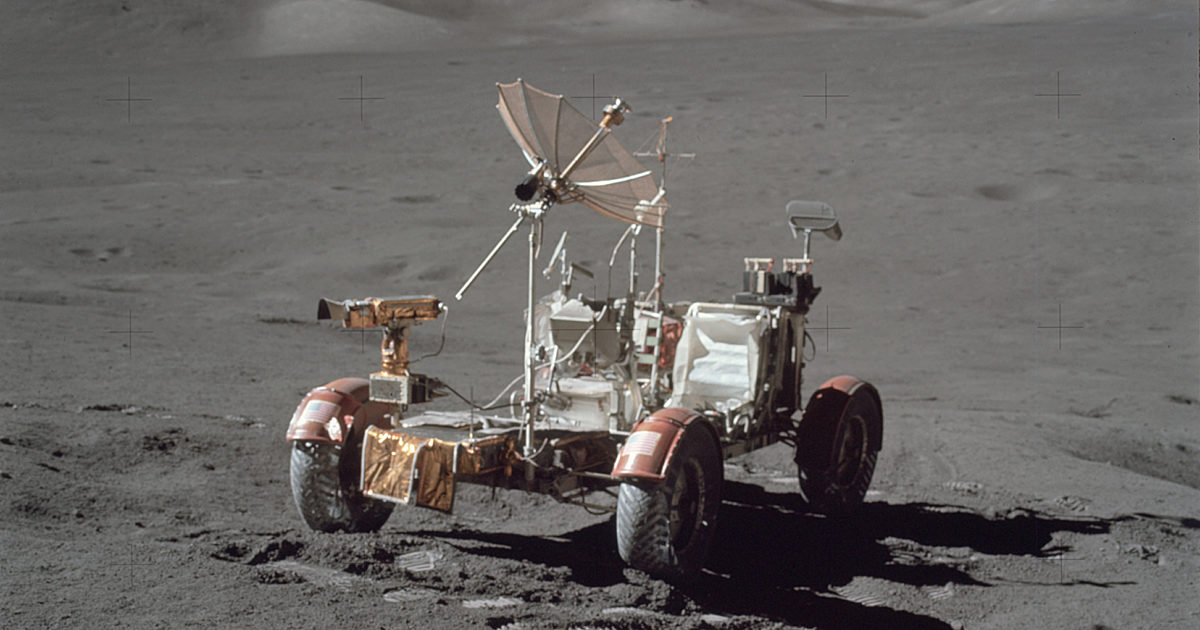
Human spaceflight programs, by contrast, operate within a different decision framework. The Artemis program aims to return humans to the Moon and establish a sustained presence there, ultimately supporting missions to Mars. Yet Artemis receives funding based on political timelines, industrial capacity, and national priorities rather than a consensus scientific roadmap. Launch schedules slip. Mission architectures change. Budget allocations fluctuate based on congressional whims and competing defense priorities.
The result: NASA devotes roughly 20 percent of its budget to human spaceflight and exploration while allocating about 25 percent to space science. Neither receives the funding needed to pursue bold objectives fully. Both compete for resources within the same budget envelope while operating under entirely different planning models.
This fragmentation wastes money and delays discovery. When human spaceflight programs stumble on delays, space science projects absorb cuts. When space science missions require additional funding, human exploration budgets remain protected. The scientific community produces detailed technology roadmaps for sample return from Mars or subsurface ocean exploration on Europa. These roadmaps sit in reports while human spaceflight pursues parallel missions without integrating the science priorities.
The path forward requires a unified strategic framework. The human exploration program could incorporate the scientific objectives identified by the decadal surveys. Lunar bases envisioned by Artemis could conduct geology and search for water ice in permanently shadowed craters. Mars human missions could target sites selected by robotic rovers and orbital imaging. These synergies exist on paper but rarely materialize in actual mission planning.
International space agencies face similar challenges. The European Space Agency pursues its own robotic missions while supporting human spaceflight through the International Space Station. China develops both human and robotic capabilities but operates them as separate programs. Russia fragments resources across multiple competing priorities.
Building consensus requires honest conversation about what space exploration accomplishes. Robotic missions answer scientific questions efficiently and affordably. Human presence enables broader exploration and inspires public engagement. Neither approach proves superior without context. But treating them as entirely separate enterprises guarantees inefficiency and missed opportunities.
Space agencies must develop integrated long-term strategies that treat human exploration and space science as complementary endeavors rather than competitors. This means creating joint planning processes, aligning budget cycles, and establishing shared milestones. The technical capacity exists. The scientific knowledge exists. What remains missing is institutional will to break down the silos that have governed space policy for decades.