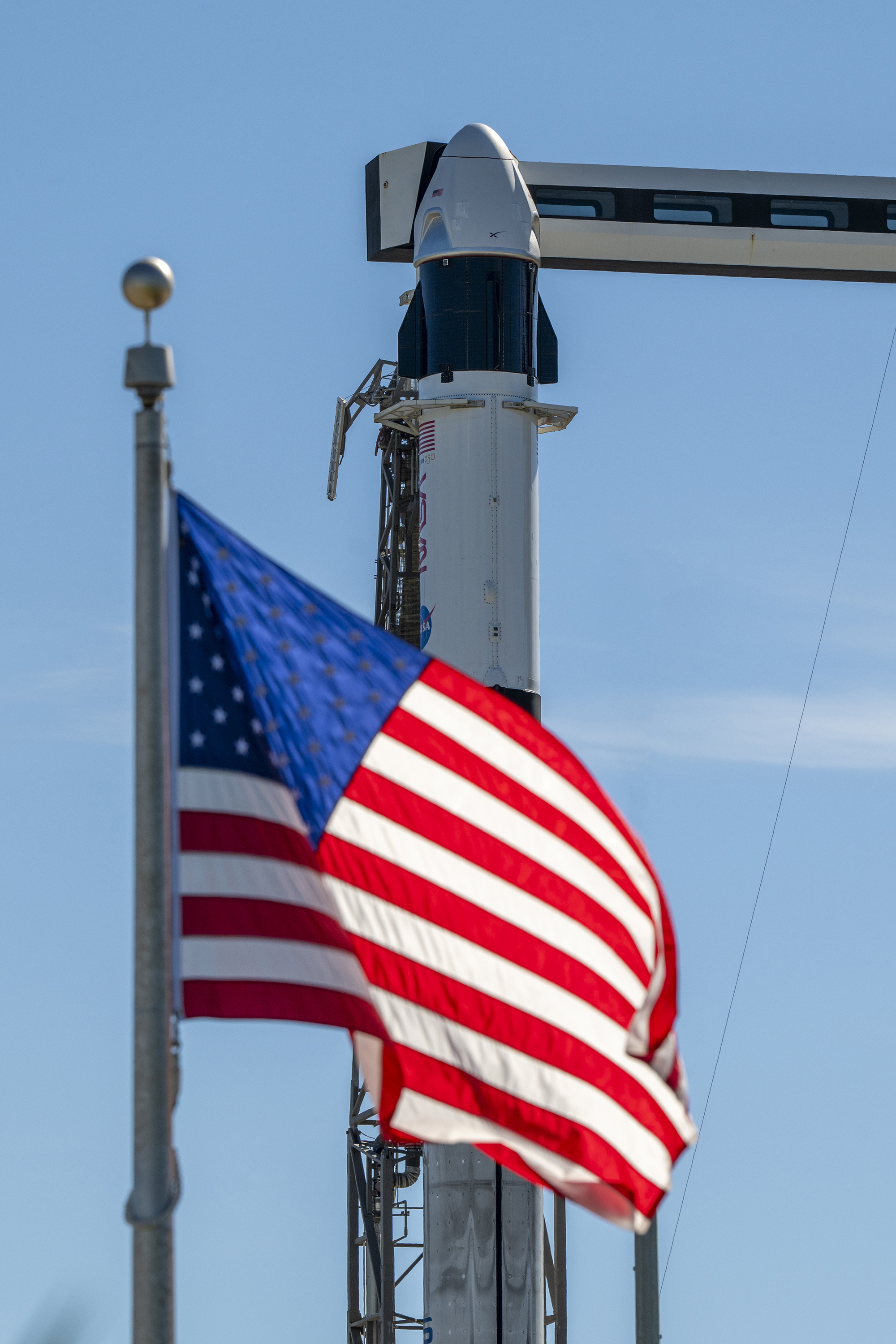
SpaceX and NASA have positioned the Falcon 9 rocket and Crew Dragon spacecraft for NASA's Crew-13 mission at Space Launch Complex 40 of Cape Canaveral Space Force Station in Florida. The vertical integration of both vehicles marks a critical milestone in the launch preparation sequence for this International Space Station crew rotation flight.
Crew-13 carries four spacefarers to orbit. NASA astronauts Jessica Watkins and Luke Delaney will lead the American contingent. Canadian Space Agency astronaut Joshua Kutryk and Roscosmos cosmonaut Sergey round out the crew roster. This composition reflects the multinational partnership that defines ISS operations, with contributions from the United States, Canada, and Russia working in concert aboard the orbital laboratory.
The Falcon 9 rocket standing vertical at the pad represents SpaceX's proven heavy-lift vehicle for crew transport. This booster design has established a track record of reliable performance across dozens of ISS crew rotation missions since NASA resumed crewed launches from American soil in 2020. The Crew Dragon spacecraft atop the rocket will carry the four-person team to the station, where they will dock and begin their expedition.
Jessica Watkins previously flew as a mission specialist on Space Shuttle Atlantis during STS-135 in 2011, the final shuttle mission. Her experience in orbital operations and robotics brings technical depth to this crew assignment. Luke Delaney and Joshua Kutryk represent the newer generation of astronauts and cosmonauts selected for sustained ISS presence. Sergey's participation underscores continued Russian involvement in the station program despite broader geopolitical tensions.
The Crew-13 mission represents routine ISS resupply and crew rotation operations, which occur approximately every six months. These rotations maintain continuous human presence aboard the station and enable long-duration scientific research in microgravity. Crew Dragon vehicles typically dock for roughly six months, during which the incoming team conducts experiments in materials science, biology, physics, and Earth observation while preparing the vehicle for eventual splashdown and recovery.
The vertical positioning of rocket and spacecraft triggers the final phases of pre-launch processing. Ground crews conduct propellant loading procedures, complete final system checks, and verify all interfaces between the booster, spacecraft, and pad infrastructure. The date of September 27, 2026, falls within the typical preparation window, suggesting a launch date within weeks of this photograph.
SpaceX's Crew Dragon program has demonstrated high reliability since crewed operations commenced. The vehicle design incorporates autonomous guidance, navigation, and abort systems that activate if anomalies develop during ascent. These safety systems allow the crew to escape the vehicle even after booster failure, a design advantage over the Space Shuttle architecture.
International participation in Crew-13 reinforces the ISS commitment to scientific cooperation despite terrestrial conflicts. Canadian astronauts bring robotics expertise, while Russian cosmonauts contribute operational knowledge accumulated across decades of spaceflight. This crew composition demonstrates that orbital research transcends political boundaries.