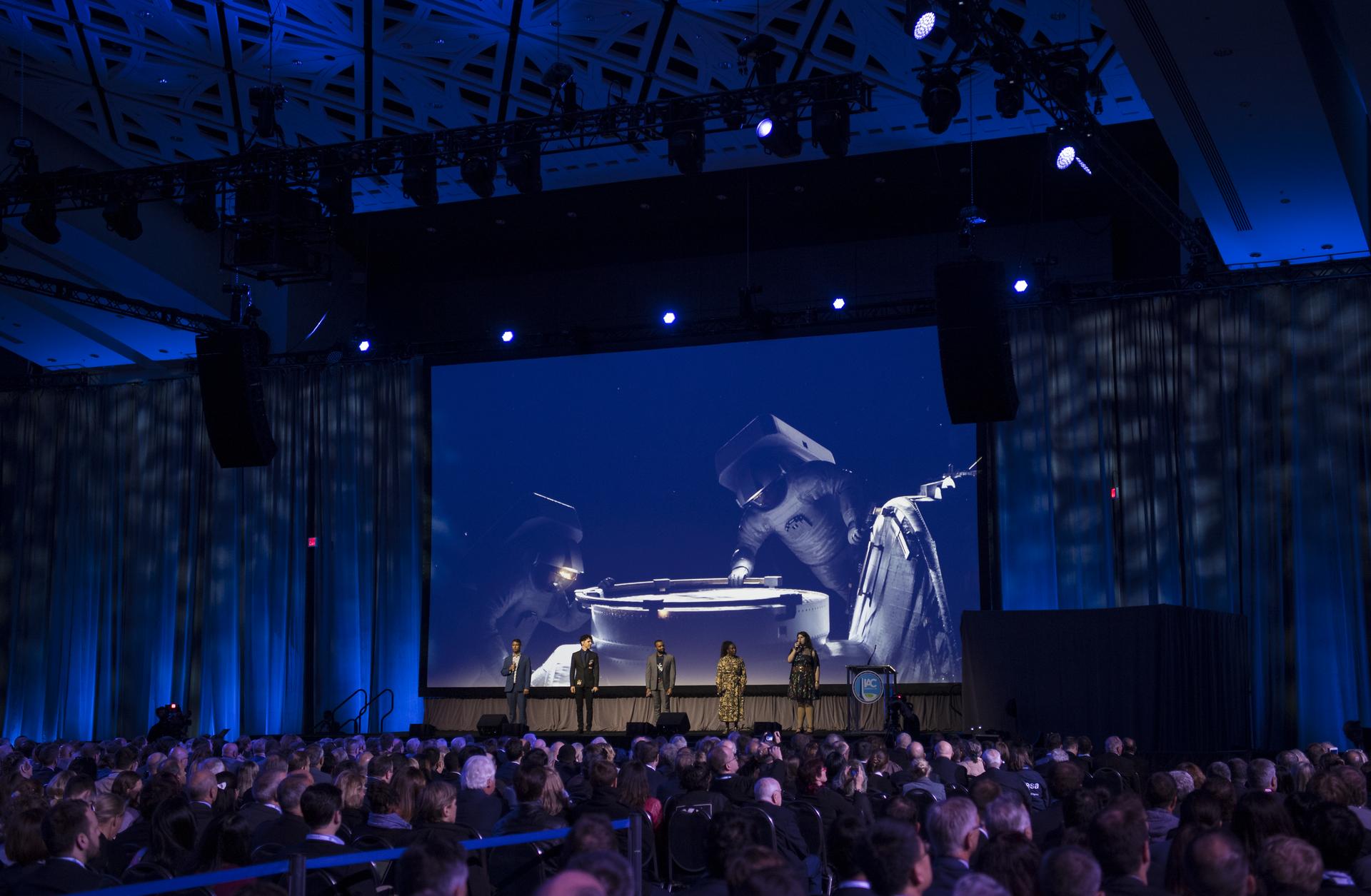
NASA will showcase its lunar and Mars exploration programs at the 77th International Astronautical Congress (IAC) in Antalya, Türkiye, October 5-9. The agency plans to demonstrate American leadership across human spaceflight, scientific discovery, and commercial partnerships.
The IAC brings together space agencies, industry leaders, and researchers from dozens of nations. This year's conference provides NASA a platform to present progress on the Artemis program, which aims to return humans to the Moon and establish a sustained presence for eventual Mars missions. The agency will emphasize the Artemis Accords, an international framework promoting responsible space exploration and peaceful use of space resources.
NASA's participation covers multiple domains. The human exploration pillar highlights recent achievements and near-term milestones in getting astronauts back to lunar surface operations. The science agenda showcases discoveries from missions like the James Webb Space Telescope, the agency's flagship observatory detecting the earliest galaxies and characterizing exoplanet atmospheres. These missions expand humanity's understanding of the cosmos and planetary systems.
The conference also reflects NASA's evolving role in spaceflight. Rather than operating all spacecraft directly, the agency increasingly relies on commercial partners through contracts with companies like SpaceX and Blue Origin. NASA will discuss how public-private partnerships accelerate development of launch vehicles, cargo systems, and crewed spacecraft while reducing government costs.
The Artemis Accords represent a diplomatic layer to space exploration. Signed by dozens of countries, the accords establish principles for extracting lunar resources, handling orbital debris, and maintaining transparency. NASA frames this framework as essential for orderly, sustainable expansion beyond Earth orbit. The agreements create rules before conflicts over space resources intensify.
The timing matters. As China advances its own crewed lunar program and Russia reasserts space capabilities, American leadership in exploration remains contested. International conferences like the IAC serve strategic purposes beyond pure science. NASA demonstrates that the United States shapes space policy through cooperation, not just technical prowess.
Mars looms as the ultimate destination in NASA's long-term strategy. The Artemis missions to the Moon serve as stepping stones, testing technologies and operational procedures needed for Mars human missions planned for the 2030s or 2040s. Life support systems, radiation shielding, surface habitats, and in-situ resource utilization all require validation in lunar operations first.
Commercial space sector support reflects budget realities and innovation benefits. SpaceX's Falcon 9 now handles most NASA astronaut launches. Blue Origin and others develop lunar landers and orbital infrastructure. By subsidizing commercial development through contracts and partnerships, NASA achieves more exploration with limited appropriations. This model also creates a growing space economy independent of government funding.
The conference serves as a checkpoint. NASA officials will present technical papers on specific projects, recruit international cooperation on shared challenges like space debris mitigation, and negotiate participation agreements with other space agencies. Partners from Europe, Japan, Canada, and other nations collaborate with NASA on lunar Gateway modules, Mars sample return, and deep space exploration architectures.