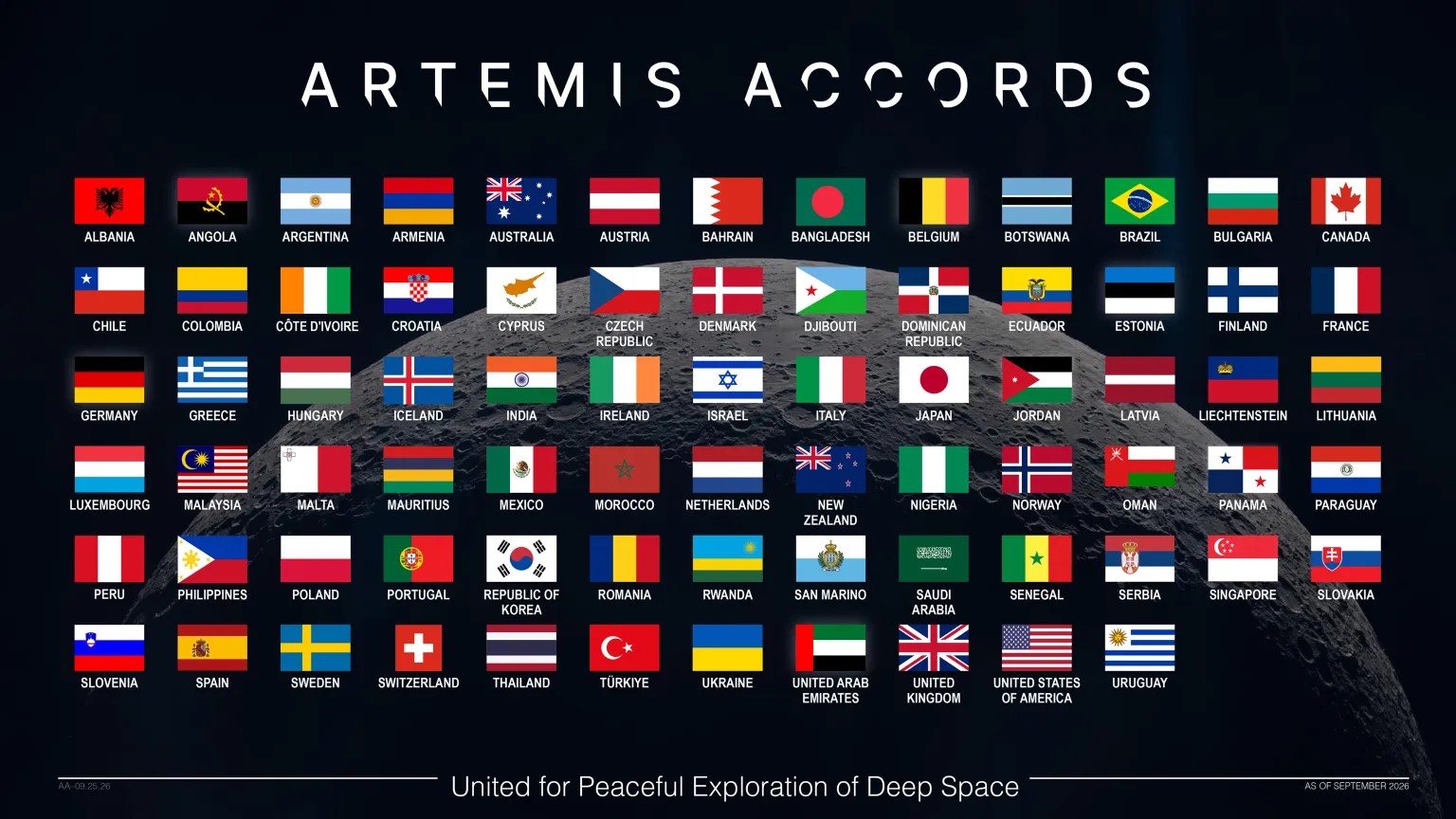
NASA announced that the Artemis Accords framework has reached 76 signatories, with four new countries, Albania, Croatia, Côte d'Ivoire, and San Marino, joining the initiative. The milestone underscores accelerating international consensus on how nations should conduct lunar exploration and broader space operations.
The Artemis Accords represent a binding set of principles for space exploration behavior established in 2020. NASA created the framework to establish norms for peaceful, responsible conduct beyond Earth's atmosphere. Signatories commit to transparency in space activities, interoperability of systems, and adherence to existing space treaties including the 1967 Outer Space Treaty. The agreements also establish safety zones around exploration activities, allowing countries to protect their landing sites and infrastructure from interference.
The latest expansion reflects growing recognition that space exploration cannot proceed without coordinated international standards. Nations that sign the Accords declare their intent to prioritize scientific discovery and resource exploration while maintaining peaceful conduct. The framework explicitly prohibits weapons testing, military bases, and hostile actions in space. Signatories also agree to register space objects, share scientific data, and assist other nations in emergency situations.
The four newest signatories represent geographic and economic diversity. Albania and Croatia join from Southeast Europe, Côte d'Ivoire from West Africa, and San Marino from Europe. Their participation signals that commitment to space governance transcends development status or existing space infrastructure. Many signatories have no active space programs but recognize the value of establishing governance frameworks before the acceleration of commercial and national lunar activities.
The Artemis program itself drives urgency around these diplomatic efforts. NASA plans to return humans to the lunar surface within this decade, beginning with the Artemis II crewed flyby mission, followed by Artemis III's lunar landing. These missions will establish sustained presence on the Moon, requiring cooperation frameworks that address resource utilization, debris mitigation, and territorial boundaries. The Accords provide the diplomatic scaffolding for this expansion.
Commercial companies also shape this landscape. SpaceX, Blue Origin, and Axiom Space operate under Artemis Accords principles when supporting NASA missions. Private lunar landers funded through NASA's Commercial Lunar Payload Services program must comply with Accords standards. This integration of commercial operations into the international framework distinguishes modern space governance from earlier Cold War competition.
The 76 signatories now include major spacefaring nations like the United States, Japan, Canada, and the United Kingdom, alongside nations developing nascent programs. Notable absences include Russia and China, which have pursued alternative frameworks for space cooperation. Russia's space agency signed briefly but withdrew in 2022 following international sanctions over Ukraine. China leads its own international lunar exploration initiative.
The Accords' expansion suggests nations recognize that clear rules reduce conflict and enable shared scientific benefits. As lunar exploration accelerates over the next decade, with multiple countries and companies targeting the Moon simultaneously, these governance frameworks become operational necessities, not merely diplomatic gestures. The growth to 76 signatories indicates space exploration is transitioning from a domain of isolated national programs to a coordinated international endeavor with established conduct standards.