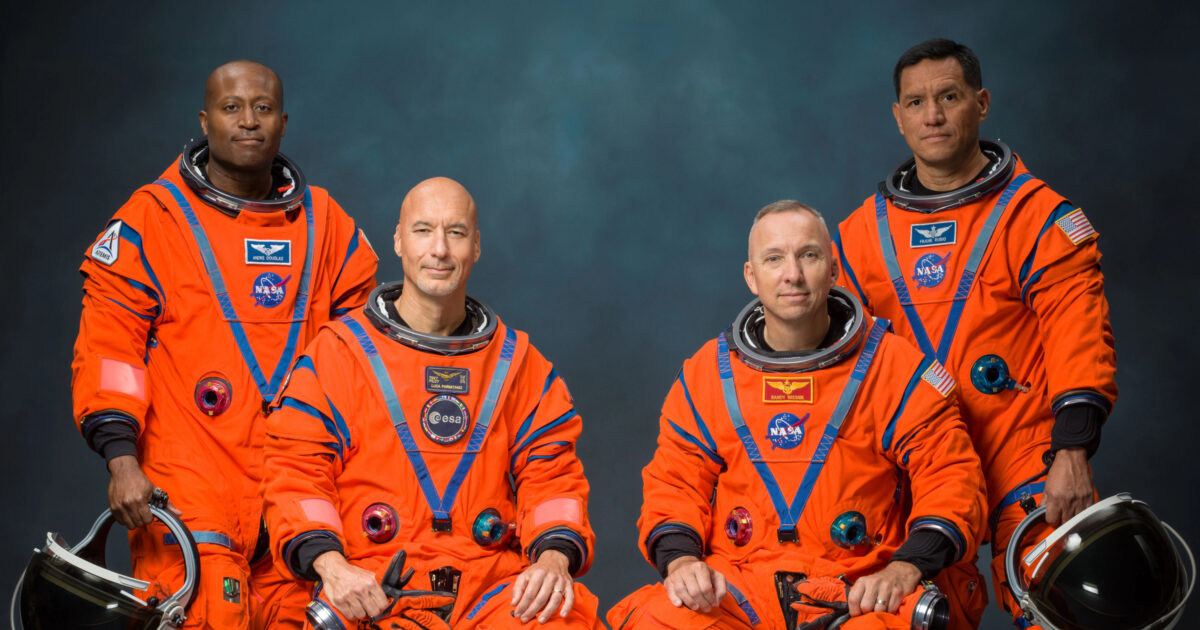
# NASA Names Artemis III Crew, Setting Course for Lunar Return
NASA has selected the astronauts who will fly Artemis III, the mission that will return humans to the lunar surface for the first time since Apollo 17 in 1972. The agency announced the four-person crew composition, marking a concrete step toward sustained lunar exploration and the foundation for deep space missions beyond Earth orbit.
Artemis III represents a fundamental shift in lunar exploration strategy. Unlike the Apollo program's brief visits, Artemis missions build infrastructure for long-term presence. The selected crew will land near the lunar south pole, a region rich in permanently shadowed craters that contain water ice. This location differs dramatically from Apollo's equatorial landing sites and reflects modern priorities around resource utilization and scientific discovery.
The crew selection process considered multiple factors beyond piloting skill. NASA prioritizes astronauts with diverse technical backgrounds, spacewalking experience, and geological training. The south pole terrain presents unique challenges. Extreme slopes, deep shadows, and reduced sunlight require crews with robust problem-solving abilities. Selected astronauts bring specialization in fields ranging from geology to engineering systems.
NASA's Artemis program operates on an accelerated timeline compared to Apollo. Artemis I launched uncrewed in November 2022, testing the Space Launch System (SLS) and Orion spacecraft. Artemis II will carry a crewed lunar flyby mission, currently targeted for 2025. Artemis III follows with the actual landing, planned for the mid-2020s. This compressed schedule reflects both technological advances and political momentum toward sustained lunar return.
The mission architecture relies on multiple hardware components. The SLS will launch Artemis III's Orion capsule and a Human Landing System (HLS) contracted to SpaceX through its Starship platform. Astronauts will travel in Orion but descend to the surface in Starship. This approach distributes responsibility across NASA and commercial partners, reducing risk and accelerating development.
Water ice at the lunar south pole holds enormous strategic value. Its presence enables in-situ resource utilization, meaning astronauts can extract water for drinking, oxygen production, and rocket fuel. This capability transforms the Moon from a destination requiring total supply dependency into a refueling node for missions to Mars and beyond. Artemis III crews will conduct experiments and collect samples to optimize resource extraction technology.
The mission also addresses scientific questions about the Moon's geological evolution. The south polar region experienced different impacts and processes than equatorial zones visited by Apollo. Core samples and observations from Artemis III will refine understanding of lunar history and composition. This knowledge supports both basic science and practical planning for permanent lunar bases.
International dimensions factor into Artemis planning. NASA's Artemis Accords framework includes partnerships with space agencies worldwide. Canada, Japan, and European nations contribute components and expertise. This collaborative approach mirrors practices on the International Space Station while expanding partnership benefits across the solar system.
Artemis III's crew announcement energizes the broader exploration agenda. These four astronauts become the faces of humanity's return to the Moon. Their mission will demonstrate that sustained lunar presence remains achievable with current technology. Success on Artemis III opens pathways for Artemis IV and beyond, establishing permanent research stations and eventually enabling crewed Mars missions. The Moon becomes not a destination but a stepping stone.