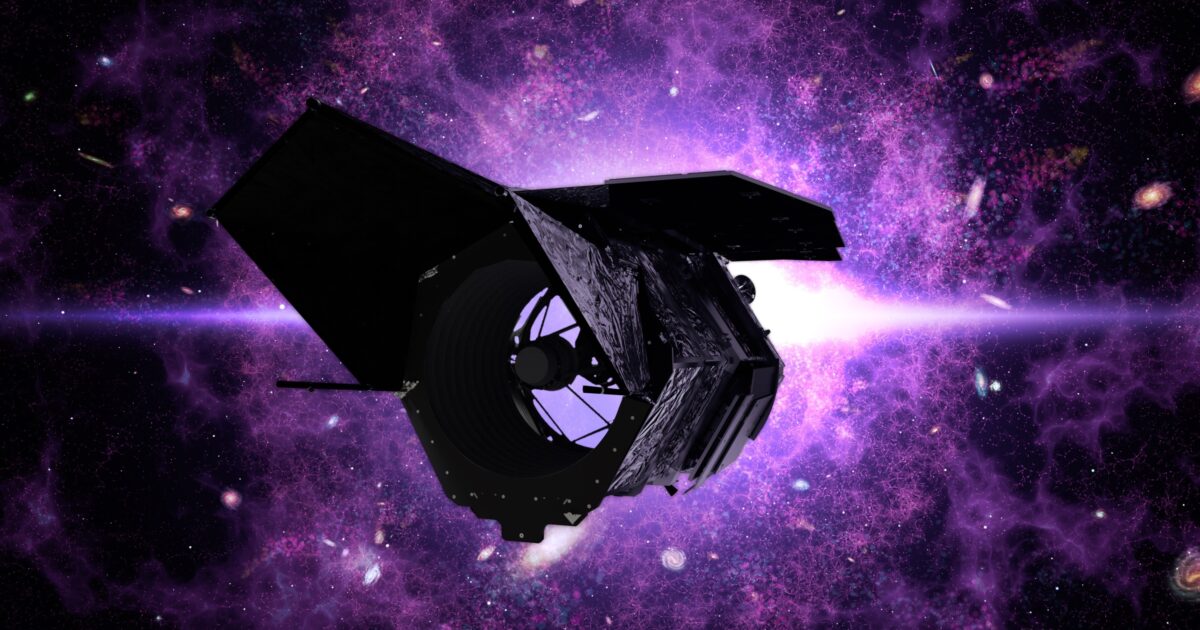
The Nancy Grace Roman Space Telescope carries a 2.4-meter primary mirror and two instruments designed to transform astrophysics research. The Wide Field Instrument (WFI) contains 300 million pixels and will survey an area of sky roughly 100 times larger than cameras on the Hubble Space Telescope or James Webb Space Telescope. The Roman Coronagraph Instrument will demonstrate technology to block starlight and directly image exoplanets around nearby stars.
Positioned at Earth-Sun Lagrange point 2, approximately 1.5 million kilometers from Earth, Roman will operate with thermal stability and near-continuous observing capability. The telescope will survey the sky about 1,000 times faster than Hubble. Coronagraph observations will show roughly a 100-fold improvement in detecting faint exoplanets compared to Hubble or JWST.
The coronagraph features silver-dollar-size deformable mirrors with thousands of pistons to correct telescope imperfections and photon-counting detectors. NASA's Goddard Space Flight Center manages the project, which has remained on budget and schedule. The launch window opened August 30, 2026.
Roman's primary science goals include studying dark energy through weak gravitational lensing, galaxy clustering, and supernova observations. The telescope will conduct extensive surveys of the Milky Way plane and its galactic center. Twenty-five percent of Roman's time will support competitively selected surveys chosen by the worldwide astronomy community. All data will be publicly available after processing.
Roman will discover over 100,000 exoplanets using transit and microlensing detection methods. The microlensing technique finds small planets or those orbiting far from their stars, including rogue planets unbound to any star. These discoveries will reveal the prevalence of Earth-like planets in habitable zones where liquid water can exist.