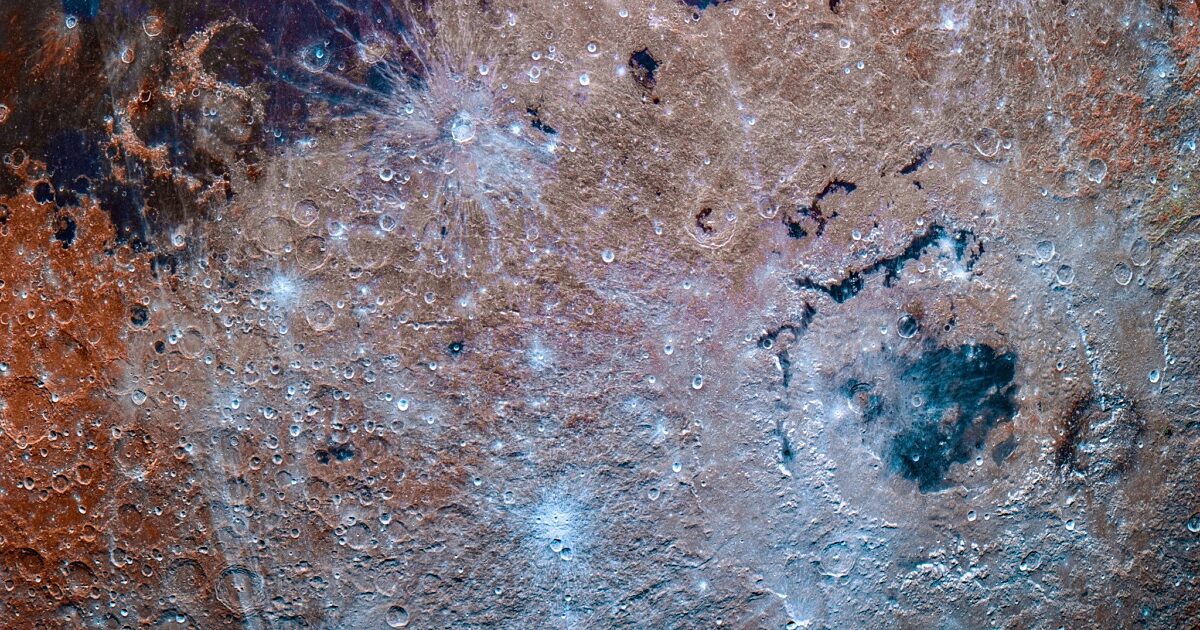
Artemis II commander Reid Wiseman captured detailed images of the lunar farside during the mission's April 6 Moon flyby. Astrophotographer Andrew McCarthy processed stacked photos to reveal the Mare Orientale and mineral composition across the surface, with blue hues indicating titanium-rich basalts and brown and red tones showing iron-rich or weathered material.
Multiple spacecraft currently study the Moon in orbit. NASA's Lunar Reconnaissance Orbiter, India's Chandrayaan-2, and South Korea's Danuri use cameras, spectrometers, and radar to map the lunar surface.
NASA Administrator Jared Isaacman stated he is "extremely confident" Artemis III will launch in 2027. That mission will test rendezvous and docking between Orion and test versions of SpaceX and Blue Origin lunar landers in Earth orbit. A crewed lunar landing is now planned for Artemis IV in 2028.
NASA has invited India to join its Moon base program. India's space agency, ISRO, may participate in establishing a permanent human presence near the lunar south pole, beginning with robotic missions in 2028 and infrastructure development in the 2030s. India is separately planning its own crewed lunar missions and eventual Moon base.
A SpaceX Falcon 9 upper stage crashed into the Moon, creating a double impact crater visible in images from NASA's Lunar Reconnaissance Orbiter.
On August 28, a partial lunar eclipse with 96% of the Moon in Earth's umbral shadow will be visible from North and South America, with portions visible in Africa, Europe, and the Middle East.