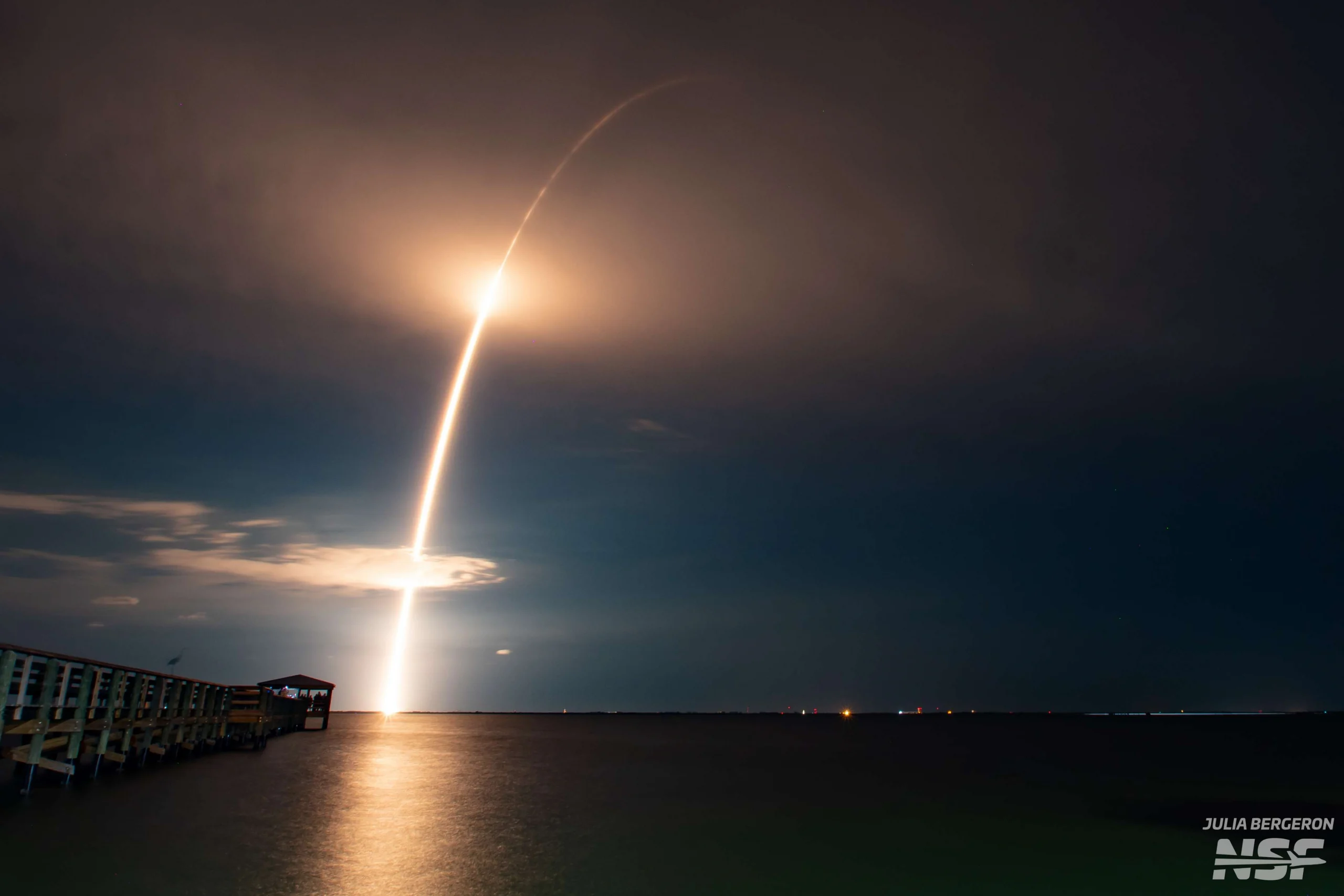
Nine rockets launched this week from California, Florida, New Zealand, Japan, and China, with missions ranging from interplanetary exploration to commercial satellite deployment.
JAXA launched the Martian Moons eXploration (MMX) mission on Monday, October 19, aboard the maiden flight of the H3-24L rocket from Tanagashima Space Center in Japan at 19:41 UTC. The H3 is a two-stage rocket built by Mitsubishi Heavy Industries, powered by liquid hydrogen and liquid oxygen. The H3-24L configuration features two LE-9 first-stage engines, four SRB-3 boosters, and a long payload fairing.
MMX will spend about a year transiting to Mars, then enter a Quasi-Stationary Orbit around Phobos. The mission will observe Phobos and Deimos, with emphasis on Phobos, studying topography, structure, composition, and gravity. Partners include NASA, France's CNES, Germany's DLR, and ESA.
The IDEFIX rover, built by CNES and DLR and weighing under 23.5 kg, will deploy from MMX at 40-100 meters above Phobos. MMX carries instruments including TENGOO, OROCHI, LIDAR, MIRS, MEGANE, CMDM, and MSA. The spacecraft will collect about 10 grams of Phobos soil samples for Earth return. MMX will depart Mars in 2030 and samples will land in Australia in 2031.
SpaceX launched two Falcon 9 missions on Tuesday, October 20. The Bandwagon-5 rideshare mission lifted off from Cape Canaveral at 11:04 UTC carrying 31 payloads including satellites from Exolaunch, Umbra Lab, Tomorrow.io, Capella Space, Planet IQ, Varda Space Industries, Planet Labs, Portal Space Systems, Viasat, and Fergani. Booster B1085 flew its 19th mission and landed aboard the droneship A Shortfall of Gravitas.
Later Tuesday, Falcon 9 launched from Vandenberg Space Force Base carrying 27 Starlink v2 Mini satellites. Booster B1063 supported its 36th flight and landed aboard Of Course I Still Love You.
Rocket Lab's Electron launched Wednesday, October 21, from the Mā hia Peninsula in New Zealand to deliver three HawkEye 360 satellites to a Sun-synchronous orbit. This was Electron's 98th overall flight.
Galactic Energy's Ceres 1S launched Wednesday from a sea platform at Haiyang Spaceport carrying an unknown payload. China's Chang Zheng 6A launched Friday, October 23, from Taiyuan Satellite Launch Center with an unknown payload.