SpaceX is preparing to launch Flight 16 of its Starship test program from Launch Complex 39A at Kennedy Space Center, with Booster 23 and Ship 43 both cleared for operations after completing cryo-proof testing.
Flight 15 is scheduled for November following a successful Static Fire test at Starbase on Sunday. Booster 23 finished cryo-proof testing on October 15 and will be ready for static fire in late November. Ship 43 completed cryo-proof testing on October 23 and should be ready for static fire in mid-December, with possible transport to Kennedy Space Center in early to mid-January.
LC-39A construction continues with two additional Liquid Methane storage tanks now complete, bringing total LCH4 capacity to nearly 5,000 metric tons at the pad, equivalent to about 3.8 stacks' worth. On October 12, SpaceX installed a reinforced roof on the tower to protect against ship catches. A tower vent was activated on September 12, and top-deck deluge testing occurred on September 24. SpaceX has begun activation testing of all pad systems.
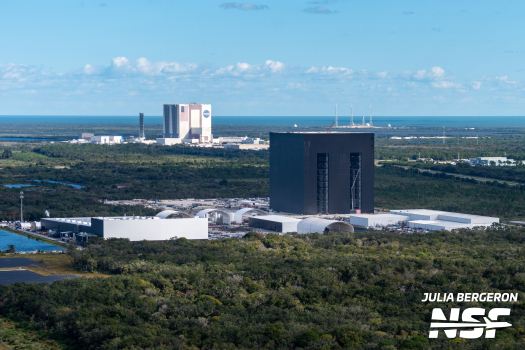
SpaceX is also expanding its Roberts Road facility at Kennedy Space Center. Working with NASA, the company has applied to expand the campus from 167 acres to nearly 400 acres. The expansion, currently in Draft Programmatic Environmental Assessment status, would include Project Ignition ship static-fire stands, a Payload Processing Facility, additional Gigabays, and a new road connecting Roberts Road to NASA Parkway. SpaceX has already built one Gigabay and installed at least one transfer-aisle bridge crane at Roberts Road since a January 2025 land extension.
Construction of SLC-37A, SpaceX's second Starship launch complex, is underway with two propellant tanks installed. The facility will likely require another year or more to become operational. SLC-37B remains in early foundation stages with no tower work started.