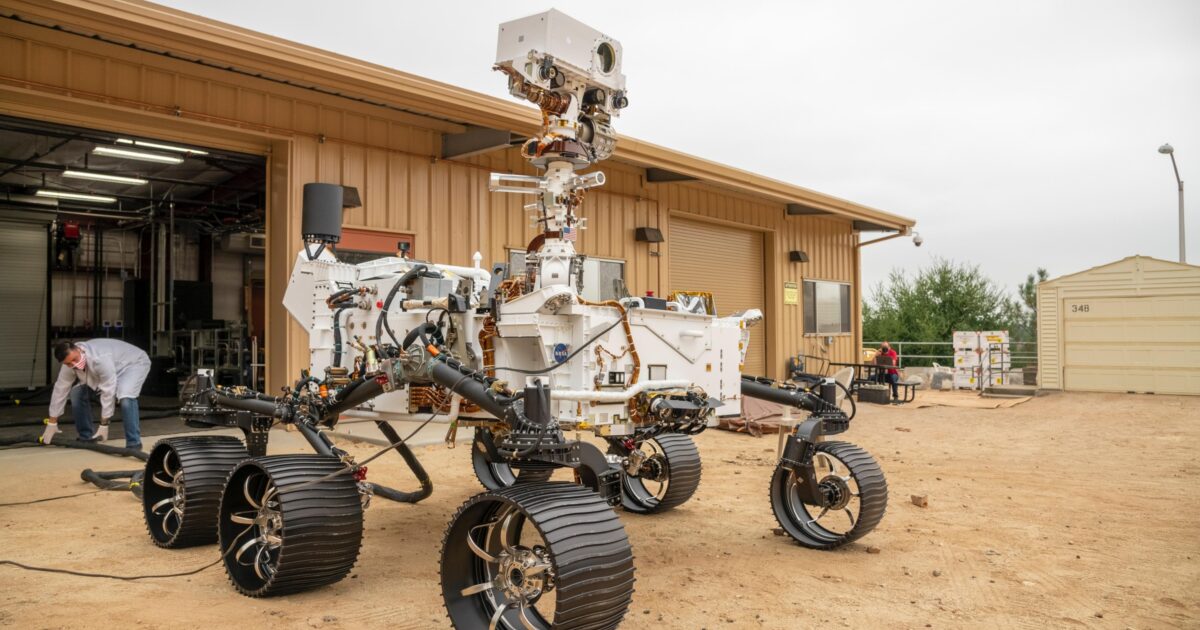
NASA Administrator Jared Isaacman announced in June 2026 that the agency may send an engineering duplicate of a Mars rover to the Moon. The concept, called PROMISE (Polar Rover for Observation, Mapping, and In-Situ Exploration), would assemble a rover from the body and parts of two engineering test articles maintained by NASA's Jet Propulsion Laboratory: OPTIMISM, the testbed for Perseverance deployed in 2021, and MAGGIE, the testbed for Curiosity in use since 2009.
"We've got this hardware that the taxpayers invested a lot in," Isaacman said. "So the question was posed, what if we sent it to the Moon?"
According to Casey Dreier, Chief of Space Policy at The Planetary Society, the project would likely cost NASA between $700 million and $1.3 billion and not launch until the early 2030s. Dreier based this estimate on historical spending, NASA procedural requirements, and cost analyses for nuclear-powered lunar rovers, accounting for launch costs, spacecraft processing, mission operations, nuclear power compliance, and science payload development.
The testbed rovers were built to work on Earth, not in space. Converting them for lunar use requires addressing thermal challenges, radiation shielding, vacuum operation, and protection against lunar dust. Many electronic parts lack flight ratings. The two testbeds also differ significantly in design. JPL engineers had previously rejected converting Curiosity's testbed rover to match Perseverance's flight design, noting that the electronics, mounting structures, and cabling differed so much that the effort was deemed too great.
Bloomberg reported that NASA intends to use Curiosity's testbed rover as the primary chassis, with components from Perseverance's testbed as necessary. Creating this hybrid requires merging hardware built more than a decade apart.
PROMISE would weigh about 1,000 kilograms, exceeding the payload limits of most of NASA's commercial lunar delivery partners except Blue Origin. Blue Origin's Blue Moon Mark 1 lander advertises a landing payload of up to 3,000 kilograms.
NASA did not specify which scientific priorities PROMISE would address or how it would be funded given the 46 percent cuts currently proposed to the Science Mission Directorate.