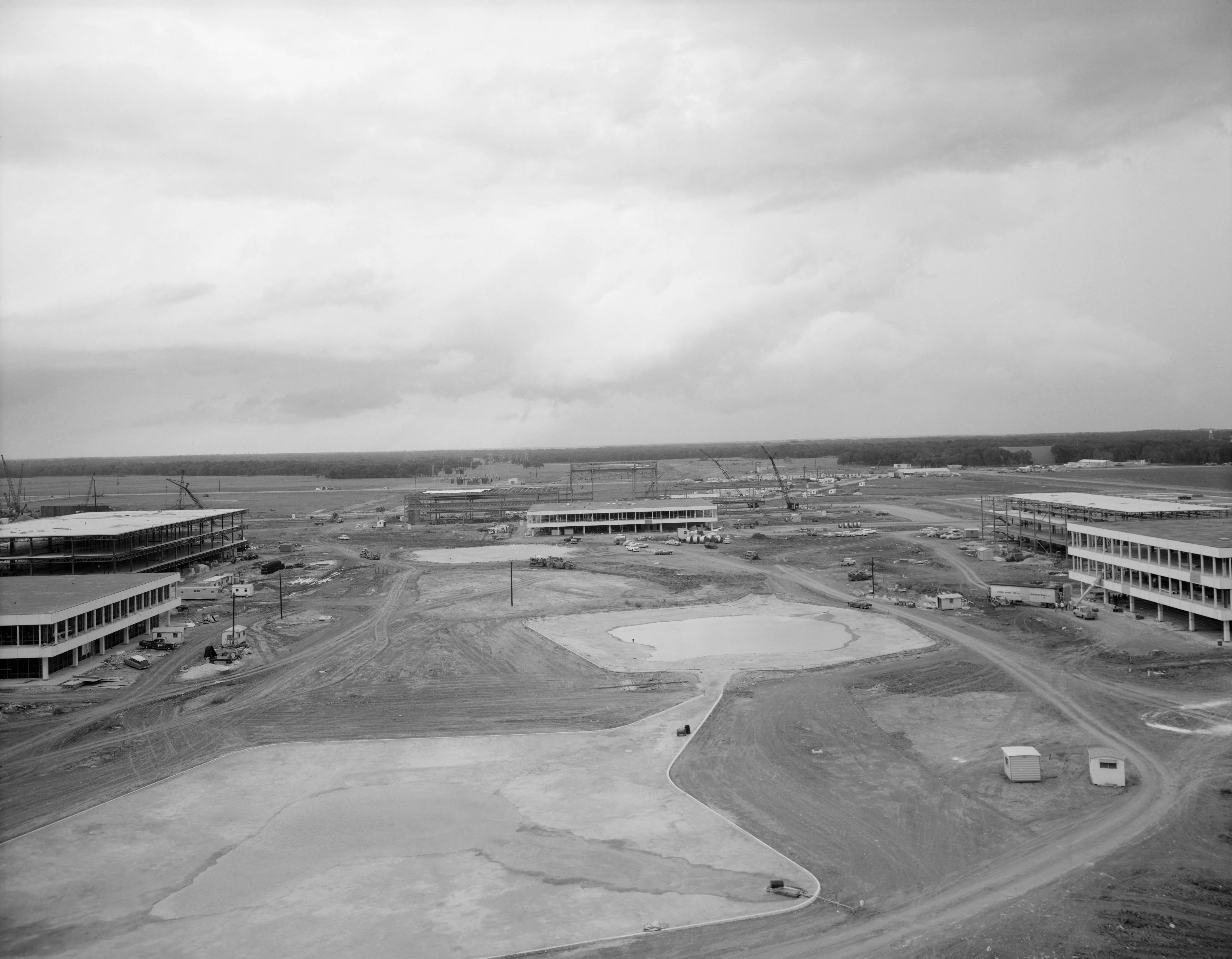
NASA's Johnson Space Center marked 65 years of operation, tracing its role in human spaceflight from Project Mercury through the Artemis program.
The center was established on November 1, 1961, after President John F. Kennedy committed the nation to landing humans on the Moon in May 1961. NASA selected Houston as the site on September 19, 1961, moving the Space Task Group from Langley Research Center in Hampton, Virginia. Construction began in 1962, and the first employees moved to the Clear Lake site in late 1963.
In 1973, the Manned Spacecraft Center officially became NASA's Lyndon B. Johnson Space Center in honor of President Johnson's support of the space program.
Johnson now serves as NASA's Center of Excellence for Human Spaceflight. The center houses America's astronaut corps and the Mission Control Center. It manages the Low Earth Orbit Program, which includes International Space Station operations and commercial partnerships. For deeper space exploration, Johnson houses the Moon Base Program and Orion Program. The Human Health and Performance Directorate and Human Research Program work to protect crew health as missions extend farther from Earth.
Key facilities at Johnson include the Space Vehicle Mockup Facility in Building 9, where astronauts train on spacecraft mockups including those for Orion and commercial vehicles. The Mission Simulation and Training Facility in Building 5, completed in April 1965, began supporting Gemini missions in June 1965 with spacecraft simulators. The Neutral Buoyancy Laboratory, opened in 1997 at the Sonny Carter Training Center, supports spacewalk training for both shuttle and space station missions, as well as testing future spacesuits and lunar surface activities. The Lunar Receiving Laboratory in Building 37 processed lunar samples from all Apollo missions and housed astronauts from Apollo 11, 12, and 14 during their three-week postflight quarantine.