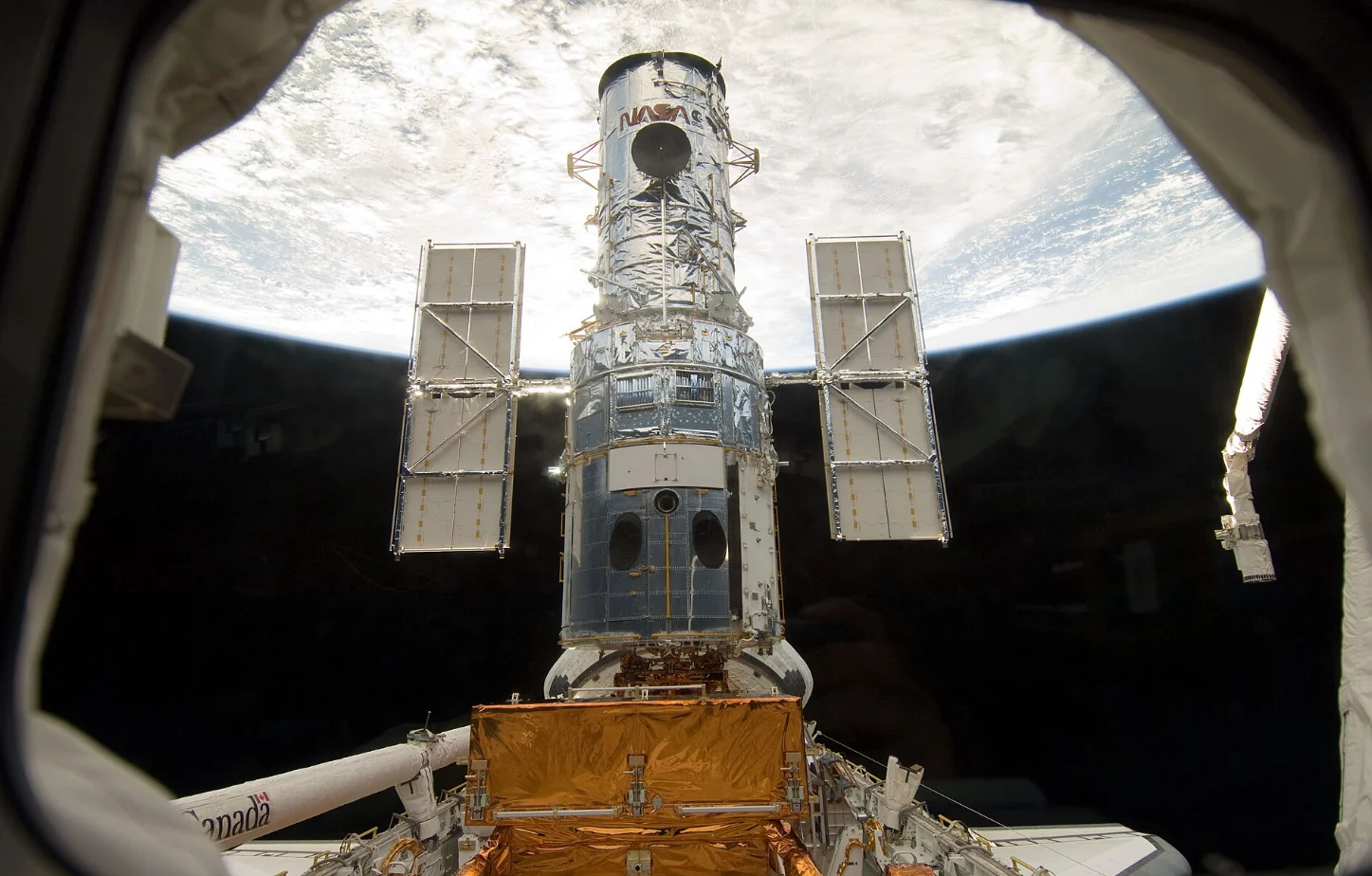
NASA Administrator Jared Isaacman has stated that an uncontrolled reentry of the Hubble Space Telescope is unacceptable and called for prioritizing science return if the agency funds a mission to the observatory.
Hubble launched aboard Space Shuttle Discovery (STS-31) in April 1990. Five Space Shuttle servicing missions followed, with the final one, STS-125, flown by Atlantis in May 2009. That mission installed the Wide Field Camera 3 and Cosmic Origins Spectrograph, replaced gyroscopes and batteries, and added a soft-capture mechanism.
The observatory now operates on two of six gyroscopes, roughly 16 years after its last crewed servicing. Operating in single-gyro mode has reduced available observation time by roughly 12 percent and limits the telescope's ability to track certain targets. Atmospheric drag is expected to bring Hubble down in the 2033–2034 timeframe.
NASA issued a Request for Information seeking commercial options for a reboost, servicing, or controlled deorbit. The RFI remains open through the end of November and asks for input on three paths: a reboost to delay reentry, a servicing mission that could restore or expand capabilities, or a controlled end-of-life disposal.
Isaacman said that commercial capture and servicing capabilities have matured since earlier proposals, including his own Polaris Program proposal that NASA studied and ultimately did not pursue in 2024. He noted that if NASA funds a visit, "you might as well boost it, get as much science as you possibly can out of it." He also did not rule out the possibility that someone could eventually recover Hubble for museum display.