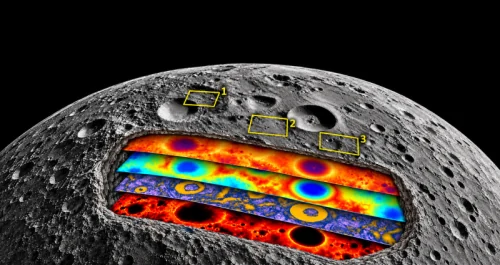
NASA plans to return astronauts to the lunar surface in 2028 and establish a permanent human presence on the Moon. Researchers from The Ohio State University have developed an artificial intelligence model called LUMINA to help identify safe landing sites and plan human outposts on the Moon and Mars.
LUMINA analyzes multiple datasets beyond orbital images, including topography, terrain hazards, geology, surface properties, and water ice locations. The model compares candidate landing sites to maximize mission success for human habitation and science.
Gokce Inal, a PhD candidate in Civil Environmental and Geodetic Engineering at Ohio State and lead author of the study, presented the work at the 58th Annual Meeting of the Division for Planetary Sciences. "AI systems are going to become critical tools for space exploration that will help humans analyze the millions of images and datasets that future missions will require," Inal said.
LUMINA builds on earlier research called the Large Language-and-Vision Assistant for Lunar Exploration (LLaVA-LE), which analyzes orbital images of the lunar surface. The LLaVA-LE model was presented at the CVPR2026 AI4Space Workshop in June 2026.
NASA's Moon to Mars Architecture guides the development of technologies needed for permanent lunar presence and eventual human Mars missions. These technologies include power systems, transportation, habitation and life support, robotics and construction, and in-situ resource utilization. LUMINA supports mission planning by improving how planners evaluate landing sites as new lunar data becomes available.