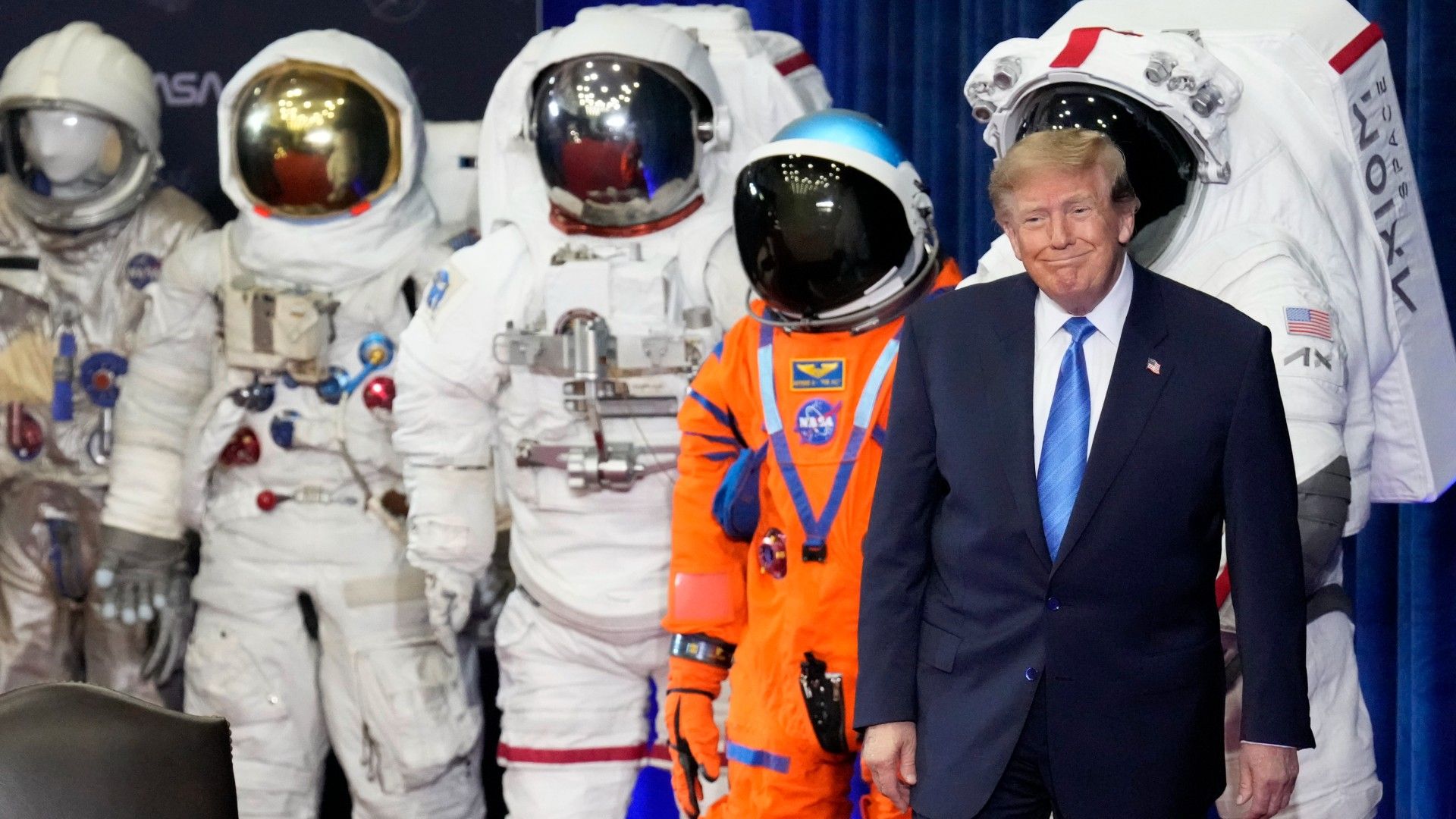
President Trump issued a proclamation on November 3 declaring space open to all humanity for exploration and asserting the right of American citizens to develop and settle the solar system under United States laws. "The American Declaration of Freedom in Space" describes space as the "province of all humans" and pledges that the United States will lead humanity's expansion into the cosmos.
The document reiterates existing administration goals with NASA's Artemis program to return American astronauts to the moon by 2028 and eventually send astronauts to Mars. It introduces no new funding, programs, or policy directives.
The proclamation highlights NASA's Artemis II mission, which carried four astronauts on a 10-day journey around the moon in April and set a record for the farthest humans have ever traveled from Earth. Artemis III is scheduled to launch next summer (2027) and will test rendezvous and docking operations between NASA's Orion spacecraft and two commercial lunar landers in low Earth orbit. Artemis IV, targeted for 2028, will be the program's first lunar landing mission.
Trump's declaration emphasizes the country's commercial space sector and invokes the Apollo 11 astronauts as examples of U.S. leadership in space exploration. "The nation that leads in space will shape the future of humanity," the declaration states. The proclamation's language echoes principles in the 1967 Outer Space Treaty, which guarantees freedom of exploration while prohibiting national sovereignty claims on other planets.