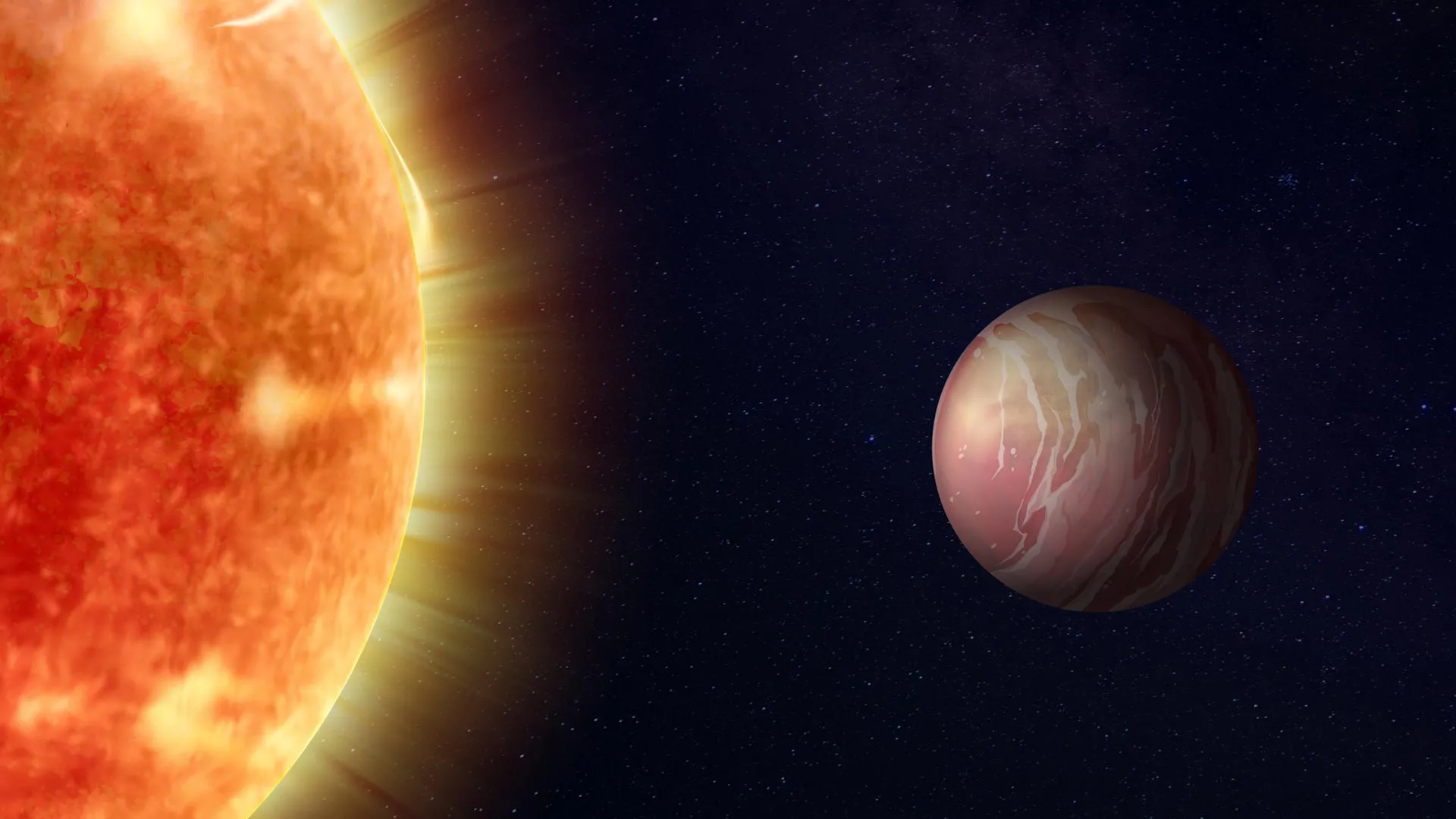
Using the James Webb Space Telescope, an international team observed the exoplanet TOI-561 b over 37 hours and detected evidence that this scorching, lava-covered world retains a substantial atmosphere. The planet orbits approximately 280 light-years away and was long expected to have lost any atmosphere billions of years ago due to intense stellar radiation.
The observations revealed that TOI-561 b reflects approximately 75% of the starlight reaching it, a reflectivity comparable to Venus. Dr. Anjali Piette of the University of Birmingham and Professor Lisa Dang of the University of Waterloo used phase curve measurements to track how the planet's brightness and heat changed throughout its orbit. Their findings appeared in The Astronomical Journal.
The team's computer climate models suggest that silicate clouds containing silicon dioxide and magnesium silicate may form over the dayside, functioning as a natural sunscreen. These clouds appear to reflect incoming radiation and prevent the surface from reaching the extreme temperatures expected on an unprotected rocky planet. The atmosphere also redistributes heat from the illuminated dayside toward the nightside.
Scientists remain uncertain which gases compose TOI-561 b's atmosphere. Possibilities include a thick carbon dioxide layer resembling Venus under much hotter conditions, or sulfur dioxide like the volcanic emissions from Jupiter's moon Io. Researchers propose that the planet's ocean of molten rock may act as a planet-wide volcano, continuously replenishing atmospheric gases and potentially explaining how the atmosphere has persisted for billions of years.
Dang stated that future observations at longer wavelengths with JWST could "give us insights and help explain how a planet this hot has held on to an atmosphere for billions of years."