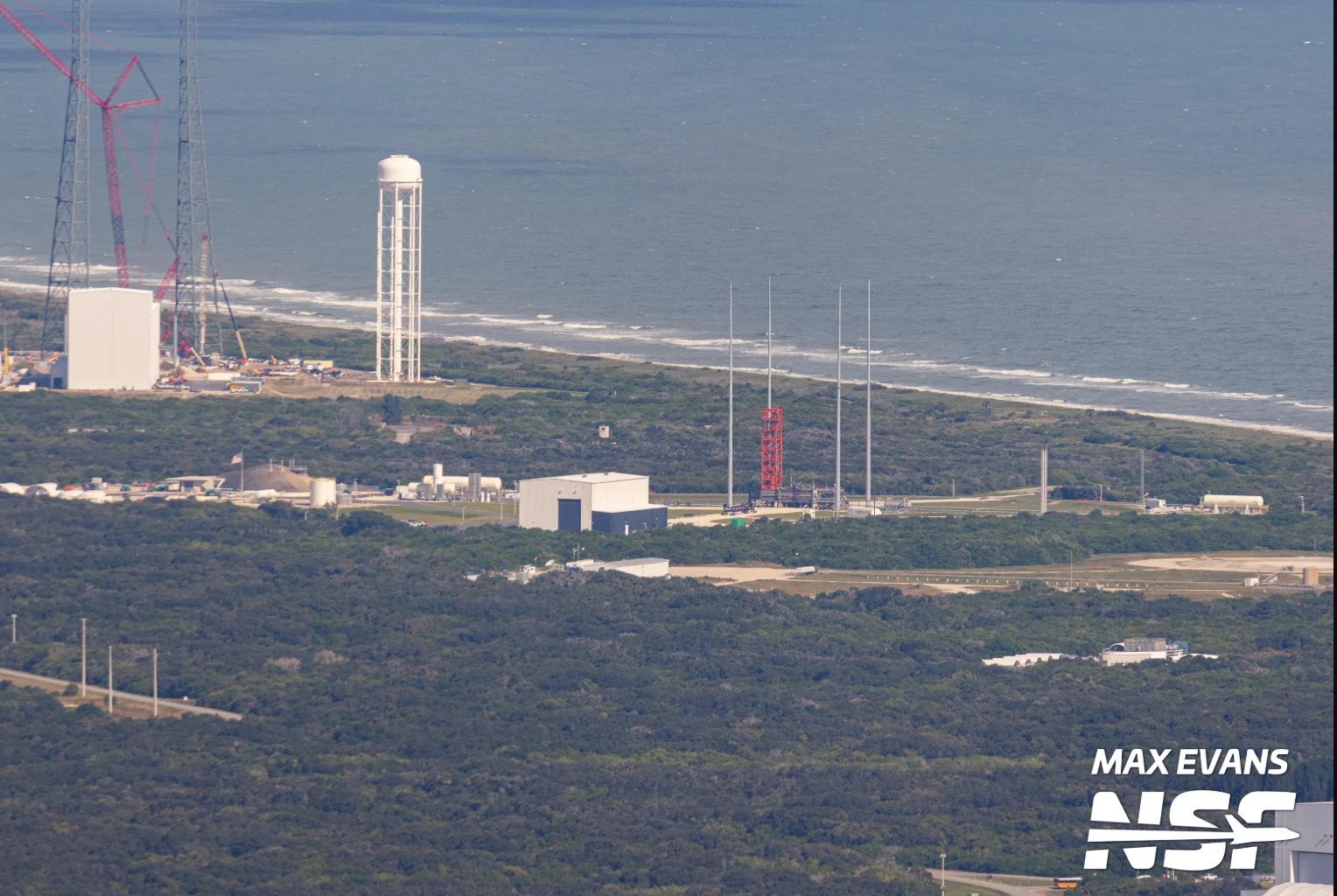
Stoke Space's Right of Entry authorization from Space Launch Delta 45 to develop a second launch pad at Cape Canaveral is a prudent next step, but the company now faces the critical task of proving that its reusability claims translate into genuine operational tempo. The move makes strategic sense: if Stoke can demonstrate that Nova Pathfinder achieves the rapid reuse it promises starting around mid-2027, then LC-15 will be ready to handle high-cadence operations when Nova Block 2 arrives in 2029. However, this expansion is contingent on execution, not just ambition.
The historic nature of this opportunity cannot be overstated. SLC-14, which hosted John Glenn's Friendship 7 mission on 20 February 1962 and later supported Mercury-Atlas launches by Scott Carpenter, Wally Schirra, and Gordon Cooper before deactivation in February 1967, is now being restored as a fully reusable launch complex. Stoke completed its reconstruction in just over a year, even reusing crushed concrete from the original Mercury-era pad and painting the new launch tower red as tribute to the early Space Coast towers. This is both inspiring and heavy with responsibility.
Col. Brian Chatman, commander of Space Launch Delta 45, stated that 'Every launch provider strengthens the nation's access to space,' and Brian Wemple, Stoke's Vice President of Launch, called it an honor to build the future on SLC-14's historic ground. These statements reflect genuine partnership, but goodwill alone does not guarantee success. Stoke must demonstrate that its rebuilt complex is not merely functional, but genuinely capable of the repeated rapid cycles it was designed to handle.
The timeline is compressed. Stoke's first booster shipped from Washington on 4 November bound for Cape Canaveral, with Pathfinder targeted for launch around mid-2027. The company then plans operational flights in 2027 and 2028 while Nova Block 2 development continues in parallel, with that larger variant's first flight planned for 2029. Meanwhile, environmental assessments and site surveys for LC-15 are just beginning under the Right of Entry.
The expansion announcement does not specify a construction timetable for the second pad, which is concerning given the compressed schedule. Stoke's $1 billion Series E funding round announced in September 2026 suggests financial capacity, and the company's positioning of Block 2 to meet constellation deployment demand is strategically sound. But Cape Canaveral has seen ambitious reuse promises before. Stoke must deliver consistent, rapid turnarounds at SLC-14 first. Only then will LC-15 be worth its investment, and only then will Col. Chatman's words about strengthening American space access truly ring hollow without proof.