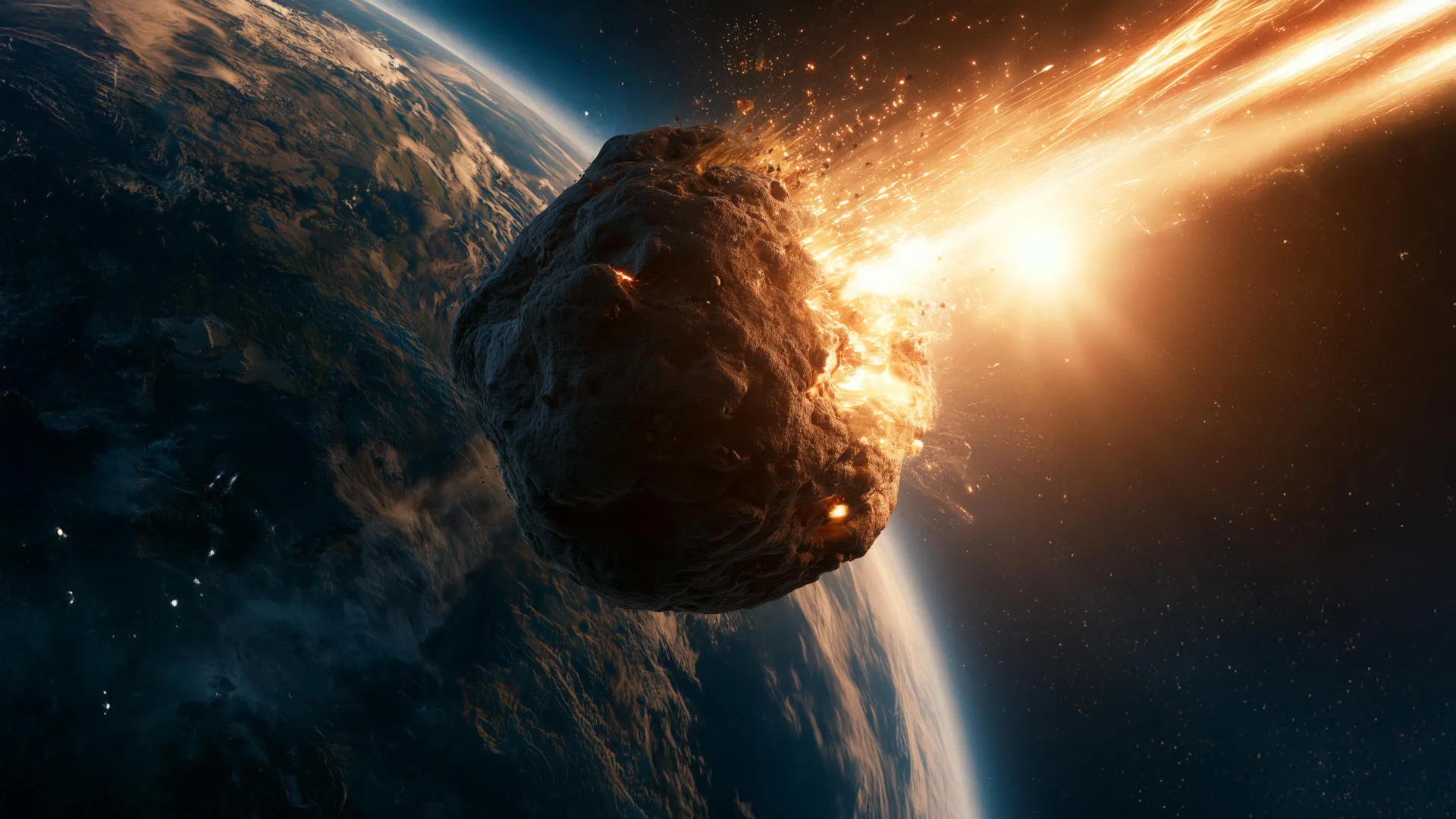
Nathan Moore and colleagues at Sandia National Laboratories developed a computer model showing that the direction of a nuclear X-ray blast aimed at an asteroid dramatically affects how much the object deflects from its current path.
The new simulation, published in Icarus, combines two previously separate calculation systems to model realistic asteroid shapes instead of treating them as spheres. Real asteroids have irregular surfaces with ridges and depressions that sphere-based models ignore.
In one test, deflection velocity changed by a factor of five depending on which direction the X-rays hit the asteroid. For another simulated object, changes in rotation varied by a factor of 17 based on blast direction.
Moore said the new algorithm runs 1,600 times faster than earlier models, enabling detailed calculations on complex asteroid geometries. The software reconstructs asteroids from spacecraft imagery, then simulates nuclear bursts while varying explosion strength, distance, and direction. It displays results as heat maps showing material vaporization and calculates the resulting trajectory change and surface damage.
"Our study shows how important it is to aim carefully," Moore stated. "Pick the right side and you win. Guess wrong and it could be a bad day."
The model cannot yet predict complete asteroid breakup, only surface fragmentation. Mission planners would ideally redirect a single large object rather than create multiple dangerous fragments. Future improvements require additional research and more advanced computational tools to account for all physical interactions triggered by an intense X-ray burst.
Practical deployment still faces obstacles. Accurate shape information requires observations from multiple angles, potentially unavailable if an asteroid were discovered on a collision course with Earth. Positioning a nuclear device at the precise location relative to a moving asteroid would demand extraordinary precision.