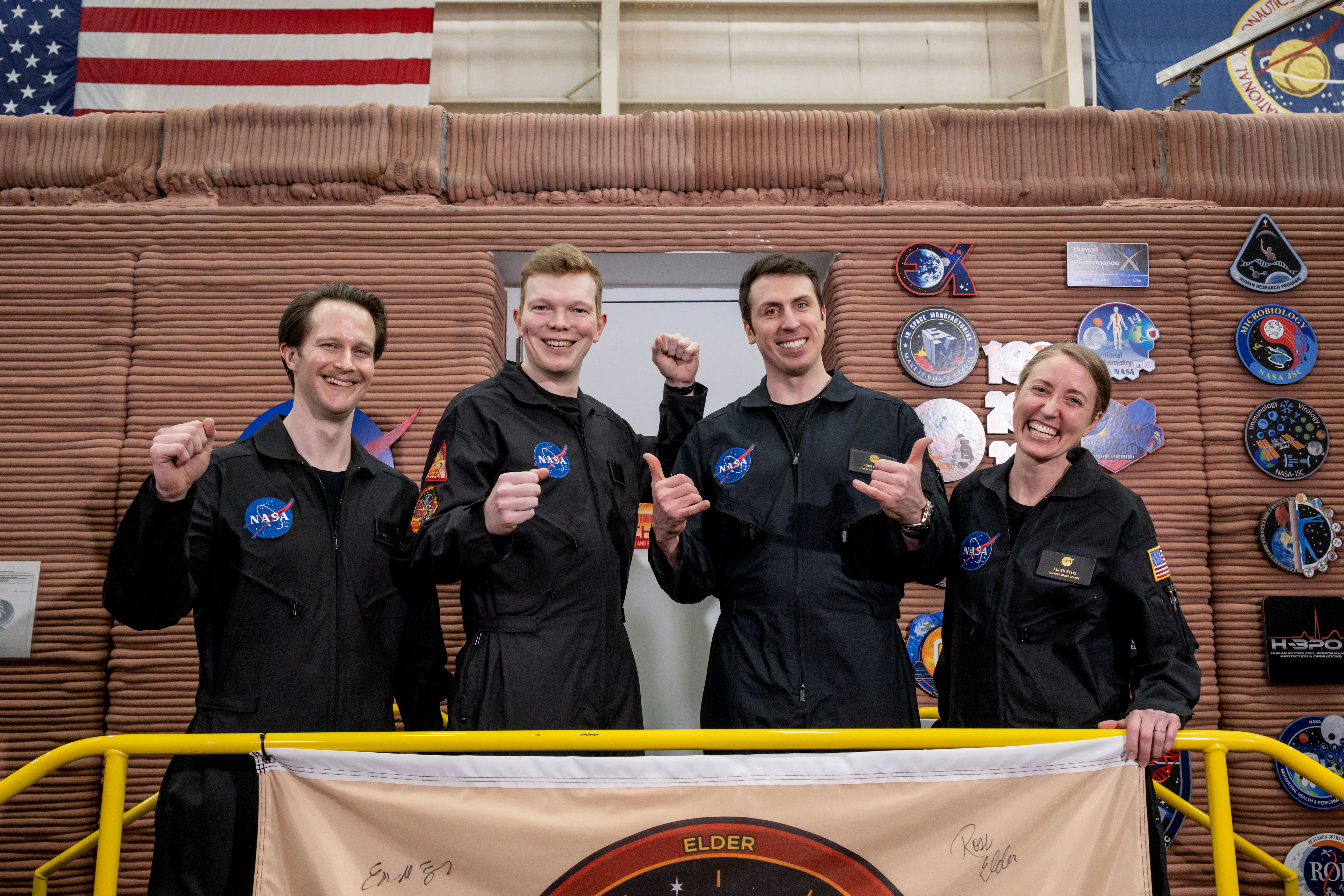
NASA's CHAPEA Mission 2 crew exited the Mars Dune Alpha habitat on October 31, 2026, after 378 days of isolation at Johnson Space Center in Houston. Commander Ross Elder, Medical Officer Ellen Ellis, Flight Engineer James Spicer, and Science Officer Matthew Montgomery conducted simulated Marswalks, robotic operations, habitat maintenance, exercise, and crop cultivation inside the roughly 1,700-square-foot, 3D-printed facility.
The crew entered the habitat on October 19, 2025, and operated under communication delays of up to 22 minutes each way while managing limited resources. They collected health and performance data throughout the mission.
Elder, a U.S. Air Force experimental test pilot, found simulated Marswalks and robotic exploration "uncannily similar" to flight operations. He emphasized that preparing suits, completing airlock procedures, and making long traverses required significant time and stamina, highlighting the physical preparation future Mars explorers will need.
Ellis, a U.S. Space Force officer with experience at the National Reconnaissance Office, organized biological sample collections and prepared supplies for health research. She noted the importance of a "highly integrated ground team" for future Mars missions and credited exercise, behavioral health, nutrition, and medical specialists for their coordinated support.
Spicer, with experience in satellite communications and spacecraft development, kept the habitat's systems operational. Montgomery, with backgrounds in hardware engineering and robotics, helped identify rock samples and maintain the habitat's 3D printing capabilities while also conducting a seed-germination experiment using simulated Martian soil.
Grace Douglas, CHAPEA's principal investigator, said the research will help NASA evaluate human health and performance risks against resources including crew time, communication capacity, and food and water system designs.