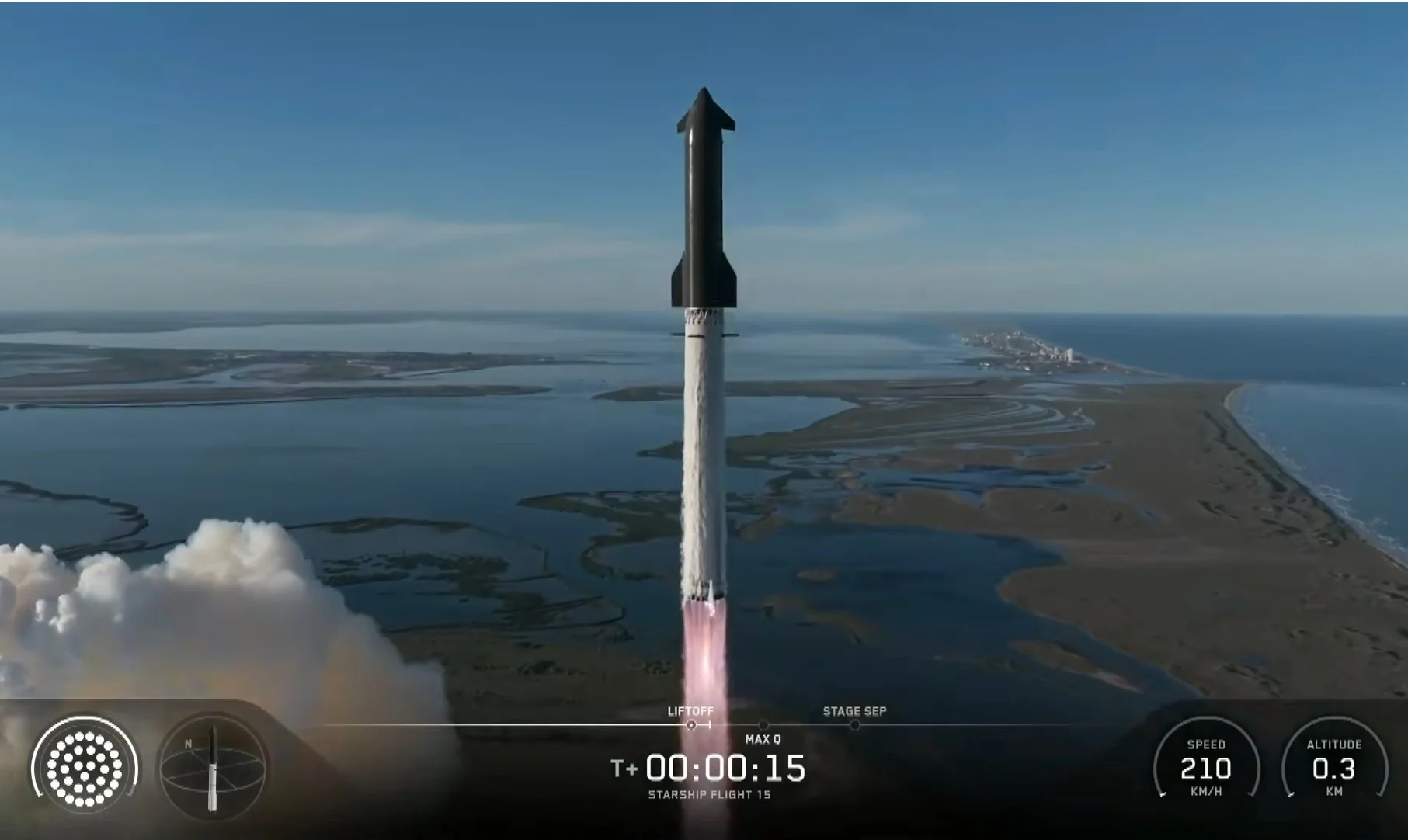
SpaceX launched Starship on its 15th flight test at 4:47 p.m. CT today from Starbase in South Texas, but canceled a planned catch of the Super Heavy booster due to safety concerns. The first stage instead splashed down offshore after launch commentator Jessie Anderson reported observers could hear and feel the impact.
The mission still aims to achieve a first. Ship 42, the second stage, is scheduled to spend as much as 22 hours in orbit before returning to the launch pad for capture by the tower's extendable arms. SpaceX has caught the booster in three previous test flights but has never caught a second stage.
After reaching orbit, Ship 42 deployed 26 Starlink satellites. Three of those satellites carry cameras to inspect the second stage's heatshield after deployment.
Starship stands 407 feet tall and produces 17 million pounds of thrust at liftoff, making it the world's biggest and most powerful rocket. NASA is counting on SpaceX to deliver a Starship-based lunar lander for astronauts by as early as 2028. NASA Administrator Jared Isaacman posted that the agency looks forward to using Starlink's on-orbit capability for the Artemis III mission, which will test the landing system in low Earth orbit next year.