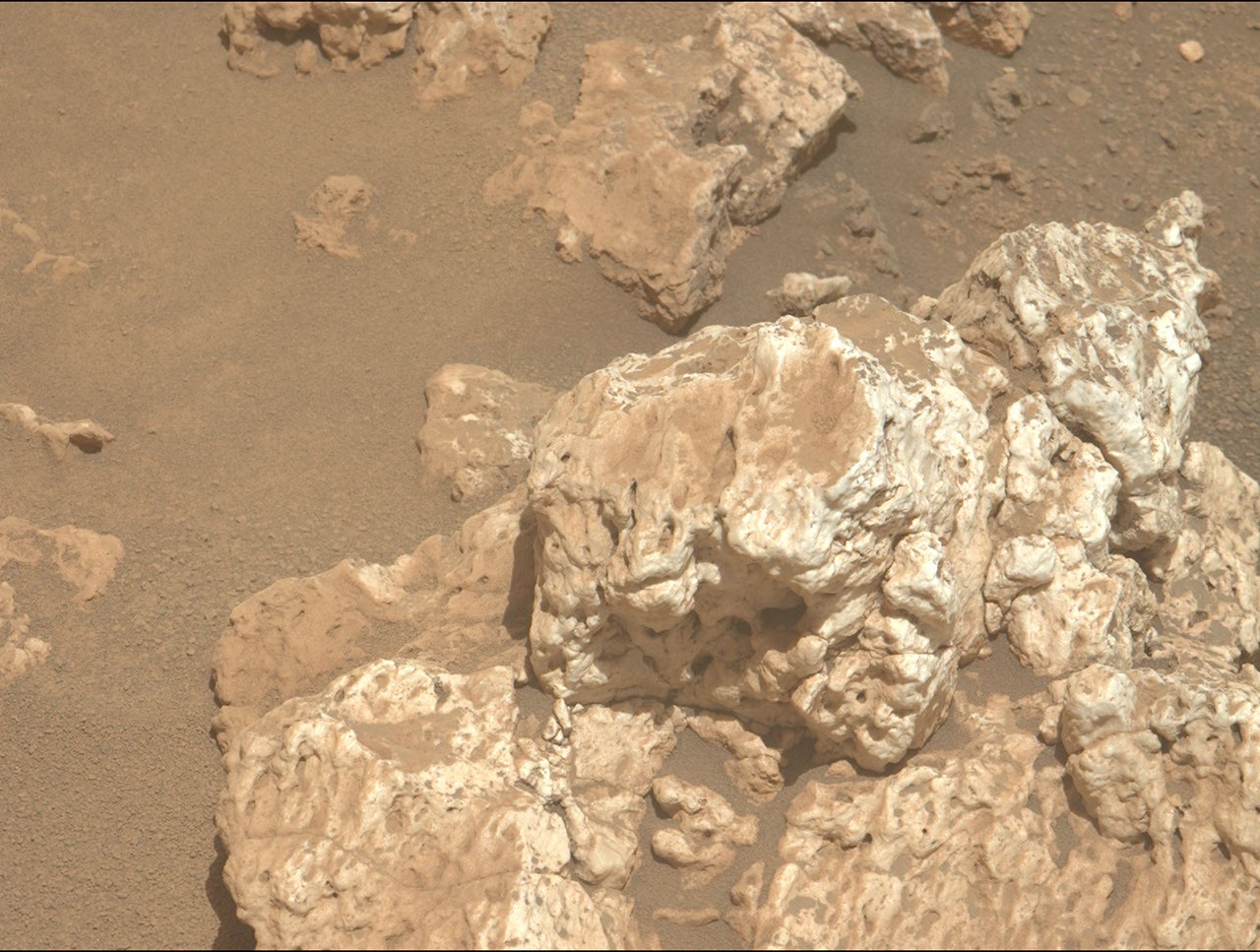
The Perseverance rover has discovered bright, light-toned rocks in the "Idubi" region of ancient Martian crust near Jezero crater. Data from the SuperCam instrument confirmed the rocks are rich in hydrated silica, not igneous in origin.
Hydrated silica forms in aqueous environments on Earth, including hydrothermal, pedogenic, and groundwater systems. These deposits help scientists understand Mars' hydrological history. The mineral also preserves microfossils, giving it astrobiological value in the search for ancient life.
When Perseverance previously encountered silica-rich rocks on Jezero crater's inner rim, the deposits were too small for proximity science instruments to analyze in detail. The rocks at Idubi offer a larger scale. A detailed proximity science campaign is already underway to gather high-resolution chemical and mineralogical data about their origin and biosignature preservation potential.