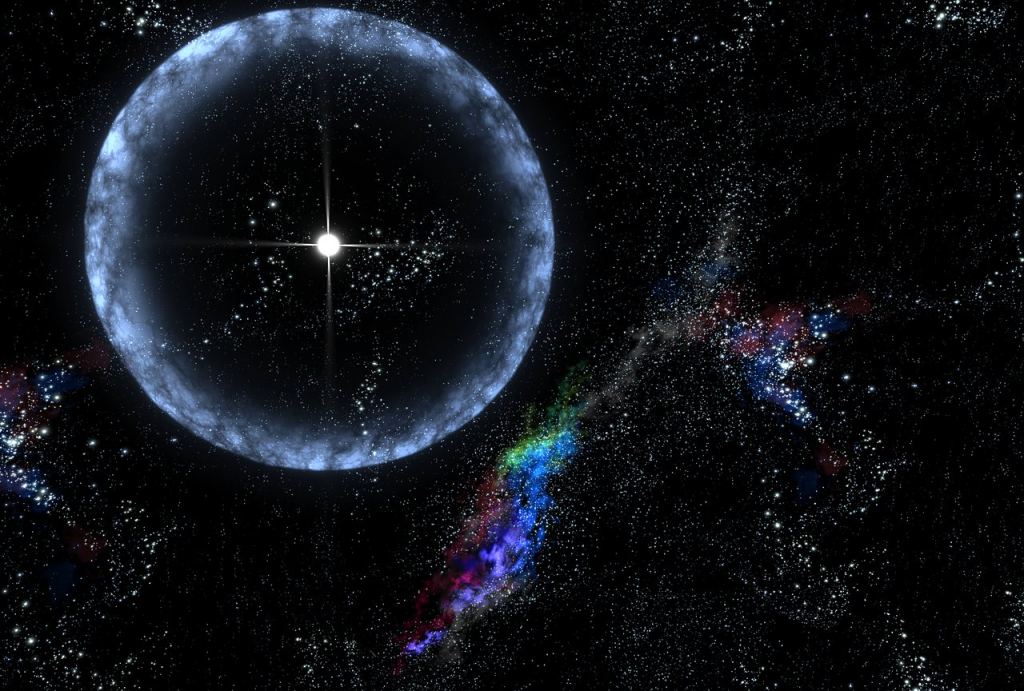
The Helmholtz-Zentrum Dresden-Rossendorf (HZDR) has launched the SUPREME project to trace rare radioactive isotopes created by nearby supernovae and other energetic cosmic events. The European Research Council awarded the project €3 million through its Advanced Grants program.
Prof. Anton Wallner leads the team, which will search for traces of heavy elements like gold, platinum, lead, and zinc in lunar samples from NASA, deep-sea sediments, ice cores, and other geological archives. These materials preserve records of interstellar material that reached Earth over millions of years.
The project addresses two questions. First, how have nearby supernovae affected Earth and biological evolution over the past 500 million years, particularly since the Cambrian Period began around 538.8 million years ago. Second, how are the heaviest elements in the Universe created and distributed to Earth and the Moon.
The research builds on a June 2026 discovery by HZDR scientists who made the first significant measurement of curium-247 and plutonium-244 in interstellar matter on Earth. These isotopes form through rapid neutron-capture processes, which create about half of all atoms heavier than iron in the Universe.
Researchers will use HAMSTER (Helmholtz Accelerator Mass Spectrometer Tracing Environmental Radionuclides), an accelerator mass spectrometry facility installed at HZDR in 2025. Combined with laser-based technology, the instrument can detect individual atoms with unprecedented sensitivity.