Relativity Space completed a 10-second hot-fire test of Terran R's flight one second stage in October at NASA's Stennis Space Center in Mississippi, marking the first stage-level test on the A2 stand since 1970. The Aeon V engine then fired for over 400 seconds in a Mission Duty Cycle test, demonstrating the full burn duration required during upper-stage vacuum flight on the first attempt.
At Relativity's Long Beach facility, engineers completed structural testing of the interstage, which endured millions of pounds of compressive load and separation latch preloads above flight levels. This closed out structural qualification for all primary flight one structures. The first stage thrust structure, equipped with all 13 Aeon R engines, fluid lines, and avionics, completed its breakover rotation from vertical to horizontal and began mating to the tankage.
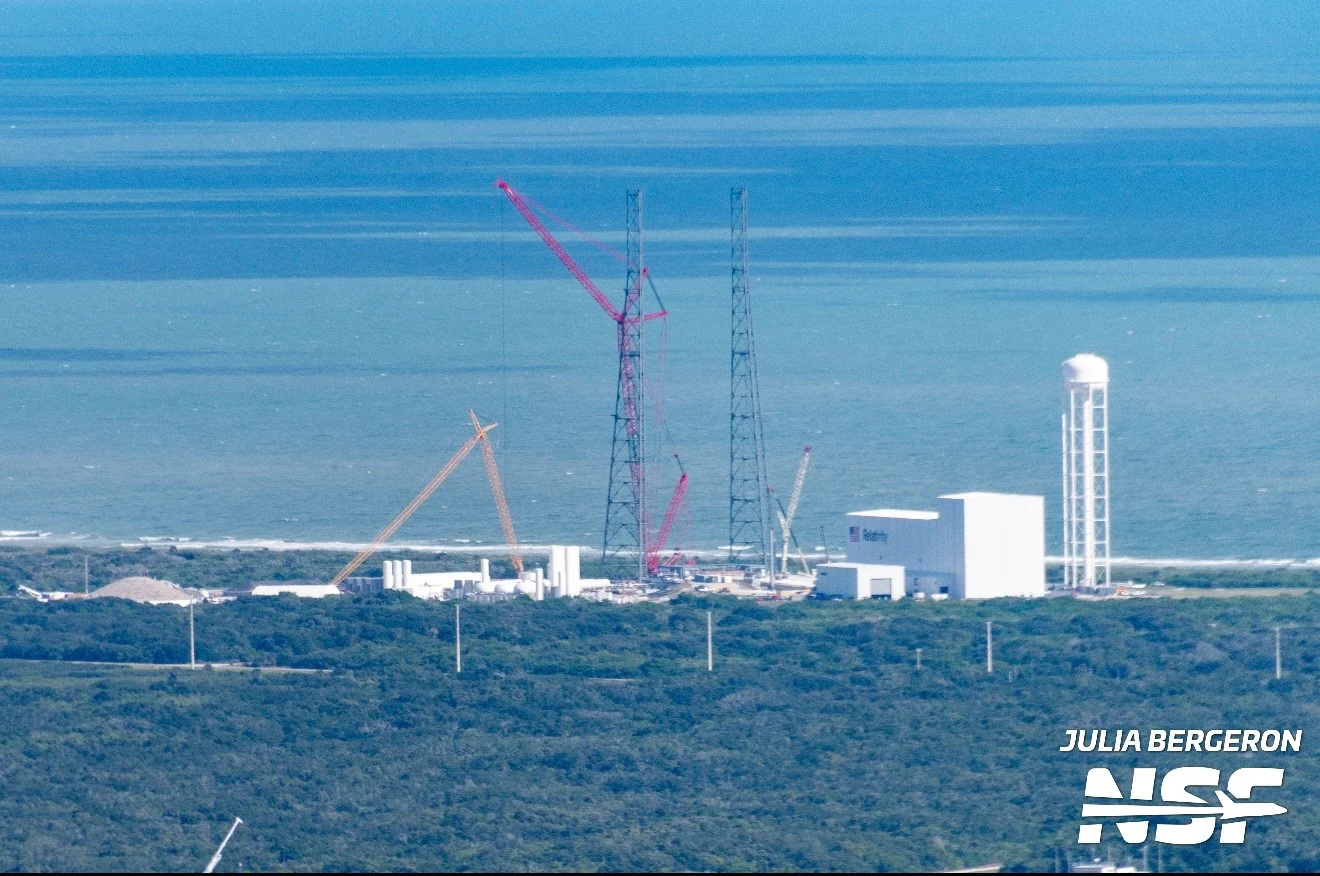
At Launch Complex 16 at Cape Canaveral Space Force Station, steel framing on the launch table is complete. Down conductor towers for lightning protection stand finished at 161 meters tall. The next step involves stringing catenary wires between the towers to form a protective canopy over the pad, then tensioning cables and running electrical resistance tests to ensure lightning dissipates safely into 30-meter foundations.
Relativity will use a transporter erector to roll the horizontally integrated Terran R to the pad and raise it upright. The second hydraulic lift cylinder of this pair of massive actuators has arrived on site.
A NASA task order awarded to Impulse Space in November calls for Terran R to launch Impulse's Helios kick stage and lunar lander beginning in 2028 as part of NASA's Moon Base program. The payloads will deploy into cislunar orbits and test cargo delivery near the lunar south pole.