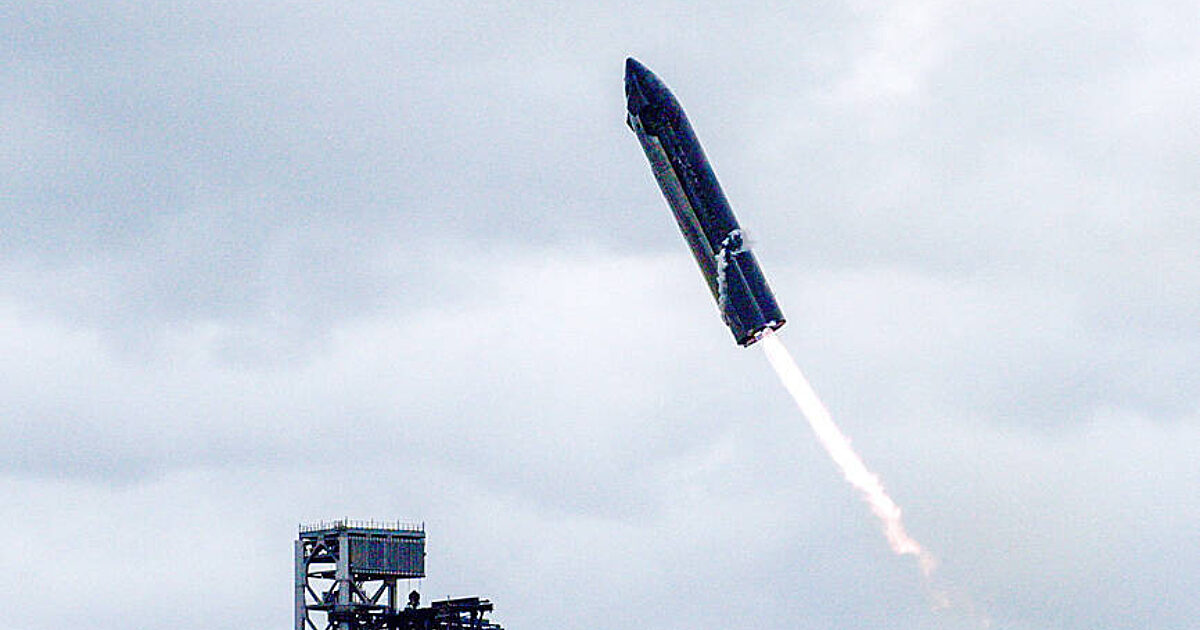
On November 14, SpaceX's Starship reached orbit, deployed Starlink satellites, and returned to its launch site where it was caught by the tower's "chopsticks" arms. No fully reusable second stage had accomplished this before.
The following day, United Launch Alliance's Vulcan rocket failed to reach orbit while attempting to launch 40 Amazon Leo communications satellites. Vulcan is a single-use medium-to-heavy-lift vehicle developed by the Boeing-Lockheed Martin joint venture. The launch was a return-to-flight attempt after a partial failure the previous year.
SpaceX has stated it will wind down its Falcon 9 and Falcon Heavy rockets once Starship flies reliably. The company has stopped accepting orders for rideshare missions and new commercial launches on Falcon. SpaceX appears focused on using Starship to deploy space-based AI data centers.
Since 2020, seven out of every 10 NASA launches have flown on SpaceX rockets. Eight upcoming NASA science missions, including Dragonfly, NEO Surveyor, and the Rosalind Franklin Rover, will launch on SpaceX rockets.
Starship currently lacks a standard payload fairing compatible with most military and NASA payloads. Its deployment system is custom-designed for Starlink satellites. The company could make a disposable upper stage with standard fairing, but no indications show this is a priority.
Potential alternatives to Falcon 9 remain in development. Rocket Lab's Neutron has been delayed to 2027. Blue Origin's New Glenn suffered a pad explosion. Relativity Space's Terran R has shared no public launch timeframe. None will immediately match Falcon 9's reliability and launch cadence.
NASA faces uncertainty about SpaceX preserving Falcon capacity for government needs and for how long. The agency will wind down the Dragon crew capsule, relying on Boeing's Starliner for low Earth orbit access after 2030. NASA Administrator has put forward the Space Launch System and Orion as the agency's primary long-term access to the Moon.