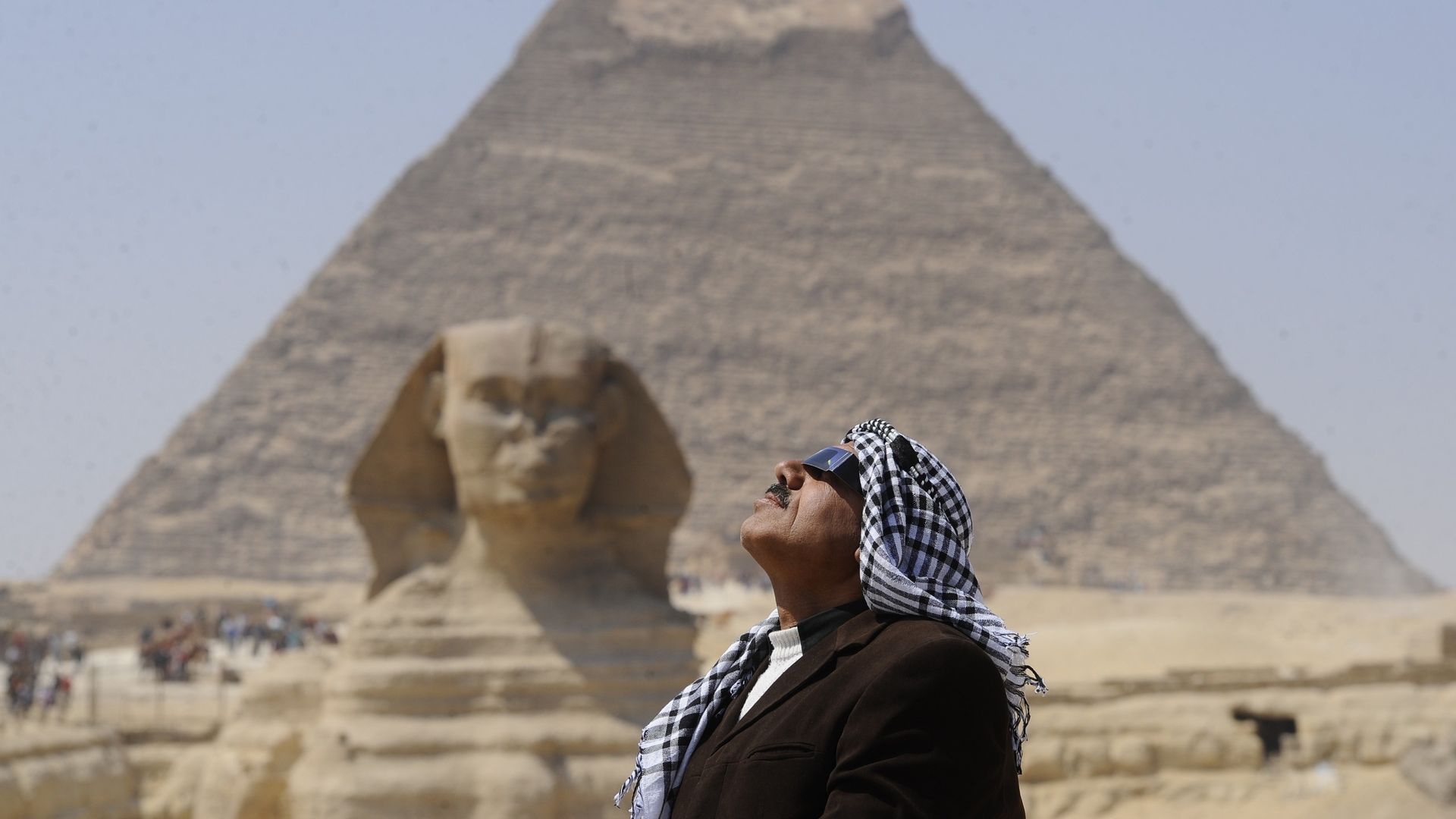
A total solar eclipse will cross Egypt on August 2, 2027, reaching Luxor at approximately 1:02 p.m. EEST and lasting 6 minutes 22 seconds. The same celestial mechanics that predict future eclipses allow astronomers to calculate where the moon's shadow fell thousands of years ago, potentially anchoring ancient historical moments to precise dates.
Archaeoastronomer Giulio Magli at the Polytechnic University of Milan proposed in 2025 research that a total solar eclipse on April 1, 2471 B.C. during Egypt's pyramid age may explain why Pharaoh Shepseskaf broke tradition and built a rectangular tomb at South Saqqara instead of a pyramid. No Egyptian text records this eclipse.
Researchers Colin Humphreys and Graeme Waddington at Cambridge University argued in 2017 that an annular eclipse on October 30, 1207 B.C. over Canaan may be described in the Old Testament book of Joshua. The passage states: "Sun, stand still at Gibeon, and moon, in the Valley of Aijalon. And the sun stood still, and the moon stopped, until the nation took vengeance on their enemies." If correct, this would be the oldest recorded solar eclipse with an identified date and could help refine the chronology of Ramesses II's reign. Egyptologists generally date Merneptah, Ramesses II's successor, to around 1213 to 1203 B.C., placing the Israelites already in Canaan by that time.
Humphreys and Waddington proposed that Ramesses II reigned from approximately 1276 to 1210 B.C., with about a year of uncertainty, differing slightly from the conventional dates of 1279 to 1213 B.C. used by the British Museum.
The interpretation remains controversial. Marinus Anthony van der Sluijs challenged the eclipse reading, arguing the biblical narrative describes the sun and moon positioned simultaneously over different locations, not an eclipse at all.